


From Michelangelo Antonioni to Mick Jagger: 10 movies that defined swinging sixties London

The swinging sixties marked a period of rapid social and cultural transformation in England. Everything changed that decade, and nothing has ever been the same since. Luckily, there were filmmakers ready to capture this revolutionary era in all its simultaneous glory and strife.
Music was developing fast, with bands like The Beatles, The Rolling Stones, The Kinks and many more dominating the airwaves. Youth culture became a more significant mainstream focus, and the sexual revolution was in full swing. As experimentation emerged in various ways, drugs and sex were more widespread, with many movies of the era reflecting this newfound sense of freedom, which heavily contrasted with the immediate post-war years. Fashion followed in tandem, with skirts getting shorter and materials getting shinier, brighter and tighter.
While some movies from this period captured this period of change through rose-tinted lenses and celebrated these new innovations, many filmmakers were unafraid to also explore this shift with a more nihilistic outlook.
From 1960s classics such as Blow-Up to lesser-known gems such as The Pleasure Girls, here are ten movies which perfectly encapsulate both the positives and negatives of swinging sixties-era London.
10 movies that defined 1960s London:
A Hard Day’s Night (Richard Lester, 1964)
If you’ve seen any movie on this list, it’s probably this one. The Beatles starred as dramatised versions of themselves in Richard Lester’s classic black-and-white comedy, A Hard Day’s Night, in 1964, encapsulating an era of cultural frenzy. The movie follows the Fab Four as they escape from fans, party and prepare for a television performance.
Depicting Beatlemania, which swept the decade and defined the swinging sixties in many ways, the movie is the perfect time capsule of a landmark moment in music history.
Blow-Up (Michelangelo Antonioni, 1966)
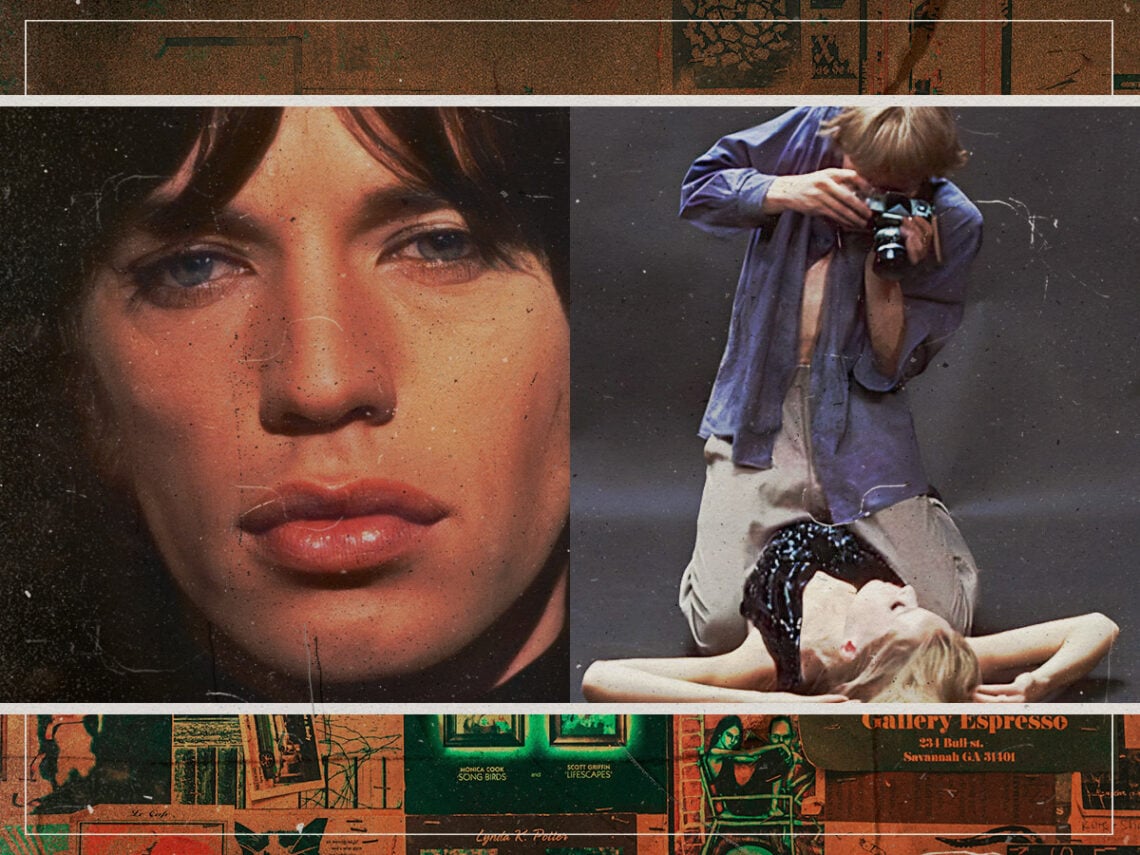
The soundtrack to Blow-Up, directed by Michaelangelo Antonioni, is possibly one of the most gloriously swinging sixties-esque collections of songs you can imagine. Created by Herbie Hancock, the soundtrack fits effortlessly into the Italian director’s foray into sex, malaise and potential murder in London during the middle of the decade.
With sexy photography shoots, a character inspired by David Bailey, and a performance from The Yardbirds, Blow-Up is jam-packed with scenes that will transport you straight to a bygone era. Deeply philosophical, the swinging sixties acts as an ideal backdrop for Antonioni to explore cultural change, art and postmodernism.
Darling (John Schlesinger, 1965)
Cited by Sofia Coppola as one of her favourite movies, Darling is one of John Schlesinger’s best-known movies, winning two Academy Awards. One of these was ‘Best Actress’ for Julie Christie, who portrays a morally challenged young woman, Diana, who does all she can to succeed in a world offering increasingly more opportunities to women.
Christie’s impressive performance is complex, with Schlesinger exploring a changing landscape where fame, fortune and getting what you want appeared more accessible than ever. She is empty, yet never boring to watch – Darling is one of the most accomplished works to encapsulate swinging London on film.
Deep End (Jerzy Skolimowksi, 1970)
Deep End gives us a foreign perspective on London during the 1960s, with Polish filmmaker Jerzy Skolimowski depicting one teenager’s romantic obsession against a backdrop of swimming baths and the streets of Soho. The movie is incredibly stylish, with Jane Asher donning go-go boots, minidresses and trench coats as she dominates the screen, reflecting the effortlessly cool fashions of the period.
Both funny and tragic, it is hard to imagine the movie being made today due to the distinctively ‘60s feel it possesses. Sometimes seductive or simply uncomfortable, Skolimowski depicts sexual and social deviancy with a potent lens in Deep End – a movie that remains severely underrated.
Georgy Girl (Silvio Narizzano, 1966)
Upon its release, Georgy Girl was a successful movie, grossing $16.8million against a $400,000 budget, although it seems to have faded into the annals of time. Yet, Lynn Redgrave does a great job of portraying a woman who must grapple with the affections of several men, one considerably older, all while she deals with her own self-image issues.
While many of the women in movies made during this time were super slim and model-esque, Redgrave’s character offers a slightly different angle. With performances from stars like Charlotte Rampling and James Mason, Georgy Girl is a fun and nuanced coming-of-age tale.
Here We Go Round The Mulberry Bush (Clive Donner, 1968)
It must first be stated that this is not an incredible film by any means, but hear me out. The seedy sex comedy is highly entertaining due to its sheer datedness, questionable accents, and failure to be anything that could actually be considered sexy. There’s not much separating this from something like Carry On Camping, yet it is hard to argue that it doesn’t perfectly capture the changing attitudes, fashions and sexual liberation that emerged during the swinging sixties.
Here We Go Round The Mulberry Bush is a fun watch that certainly isn’t the most politically correct. Rather, its title sequence alone is worth watching for fans of psychedelic visuals, and fashion aficionados will also gain a lot from the female characters’ amazing outfits.
Joanna (Michael Sarne, 1968)
Slightly cheesy but also tender and inexplicably fun, Joanna embodies the excitement of swinging London through bright colours and wonderful outfits. At the same time, the movie isn’t afraid to dig a little deeper, with racial issues playing a significant role in the film.
There’s an excellent scene in which Joanna mopes around to Scott Walker’s song of the same name and even a bizarre character played by a young Donald Sutherland. Sarne’s Joanna is ineffably stylish, slightly scandalous and undoubtedly ‘60s.
Performance (Donald Cammel; Nicolas Roeg, 1970)
Nicolas Roeg’s first feature, Performance, was co-directed by Donald Cammel, and like A Hard Day’s Night, the pair recruited one of Britain’s biggest musicians to star. The Rolling Stones’ own Mick Jagger appears as a rockstar, with Anita Pallenberg, one of the band’s most well-known muses, also featuring.
Beautifully shot, erotic and psychedelic, Performance is a sumptuous tale of murder, sex and drugs. Essentially, there are few better films out there which have captured the sleaze and seduction of the era so well.
The Pleasure Girls (Gerry O’Hara, 1965)
While Here We Go Round The Mulberry Bush focuses on a sexually ambitious young man, The Pleasure Girls centres on the love and sex lives of the (somewhat) newly liberated woman. The big city proves to be a place for women to experiment and let loose, like never before, with Francesca Annis’ Sally uncovering a new world after moving in with other young single women.
Shot in black-and-white, the movie features some beautiful scenes of London, great party sequences, and even performances from actors like Klaus Kinski and Ian McShane. A hidden gem, The Pleasure Girls is certainly worth adding to your watchlist.
To Sir, With Love (James Clavell, 1967)
Race and class intersect in To Sir, With Love by James Clavell, with Sidney Poitier starring as a recent immigrant who, despite having no prior teaching experience, ends up working in a school. While this might not be the best drama set in a school ever made, Poitier is fantastic as a teacher who is learning just as much from his students as they are from him.
Clavell’s movie emphasises the burgeoning youth culture that was prominent in the 1960s, and there’s plenty of joy to be found through the teenagers’ performances. There’s also the chance to see Poitier teach a lesson on how to make the perfect salad.

Never Miss A Beat
The Far Out Beatles Newsletter
All the latest stories about The Beatles from the independent voice of culture.
Straight to your inbox.