


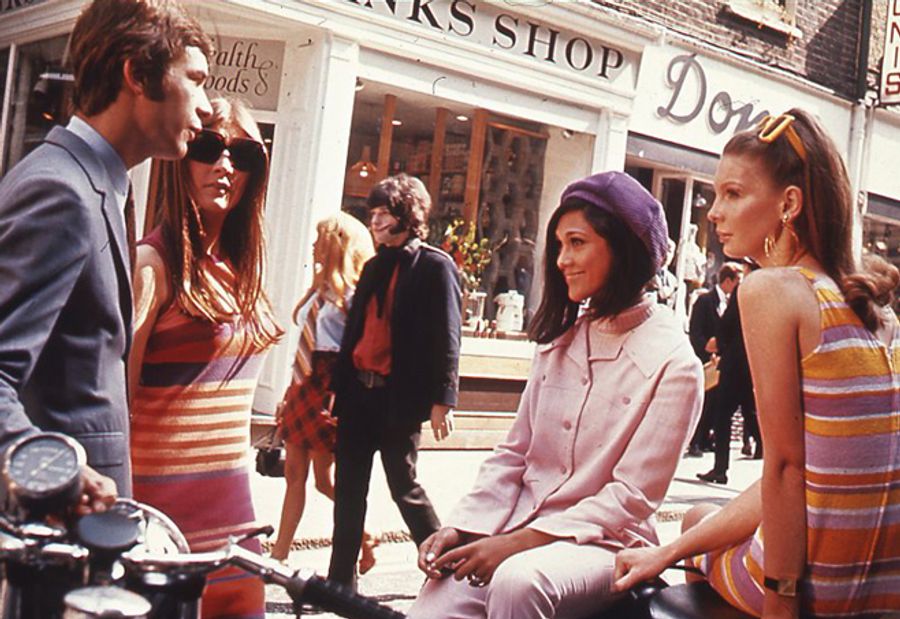
Watch archive footage of London during the swinging sixties

By 1966, a new London was emerging. Abortion was finally legal, Winston Churchill was dead, and Britain was experiencing almost full employment for the first time in decades. There was a real sense of optimism in the air. People could imagine their futures as easily as they could turn on the TV because there was likely to be a job for them no matter what. Life was good. After the black and white post-war years, suddenly Britain was bursting with colour, and nowhere was life more vibrant than in London.
The concept of “swinging” London began when Time Magazine ran a cover story about the city on April 1966. The publication turned London into an international symbol of cultural flux and innovation in one fell swoop. Practically overnight, it became the centre of the Western world. For American tourists especially, there was simply nowhere quite as cool. It wasn’t just the sheer amount of famous faces you were likely to see either. Sure, London was home to The Beatles, models like Twiggy and countless actors and directors, but it was an icon in its own right.
For the cover of the April 15th edition of Time, the publication commissioned a Punch Magazine illustrator to create a collage of traditional symbols of the city (the red buses, Big Ben, the Union Jack etc.) and symbols of youth culture. As well as The Houses of Parliament and Buckingham Palace, the illustrator included The Beatles riding in a pink Rolls Royce, the mini-skirt-clad inhabitants of the King’s Road, and The Rolling Stones strutting their stuff. Clearly, London was longer a city of grim tradition but a playground of jubilant, optimistic young people.
In the footage below, that optimism shines through. If you were young in the 1960s, London was the place to be. In the year before it was taken, Carnaby Street recorded a turnover of £5 million in a single year. Add to that hitherto unseen levels of social mobility, a musical revolution and changing attendees towards sex, and it’s easy to see why so many people felt found a reason to be cheerful.
Of course, it wouldn’t last forever. The 1960s would inevitably give way to the economic downturn of the ’70s, leaving ageing hippies with either a profound sense of nostalgia or frustration that their dreams had been scuppered. Perhaps that’s why this footage makes for such good viewing. It captures a moment when people truly felt things would keep improving forever. It also reminds us that culture and economy are interlaced, and that one rarely exists without the other.

Never Miss A Beat
The Far Out Beatles Newsletter
All the latest stories about The Beatles from the independent voice of culture.
Straight to your inbox.