


Dissecting the portrayal of women in the work of Stanley Kubrick

The cinematic world of Stanley Kubrick is ineffably masculine. There’s no denying that each of his movies occupies an ostensibly phallocentric space, defined by the trials and tribulations of masculinity, which is associated with power, control, and reputation. Women seem to play secondary roles in every production, typically appearing as lesser beings in comparison to their patriarchal counterparts.
Yet, Kubrick’s world isn’t so black and white. The filmmaker remains one of the most popular directors of all time, and you’ll be hard-pressed to find a cinephile, regardless of gender, who doesn’t adore at least several of his works. The portrayal of women within his work is complex, to say the least, with some of his movies giving considerably more autonomy to women than others. In general, however, Kubrick’s preoccupation with gender reflected what he knew – the male experience.
Apart from characters such as Alice in Eyes Wide Shut, Wendy in The Shining, and Lolita in the movie of the same name, it is hard to think of many women who occupy Kubrick’s oeuvre. Rather, he was preoccupied with masculinity and how it related to the wider human experience, using troubled men as protagonists, such as Alex De Large or Barry Lyndon.
Luckily, because of Kubrick’s supreme skill, his depictions of male characters often transcend their confines, making for fascinating character studies that don’t simply alienate female viewers. Still, that doesn’t mean that we can’t criticise the filmmaker’s lack of consideration for complex female characters – something which is arguably his biggest downfall. While it is perhaps for the best that Kubrick didn’t direct any movies with a female protagonist at the centre, it is disappointing to realise that someone as revered as Kubrick treated women like second-class citizens in most of his universally adored work.
One of Kubrick’s first movies to prominently feature a female character was Lolita, which tells the story of an academic named Humbert Humbert who becomes infatuated with a child named Dolores/Lolita. Not yet a teenager, this doesn’t stop Humbert from doing whatever he can to get close to Lolita, who he believes to be the ‘fire of his loins’. Adapted from Vladimir Nabokov’s novel of the same name, Lolita was perhaps the first inclination that Kubrick might not have had as much cinematic gusto to explore such a complex tale of gender as one might think.
While, on its own, Lolita is a hugely enjoyable dark comedy, in comparison to the book, it fails to adequately convey the true horrors of Nabokov’s exploration of paedophilia. Kubrick does Lolita, the innocent child victim, a disservice, using heavily sexualised imagery of 14-year-old actor Sue Lyon sucking on a lollipop as the poster for the film.
It wasn’t until 1971’s A Clockwork Orange that women featured prominently in another of his projects, although every female character ends up subjected to Alex’s deviant ways. We see the protagonist engage in a threesome – the girls are given no identities besides acting as objects of sexual satisfaction. Moreover, Alex’s choice of hangout, the Korova milkbar, uses sexualised mannequins of naked women as tables and chairs. And then there are the rape and murder scenes, which see one woman brutalised by a giant penis sculpture.

That’s pretty much the extent of female visibility in A Clockwork Orange. Many feminists have criticised the film, although it can be conversely argued that Kubrick’s inclusion of such scenes only serves to highlight how truly evil Alex is. Still, despite being a great movie, with its brutal treatment of women highlighting the horrors that can form from toxic masculinity and patriarchal reign, it is hardly a feminist exposé.
Barry Lyndon came next in Kubrick’s body of work, which has several minor female characters in it, such as Barry’s mother, Belle. The movie wastes no time in depicting the fall of a once-prosperous man, dissecting themes such as fate, ambition and greed. This is a wholly male world, and Kubrick knows it well. The women around Barry serve as chess pieces, and he uses them to try and get what he wants. Kubrick’s study of masculinity is undeniably fantastic here. It is just a shame that the female characters are not given more developed, autonomous parts.
The final two movies worth discussing here are The Shining and Eyes Wide Shut. The former contains Kubrick’s most famous woman, Wendy, played by the mesmerising Shelley Duvall. The story of her performance in The Shining is largely associated with the fact that Kubrick worked her to the bone, seemingly demanding more of her than anyone else on set. As a result, Duvall’s performance is often criticised for being over-the-top, although who wouldn’t act like that if your husband tried to kill you and your son? Wendy was labelled as “one of the most misogynistic characters ever put on film” by Stephen King, yet it can be argued that she is much stronger than people give her credit for.
Yes, she screams a lot, but despite experiencing extreme levels of anxiety and fear, she manages to escape, saving herself and her son from the monster that is her husband, Jack. Criticisms of Wendy as nothing more than a helpless victim suggest that it is not okay to express signs of weakness and stress when, in reality, that doesn’t make her any less of a complex character.
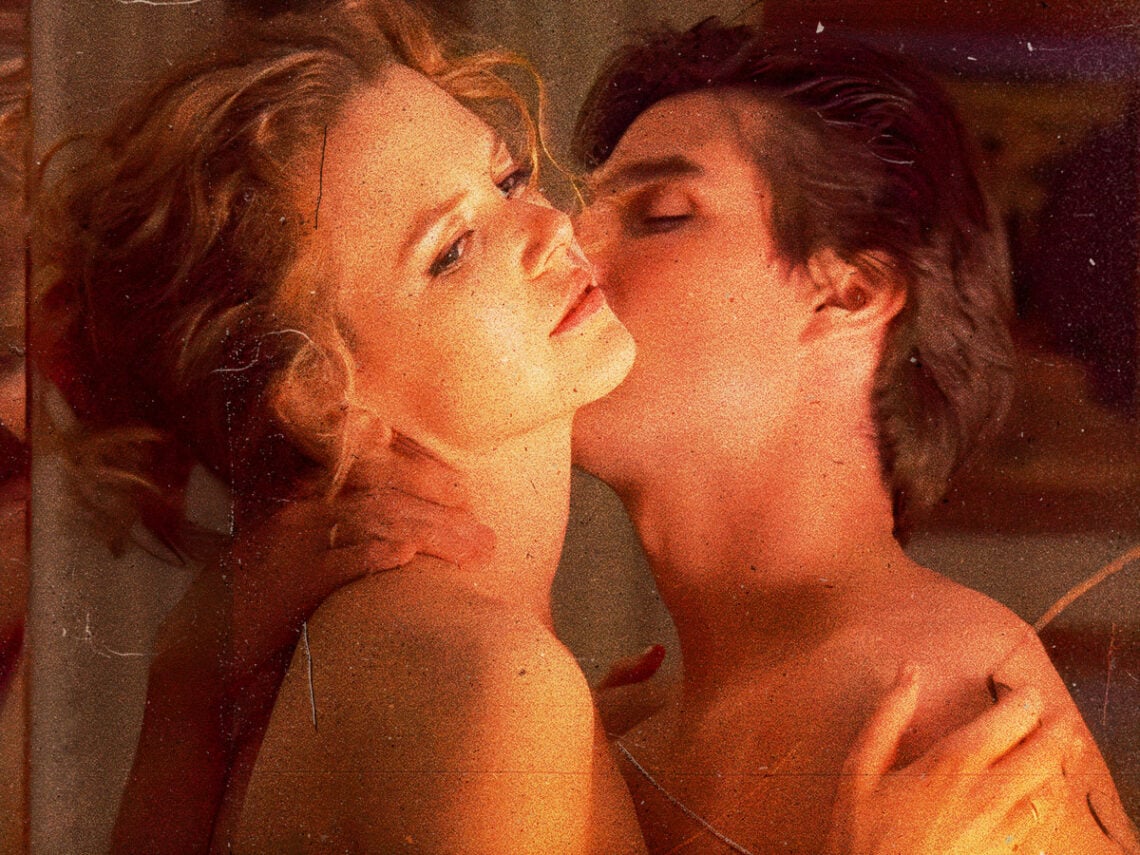
As Kubrick’s career came to an end, he made a damning erotic drama about secret elite sex cults starring Tom Cruise and Nicole Kidman. Male notions of female sexuality are cleverly questioned here, and Kidman gives a seductive and compelling performance as Alice, who is as independently-minded as her husband, Bill. Eyes Wide Shut is a complex foray into gender and sexuality, and it is important to consider how disgusting and criminal most of the men are in the film, something the auteur openly condemns. Kubrick breaks down a world that is corrupt and flawed, which, in turn, reveals an uneasiness between men and women, although one that is fascinating to analyse.
So, while Kubrick wasn’t exactly a feminist filmmaker, that wasn’t his modus operandi. He was much more concerned with wider themes of humanity, power, corruption and evil to make the intricacies between men and women the main focus of most of his work. His ability to write autonomous or notable female characters was certainly a skill that Kubrick lacked and something we can rightly criticise him for. However, we can hardly argue that Kubrick particularly championed any notion of masculinity he placed in front of us, either.
Rather, every man in his films is depicted as weak, succumbing to a greed for power or a false sense of understanding about the world. Thus, despite his world being an androcentric one, it seems intrinsically critical, whether consciously or not, of the power held by the patriarchy – even if Kubrick was more concerned with how its structure affects men rather than women. You can still be a feminist and love Kubrick’s movies. It is just regrettable that the filmmaker didn’t see the roles of women as equally important in his cinematic constructions of the world.
