


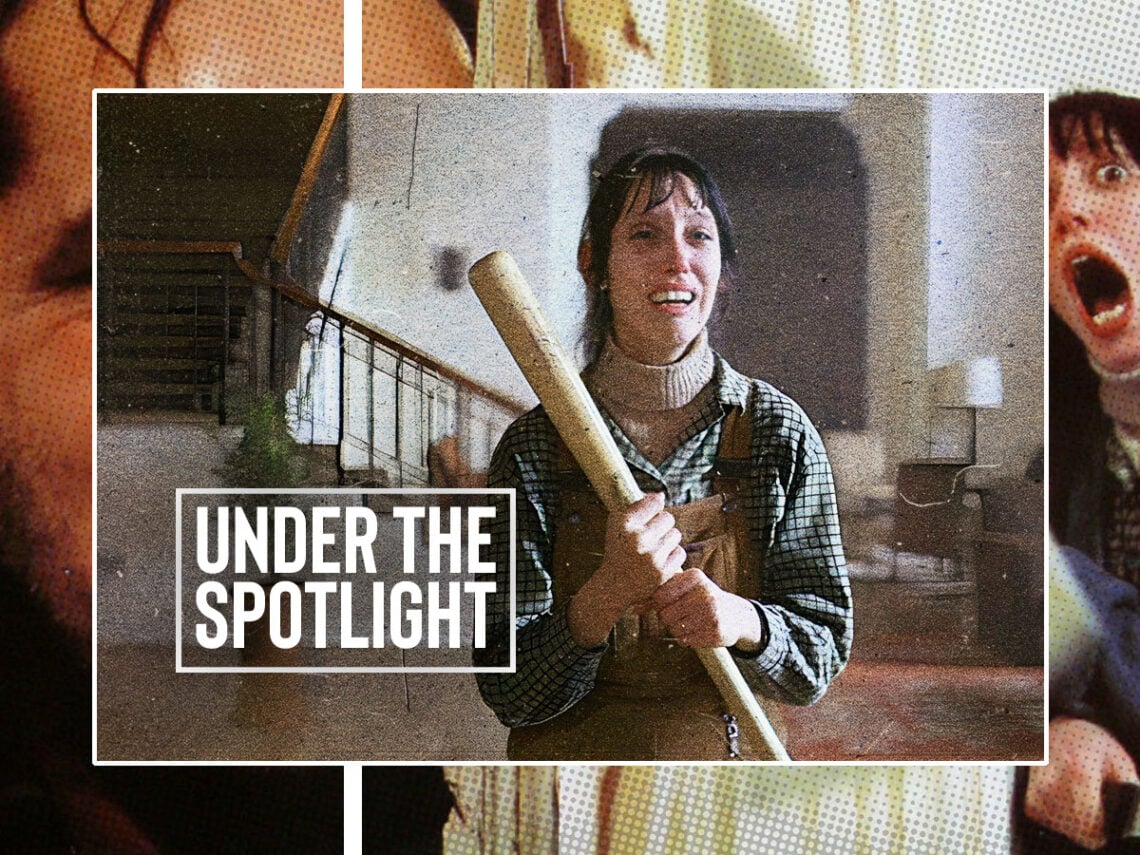
Under the Spotlight: Shelley Duvall’s complex performance in ‘The Shining’

Horror boomed in the 1970s, with movies like Halloween, The Texas Chainsaw Massacre and Suspiria altering the landscape of the genre. With the success of Brian De Palma’s 1977 supernatural movie Carrie, based on the book by Stephen King, it wasn’t long before other directors looked towards the horror writer’s oeuvre for source material.
After completing the moderately received Barry Lyndon, a lengthy, decadent period drama, Stanley Kubrick knew he needed to make something financially successful. Due to the booming horror craze, Kubrick decided to adapt King’s 1977 novel The Shining. The result was one of his most popular films – an odyssey through isolation, violence and family. With a stunningly unsettling score by Wendy Carlos and an elaborate set design, The Shining is now revered as one of the most beloved horror movies ever made.
The film stars Jack Nicholson as Jack Torrance, a troubled alcoholic writer who moves into the Overlook Hotel with his family. However, the house turns out to be incredibly haunted, affecting Jack’s condition, which rapidly deteriorates, much to the fear of his wife, Wendy, and psychic son, Danny.
While the movie is propelled by Nicholson’s terrifying performance – who can forget his delivery of “Here’s Johnny!” – Shelley Duvall’s role as Wendy is just as vital. Unfortunately, Duvall, who rose to prominence in the 1970s after starring in several Robert Altman movies, was treated poorly on set by Kubrick. He worked her to the bone, forcing her to cry for 12 hours each day for months, leading her to describe the shoot as “almost unbearable.”
While it’s hard to separate the knowledge of Duvall’s disgusting on-set treatment from her performance, which conveys true exhaustion, fear, and hysteria – no doubt stemming from her filming experience – her portrayal of Wendy is phenomenal and deserves to be recognised for its brilliance. Since the film’s release, Duvall’s performance has been incredibly divisive, with some audiences believing her to be too over-the-top and emotional.
Yet it’s this intensity, this emotional instability, and occasionally exaggerated performance style that makes the character of Wendy so unforgettable. You are forced to confront a woman terrified for her life, reckoning with a view of her husband she’s tried to bury for a long time. Duvall’s wide eyes pierce deep into the viewer, leaving us unable to avoid her penetrating gaze as she navigates a world of abuse and fear.
Duvall plays Wendy with sensitivity, allowing her to express many emotions throughout the film. Contrary to many audience’s beliefs, Wendy is not just a hysterical mess. Instead, Duvall gives Wendy much more nuance, highlighting her attentiveness and caring nature. She depicts Wendy as a woman who has been through abuse and stress, with subtle movements, like her uneasy grasp of a cigarette or her hesitancy to discuss her husband’s violent behaviour, painting the picture of someone emotionally drained and traumatised.
Still, Duvall gives Wendy multiple dimensions, proving that abuse victims aren’t simply timid and submissive. While Wendy has moments of exclusively screaming and crying, she is also headstrong and determined to save herself and Danny. Although her character is considerably less defiant than in the book – one of King’s main criticisms of the movie – Duvall still does an excellent job of depicting an emotionally complex woman who will do whatever she can to escape her husband’s violence.
The backlash Duvall received from many audiences – she even found herself nominated for a Golden Raspberry Award – is a symptom of a widespread misunderstanding of abuse and trauma. Yes, Wendy cries a lot, but her intense emotions are entirely justifiable in her extreme circumstance. Some viewers seem to cast a misogynistic gaze over Wendy, finding her reaction to life-threatening violence overly dramatic. It appears that even in moments of unthinkable terror, women can still be criticised for being hysterical and ‘too emotional’.
Duvall portrays Wendy’s fear with such conviction and humanity that it’s hard to understand why anyone could argue against her performance. She embodies genuine terror as Nicholson swings his axe through the bathroom door, no longer her recovering husband but a murderous villain. Duvall’s performance is one of the movie’s most unforgettable assets, yet she is rarely afforded the credit she deserves for acting as the beating heart of The Shining.
