


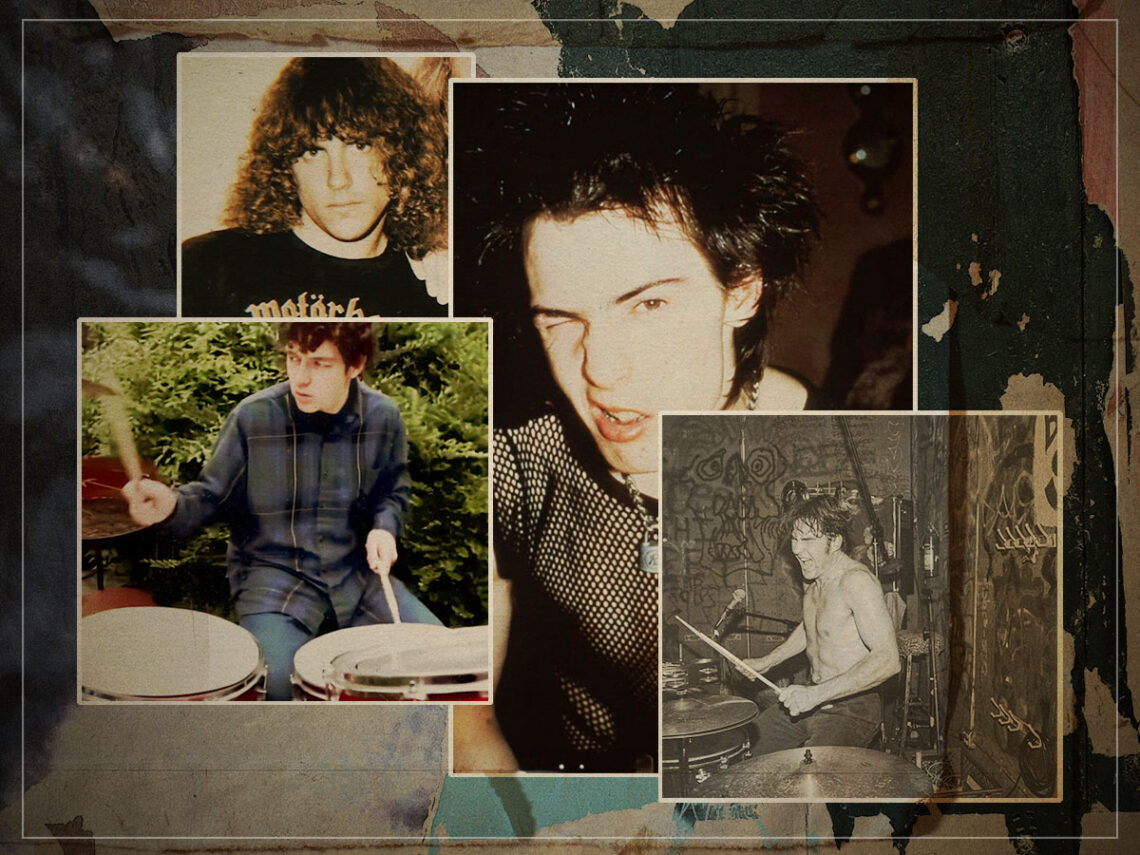
10 members who weren’t good enough for classic rock bands

Rock and roll outfits never boil down to one person. Even if Tom Petty is the star frontman leading the Heartbreakers, there’s a good chance he would have never made it out of the bar scene unless he had the power of artists like Mike Campbell and Benmont Tench behind him. Any band is as strong as its weakest link, and judging by how bands like Fleetwood Mac struggled, it was clear that some of the members weren’t cutting it after a few too many years with the group.
Then again, it’s hard for anyone to forcibly kick someone out of their band. It might come down to someone not gelling properly or not having the stamina to commit to the massive touring cycle expected out of any other blockbuster rock and roll outfit, but there are many other times when the rest of the band starts to question whether or not they could carry on with those few kinks in the armour after a while.
At the same time, it’s easier not to see a band operating at full capacity when you see the key member taken out. Since most people know their favourite acts from their classic period, it can be disorientating trying to look at them in their early days, usually trying their best with one person who was either not pulling their weight or kept certain parts of their practice routine on the back burner.
Whereas most people like the identity of personalities clashing and people leaving with their middle fingers aloft, not everything is that black and white. Sometimes, the biggest names in music simply need to cut out the fat, and as well-meaning as some of these musicians were, they were no match for when the right person was brought in behind their respective instruments.
10 members that weren’t good enough for classic bands
John Rutsey – Rush

Anyone working in a progressive rock band needs to be on top of their game to maintain even a steady gig. This was a genre meant for the best of the best, and merely being a serviceable musician wasn’t going to cut it when the goal was to push rock music forward at every turn. That’s not exactly what John Rutsey signed up for when Rush got together, but circumstances made sure that Neil Peart got the drum throne after him.
Since Rutsey approached rock from a pure blues rock perspective, his days were already numbered when Geddy Lee and Alex Lifeson started warming up to bands like Yes and Genesis. And while they would have most likely gone on this major tug of war between different genres for the rest of their days, Rutsey’s incompetence came more from his health concerns than anything having to do with his drumming. Because if they kept him on the road while battling juvenile diabetes, there’s a good chance he would have been dead before they got off the ground.
Although Rutsey’s departure meant that Rush was losing a part of their innocence, there was no way that they were going to slow down for a second. The whole point behind their music was about dreaming bigger, and when they got one of the greatest drummers of all time in their ranks, there was no limit to where their music could go.
Al Sobrante – Green Day

One of the biggest hurdles in any rock band is determination. As much as people like the idea of the band of brothers going on forever, things start to crumble the minute that you start to realise that one of your best friends doesn’t have the same drive as the rest of the band. And while Green Day already had the passion for music that would carry them through their entire career, Al Sobrante knew that he would never get anywhere with his drumming style in the group.
Despite Billie Joe Armstrong’s songwriting already being fantastic on those early demos, it was clear that Sobrante never fully clicked with the group. He was already dealing with being the band’s manager for a while, but when sitting behind the kit, his drum rolls and general sense of timing tended to fluctuate half the time, never fully locking in with Mike Dirnt and being a little bit clumsy getting out of the more intense sections.
But Green Day isn’t a cakewalk, either, and even Tre Cool remembered having some trouble settling into his groove before learning to play the song rather than his instrument. The band’s stomping grounds always emphasised the punk rock credibility above anything else, but one of the cardinal rules of any good musician is to play what suits the song and not let the intensity get in the way of anything.
Mark Wakefield – Linkin Park

The entire story of Linkin Park is the ultimate tale of perseverance. The whole point behind their music was doing things on their own terms, and after getting turned down by every single record label that came their way, the band formerly known as Xero was going to need some drastic change if they were going to get noticed. Unfortunately for Mark Wakefield, though, that meant they had to cut some of the fat from the group and get one of the greatest singers of their generation in the mix.
Most of Xero’s demos sound perfectly fine as rap-rock tunes, but Chester Bennington’s scream was always what they were missing. Despite being cut from the same cloth as grunge bands around the same time, Bennington had the precision and grit in his voice that Wakefield didn’t, almost sounding like his voice was filtered through a Marshall stack whenever he entered his screaming register.
And to Bennington’s credit, he managed to stick by his band through everything, even telling the label to go to hell when they tried to convince him to ditch the rest of the group and make him the centre of attention. Wakefield might not have had the same amount of vocal stamina, but if all we had to go on was a thinly-sung version of something like ‘Crawling’, an entire generation of nu-metal kids would have never been born.
Jimmy Crespo – Aerosmith

The entire appeal of Aerosmith is all about the chemistry between Steven Tyler and Joe Perry. Although the rest of the band can’t be discounted for a second, Tyler and Perry gave the world the American equivalent of Mick Jagger and Keith Richards, with Perry having an uncanny ability to turn any blues lick intot he perfect bed for Tyler’s screams. So when he left halfway through a tour, one of Tyler’s biggest fumbles was thinking that he could shrug off one of the best guitarists in the world.
Even though Jimmy Crespo fit right in and played all the riffs that he was supposed to, it’s easy to look at any music video they made around that time to see when things went wrong. Tyler was still his charismatic self throughout every song, but whenever he puts his arm around Crespo and pretends to be buddy-buddy, you start to realise that something is incredibly off, which doesn’t help when tunes like ‘Lightning Strikes’ doesn’t have the same staying power as ‘Movin’ Out’, never mind a ‘Walk This Way’.
Considering Tyler ended up getting back together with Perry a few years later, it looks like even he wants to forget about this wilderness period. Because whenever one of the videos ends up appearing out in the wild, Tyler appears like a jilted lover that realised that he lost the musical love of his life. He could try to mask the pain all he wanted, but a Perry-less Aerosmith was never going to get anywhere.
Tony McCarroll – Oasis

Oasis never emphasised being one of the sturdiest rock acts in the world. The volatility between the Gallagher brothers was always going to put the band on shaky ground, but that meant that everyone else would have to play to the best of their ability to offset everything. Bonehead may have played the rhythm right up the middle, and Guigsy could anchor the entire group live, but Tony McCarroll seemed to have more than a simple personality crisis during the Definitely Maybe era.
As much as people love the punky thrash happening on their debut, most of McCarroll’s drum rolls were too chaotic for Noel’s liking. The entire point behind a good rock and roll band is building the drums out first, and when every song starts with the drummer trying and failing to keep in time, Noel gets the wheels turning in his head for sacking McCarroll. And listening to the original takes of ‘Cigarettes and Alcohol’, hearing them go out of time before it got covered up by hiss from Owen Morris, was the best way of covering up that kind of mistake.
McCarroll has sworn up and down that he could have kept the ship going had he had the chance to prove himself to the rest of the group, but the transition from their debut to What’s the Story Morning Glory is like night and day in terms of drumming. It might have hurt seeing Alan White fit in so snuggly after the fact, but compared to the simplistic drumming of ‘Supersonic’, the idea of that same person pulling off something like ‘Don’t Look Back In Anger’ may have been impossible.
Sid Vicious – Sex Pistols

Punk is not a genre that emphasises being a musical god. The whole point of the movement was to take people down a couple of notches, and even icons like Joe Strummer knew that he was better off letting Mick Jones cover all the guitar parts on the first Clash albums than cower to what a producer wanted him to do. But you still needed to have some degree of finesse, and that wasn’t the kind of advice that Sid Vicious wanted to hear.
Although John Lydon was far from Freddie Mercury in the vocal department, his voice at least suited the songs he was singing. For Vicious, he was far too screwed up to even track a proper recording in the studio, usually wearing his guitar and making it look like a prop half the time he was onstage while he tried to be the coolest person in the room with his spiky hair and torn-up torso.
That was enough for the punk rock masses, but considering how quickly he was lost to history, Vicious’s tale is the story of someone who got into the music business for the wrong reasons. He might be looked at like the punk rock incarnation of James Dean half the time, but whereas Dean himself had some solid acting chops behind him, Vicious was the definition of style over substance half the time.
Ron McGoveney – Metallica

No one expected a band like Metallica to become one of the biggest names in music. When they started, metal was barely a mainstream force, and if it did enter the charts at all, it certainly wasn’t going to be from a bunch of people from San Francisco trying to live out their Judas Priest and Venom fantasies. But compared to every other piece of the thrash icons’ story, Ron McGovney feels like a foothold right before the band started to take themselves seriously.
If Lars Ulrich and James Hetfield were locked in from the very beginning, McGovney was always an honourary member of the group half the time. He would put the money when he could and even play the odd cool bass groove, but he was never dyed in the wool like the rest of them, which probably explains why he was booted the minute that Cliff Burton became interested in them.
And since McGovney was out of the picture, Burton transformed every one of their songs, taking the basis of his predecessor’s simple bass lines and approaching each song like a lead guitarist would half the time. Which is strange, because in many respects, McGovney was the only bassist the band had for the first few years of their career. Once they had Burton in their ranks, they had two guitarists and a lead guitarist that happened to play a guitar with four strings.
Jason Everman – Nirvana/Soundgarden

There’s always more that gets someone booted out of a band than simply not playing their gig right. Sometimes, the biggest hangups can mount up after a while, and the little microaggressions about one member not pulling their weight can get more than a little bit frustrating when everyone else wants to be rock stars. However, for Jason Everman, wanting to be a rockstar is one of the reasons why he ended up not clicking with anyone in the Seattle scene for a while.
Because rule number one of the grunge movement was no one was looking for that kind of success. They may have wanted fame and fortune in their dreams, but certainly none of them wanted it to happen as quickly as it did, but before Nirvana met the big time, they ousted Everman for his rockstar personality, which is a low blow considering he put up the money to finance their debut album Bleach.
He may have had a second shot at rock and roll history by joining Soundgarden, but personality clashes would be another reason why they ousted him, eventually getting Ben Shepherd when working on records like Badmotorfinger. Even though many people would count themselves lucky for being in two of the greatest rock and roll bands of the 1990s, there’s a certain amount of resentment and therapy one would need to go through if they realised they were turned down a shot at rock and roll history twice.
Bekka Bramlett – Fleetwood Mac

There are usually a few artists that come out every generation that can seem irreplaceable. The Beatles were never going to get back together with a new guy being one of their replacements, and it was completely understandable why a band like Led Zeppelin decided to call it a day the minute that John Bonham died. Stevie Nicks certainly fit that description of an impossible talent, but Fleetwood Mac’s decision to keep trucking led to one of the biggest downsides any band made within the span of one album.
Behind the Mask may have been far from Rumours levels of quality, but if Lindsey Buckingham had them in unstable territory, bringing in Bekka Bramlett on Time resulted in some of the most milquetoast music of their career. If the blues purists were pissed that they went towards pop music in the 1970s, they would have probably dry-heaved listening to this album, complete with the kind of faux-pop country songs that would have been thrown out of any store that sported Garth Brooks and Shania Twain albums.
Then again, as much as the album tarnishes the legacy of Fleetwood Mac in some ways, there’s no real way to hold that against Bramlett herself. There was no conceivable way that any woman would have been able to step into ‘The Gold Dust Woman’s shoes, and while she gave it her best shot, one can only do so much when they have so little to work with amongst their bandmates.
Stu Sutcliffe – The Beatles

Anyone even remotely associated with The Beatles’ early years would have been kicking themselves for years about what their friends ended up accomplishing. Here was one of the biggest rock bands in the world that would go on to shape the whole concept of popular music, so the idea of being one of the people who either turned them down or were asked to leave couldn’t have been easy to get over. Although Pete Best might be known as one of the biggest missed opportunities in rock and roll history, Stu Sutcliffe is much more appropriate for a list like this.
After all, there wasn’t anything inherently wrong with what Sutcliffe was doing. He was one of the coolest members of the band and even adopted the cool haircut that would come to define them, but he couldn’t play a note to save his ass, which isn’t a trait that you should be looking for when going professional. In fact, the band noticed his incompetence enough to tell him to turn his back to the audience when he played his instrument so they wouldn’t see how inaccurate he was behind his instrument.
Even if Sutcliffe left on good terms with John Lennon, relinquishing bass duties to Paul McCartney gave the world one of the most inventive musicians of the 1960s when he started developing new melodic lines on albums like Rubber Soul and Sgt Peppers. Despite Sutcliffe eventually passing away far too young from a brain injury, he was far from a footnote for any of the band. He was an artist in the purest sense of the word, and his inventiveness is probably what guided Lennon towards different musical possibilities.

Never Miss A Beat
The Far Out Beatles Newsletter
All the latest stories about The Beatles from the independent voice of culture.
Straight to your inbox.