


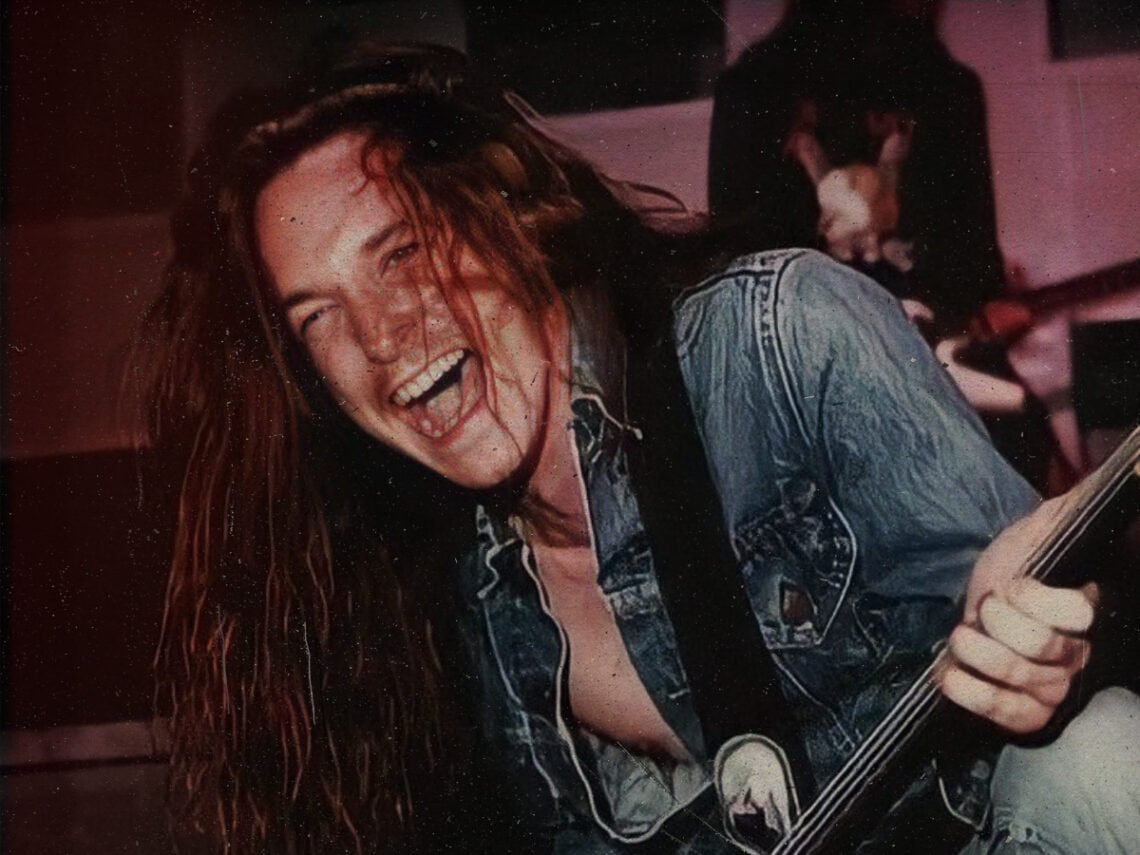
Cliff Burton’s 10 best bass performances for Metallica

The classic era of Metallica always circles back to James Hetfield. Although Lars Ulrich and Kirk Hammett added their flair at the beginning of the band, Hetfield was the riff master, pumping out one classic lick after another and having superhuman downstrokes. However, every band is only as good as their secret weapon, and Metallica’s weapon was Cliff Burton.
From their first album onward, Burton was always the most eclectic member of the band, tying the low end together with some of the most intense bass performances of the thrash scene. Then again, thrash was only one musical influence that he drew from.
Across Metallica’s classic thrash catalogue, Burton was a student of all kinds of music, incorporating elements from classic rock, prog, and even classical music into some of the band’s greatest compositions. While every Metallica song on albums like Master of Puppets held together as a thrash classic, Burton always brought a sense of musicality to Hetfield’s menacing licks.
While a bus accident in 1986 brought Burton’s life to a close, his legacy lives on in every bass player that followed him, from Jason Newsted to Robert Trujillo. In honour of Burton’s birthday, these are the songs that proved he could do with four strings what most musicians couldn’t do with six.
10 best Cliff Burton bass performances
10. ‘Creeping Death’ – Ride the Lightning
Metallica were never the type of group to sing about the underworld. For as many metal classics they have made over the years, only a handful of them actually had to deal with the devil, sticking instead to writing songs about war and current events. And if ‘Creeping Death’ is any indication, why write about Satan when you can write about the carnage of the Bible?
Although Hetfield came up with the main guitar figure for ‘Creeping Death’, Burton’s personality is on full display across the song, from the little high-octave figure to matching the guitar note for note during the verses. There are even a few times when Burton plays with the melody, and he isn’t afraid to go into full bass chords when the chorus kicks in.
The most important element of Burton’s playing is harmony, and the Iron Maiden-esque harmony towards the end of the track was written by him, having to show the rest of the band how to play it on guitar. Since the writing credits fall on Hetfield, Ulrich, and Burton, as well as a kickass lead from Hammett, this might be the definitive Metallica song of their early years.
9. ‘Fade to Black’ – Ride the Lightning
The topic of Metallica’s ballads has sent a shiver down many metalheads’ spines. As much as they are the kings of thrash metal, breaking out the acoustic guitars for ‘Fade to Black’ was definitely a bold move when they were getting started. Although Burton worked great at full blast, his ability to support this song is fantastic.
While the majority of the song revolves around an acoustic guitar, Burton’s playing in the first verse is really understated, sticking to the root notes most of the time with a little crunch behind everything. Even when playing a simple ballad, Burton knows how to improvise, playing little bass licks as if he were playing a lead guitar.
Once the outro begins and the heavy guitars come back in, we are back into status-quo territory, as Burton hits a massive bass chord before filling in underneath Hetfield’s harmony guitars. By the time the guitar solo kicks in, Burton is laying down a rapid-fire gallop that leads us to the end of the song. Steve Harris would have been proud.
8. ‘The Four Horsemen’ – Kill Em All
Every band gets cut a little bit of slack for their first album. Even though Metallica were still working out the bugs of their sound, they were hungry as hell on Kill Em All, making songs that hit like sledgehammers. Although ‘The Four Horsemen’ was the first lengthy cut of their career, it’s Burton’s bass playing that keeps it interesting.
While the whole song starts with a galloping rhythm, Burton’s tone is piercing, almost sounding like a detuned guitar in some sections of the song. Once the band gets into the laid-back bridge, Burton starts improvising, climbing up the neck for one of his licks and then jumping up the octave on the next run-through.
And while Hetfield’s licks lead the charge, the descending figure that connects each section together. Burton might not have been the leader of the group, but when you can play stuff like this, you can let the music do the talking.
7. ‘No Remorse’ – Kill Em All
The surviving members of Metallica have always praised Burton’s work since the beginning. Thanks to his knowledge of music theory, Hetfield admitted that Metallica wouldn’t have existed without Burton’s influence. And that influence began towards the end of this song.
Compared to the rest of Kill Em All, ‘No Remorse’ originally seems by the numbers, having a groove indicative of the New Wave of British Heavy Metal. When everything drops out to just guitars, Burton uses his bass to harmonise with the rest of the band, bringing an almost orchestral slant to their metal credentials.
After teaching the rest of the band how to work with harmony, it wasn’t long before Hetfield started making harmony licks of his own, like the breakdown section of ‘Master of Puppets’. Burton might have joined the band in a support role, but without his performance on this song, the whole track would have collapsed.
6. ‘Damage Inc.’ – Master of Puppets
After going through one of the best albums in thrash metal history, ‘Damage Inc.’ is the last track to tie everything together. Across the album have been songs about the horrors of life set at breakneck speeds, so the first thing you hear when you turn on this track is… strings?
Not necessarily. The intro of ‘Damage’ is made up of different bass tracks played backwards by Burton, creating a minisymphony before the rest of the track kicks in. Though Burton was nervous that he had ripped it off from a Bach chorale, it’s easy to mistake the phrasing of the notes as something ripped out of the baroque period.
The metalheads didn’t have to wait too long for the song to kick in, going for broke from the minute the guitars and letting Burton share his love of punk rock towards the end of the track. In just five minutes, Burton goes through all of his influences, adding a bit of Beethoven and chasing it with the spirit of the Ramones.
5. ‘Master of Puppets’ – Master of Puppets
The title track of Metallica’s definitive piece of work had to knab a spot on Burton’s best performances. Although Burton turns in a fine job supporting Hetfield’s riffs, he wore one of his influences on his sleeve when he threw in his own riff.
Right at the end of the guitar solo, the band go into a rapid-fire lick that keeps you on the edge of your seat as you’re listening. While the scale runs sound like something out of classical music, Burton actually nicked the riff from David Bowie’s ‘Andy Warhol’, which had been in heavy rotation while the band were making the album.
Though glam rock and thrash metal don’t mix that often, this is a perfect fit, keeping the energy going throughout the song and being slightly offbeat, so you’re never quite sure where the beat is. Burton’s heart may have been in thrash metal, but it’s more fun to pick from different influences when you can.
4. ‘Fight Fire With Fire’ – Ride the Lightning
In the world of thrash, there was no one who could compete with James Hetfield. Although Burton played with fingers, there was no way to keep up with Hetfield’s relentless downpicking, which could give other guitar players tendonitis. When it came time to show off, Burton held his own on the opening of Ride the Lightning.
Opening up with a play of another Bach piece played on classical guitar, the song shifts on a dime into one of the fastest Metallica songs committed to tape. Regardless of Hetfield’s performance, Burton is tearing up his bass, never sounding fatigued and holding down the tempo even when Ulrich starts to speed up.
This adrenaline rush ends the only way that it could, with the sound of an explosion towards the end of the song. It might have been a way to depict the world descending into chaos, but it’s entirely possible that the amps they were using gave out because of how intense Burton’s performance was.
3. ‘The Call of Ktulu’ – Ride the Lightning
One of the best Metallica instrumentals committed to tape didn’t even feature a majority of Metallica. Though ‘The Call of Ktulu’ closes out the band’s second album, Ride the Lightning, the song is based on sketches that were lying around from when Dave Mustaine was still in the band. Even with someone else’s work, Burton knew how to make the song his own.
Without any lyrics, Burton makes this depiction of Ktulu feel like a journey on tape, filling in the middle sections with different bass breaks. This is one of the first times where Burton feels like the lead instrumentalist of the band, including a few sections where he uses tapping on his bass to create some added chaos.
The most epic part of this tune isn’t even about the notes. When the band reaches the final breakdown, Burton starts bending the strings on his bass, simulating the mythical beast rising from the sea and laying waste to humanity. The riffs may have come out of Mustaine, but the lead lines from Burton have a life of their own.
2. ‘Anesthesia (Pulling Teeth)’ – Kill Em All
When Hetfield and Ulrich first saw Burton play in Los Angeles, there was no question that they were going to get him in their band. Although the band presented themselves as a gang onstage, Burton could have easily carried the entire show with just his bass on a song like ‘Anesthesia’.
Recorded in one take, this was Burton’s unofficial welcome into the band. Since most of the songs had already been written, Burton was left with an entire track to shred a bass solo. He doesn’t waste a single note either, going from different classical arpeggios to going back into heavy metal mayhem once Ulrich’s drums come screaming back in.
Burton does save the best moment for last, playing two hand tapping on the neck of his bass to get different harmonics. Metal fans would expect this kind of playing out of Eddie Van Halen, but Burton was a different breed with just a bass guitar.
1. ‘Orion’ – Master of Puppets
Everything that Burton touched music-wise was always informed by classical music. Where most metal fans worshipped Tony Iommi, Burton’s main musical influence was always Bach, and he spent most of his time honing his craft with classical scales. Those would have to come in handy eventually, and ‘Orion’ was the first time Burton’s genius was on full display.
Though the original idea was to make this song a subsection of ‘Welcome Home (Sanitarium)’, it quickly became its own piece once Burton started adding different layers to it. Starting off with a simple bass lick, he started slowly adding different parts onto it before transferring his ideas over to guitar for Hetfield and Hammett.
Towards the mid-section of this song, it sounds like a classical piece that just happens to be played on heavy metal instruments. Once the heavy part does come back in, Burton’s bass solo begins, split up between two harmonised bass parts and weaving in and out of each other before coming back to the main groove. While Burton left his mark on every song he played in Metallica, this was the one song played at his funeral as his definitive musical statement.
