


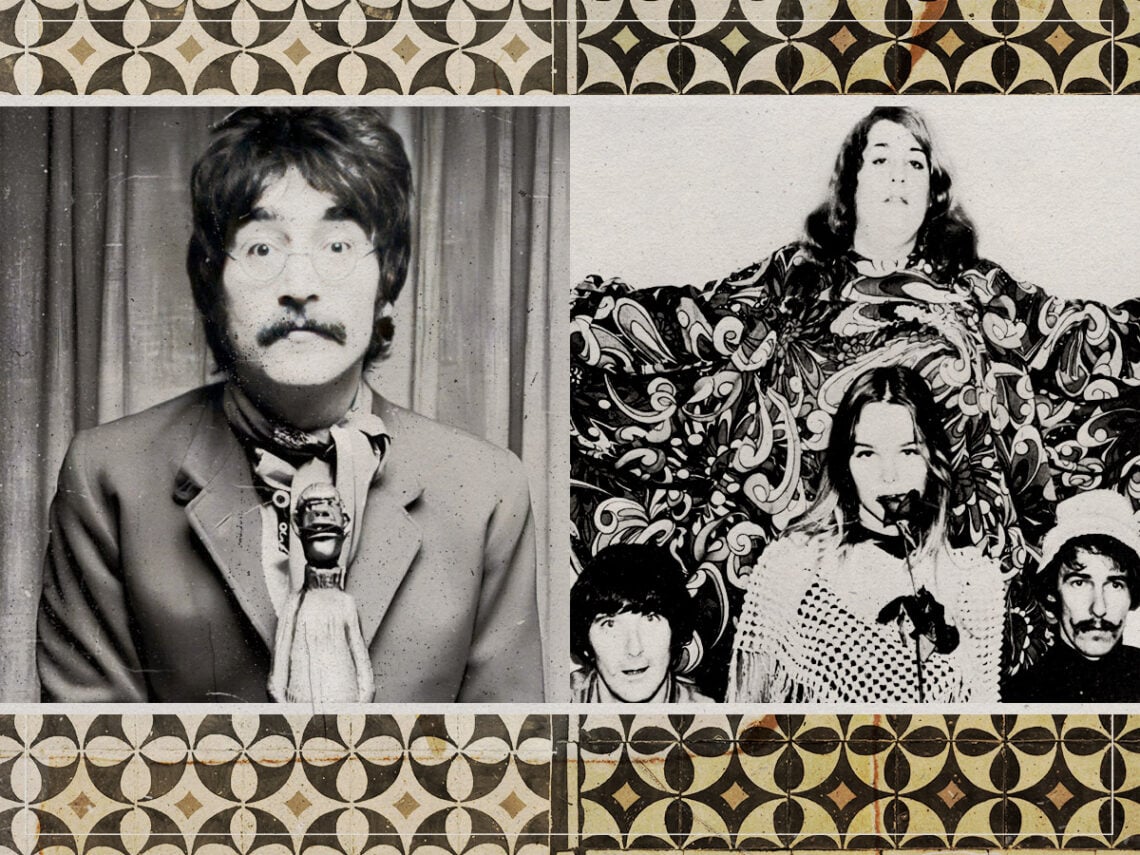
10 iconic bands that hated being in bands

Let’s cut to the chase: some of the best bands in music history have been the ones that were vicious towards one another in some form. There is absolutely no excuse for toxic behaviour, but something about how disdain and even hatred manifest seems like a vital ingredient in creating world-class music. Musicians can and have crafted incredibly groundbreaking music without such red emotions, but it’s interesting to look back at the ones who managed to strike gold while butting heads.
The bands in question, like Fleetwood Mac, The Beatles, and so on, either possessed such high-intensity artistry that internal feuds couldn’t even touch the quality of the musical output or the irreparable conflict was a necessary part of the machine. Either way, the temperamental dynamics say a lot about the concept of teams in music. Are they really necessary to hit the big time?
According to the success of various players, no, they are not. However, asking them this question would likely dredge up a can of worms as they attempt to decipher the downfalls of their past and side-step the influence of external factors like drug and alcohol use. As listeners, we often appreciate the music through a distant lens, unable to connect with the raucous behaviour behind the scenes. However, connecting the sounds with the dynamics is usually tricky, particularly when the music is upbeat and hopeful while the relationships are hanging on by a thread.
Many of these acts went on to be soloists, enjoying their newfound freedom and ability to chase their own direction without any accompanying hindrance. However, others were just happy to have exited a situation they knew no longer served them. Whatever the reason, each of those selected for this list created unfathomably great music which changed the landscape forever.
Bands who hated being in bands:
10. The Supremes
Although The Supremes seemed an outfit as good as any when they formed in 1958, various shifts in dynamics and the introduction of marketing set them on the wrong path. The group was founded by Florence Ballard, who invited her friends, Mary Wilson and Diana Ross, to join. They signed with Motown and found mentorship in Smokey Robinson at the dawn of the 1960s, taking turns singing the lead and enjoying a taste of success.
Everything changed, however, when Berry Gordy started tampering with the pawns, making Ross the lead singer and demoting Ballard and Wilson to backing vocals. He completed this transition after changing their name from The Supremes to Diana Ross and The Supremes, which likely contributed to Ballard’s declining mental health and reliance on alcohol as a coping mechanism.
Things took a turn for the worse when Gordy took different singers on tour without Ballard’s knowledge, prompting her to quit the group and start a solo career. It’s safe to say that her experience being in a band largely centred around the pitfalls of Motown’s quintessential ’60s campaigns to appeal to mass audiences with little regard for the feelings of the band members.
Ross, on the other hand, suffered a different experience within The Supremes. Although she was considered Gordy’s favourite due to her talent, she often felt she was treated badly by the other band members, which led to her feeling alienated and “talked about behind my back when my back wasn’t even turned.” Conflicts within the band and the struggle to cope with personal issues eventually led to Ross pursuing a solo career.
9. The Smiths
The combined efforts of Morrissey, Johnny Marr, Mike Joyce, and Andy Rourke seemed to work remarkably well, considering the immensely different personalities of each member. Across their five-year career, The Smiths delivered some of the greatest music in history. However, a lack of a proper manager and Morrissey’s issue with Marr working with other artists, among other reasons, eventually led to disagreements that blocked the band from ever moving forward.
With the benefit of hindsight, the partnership of Morrissey and Marr seems like a match made in hell. Marr enjoyed approaching music with open-mindedness, embellishing the possibilities of future-gazing and broadening his horizons when it came to musical boundaries. Morrissey, on the other hand, was…Morrissey. Not only did Marr disagree with the singer’s rigid approach, but his fixation with 1950s and 1960s music eventually rubbed him up the wrong way.
“That was the last straw, really,” Marr said in 1992, discussing Morrissey’s desire to cover Cilla Black. Although he also told Rolling Stone that “the differences in personalities are what often make for interesting chemistry,” he also said that those differences stalled “forward motion”, and his clashing with Morrissey was a significant contribution to their dissolution.
8. The Mamas and The Papas
Although they were only together for just over two years, The Mamas and The Papas counted the days until they would be able to leave the band. Contractual obligations meant that they needed to write one more album before they were free to do whatever they wanted, which almost seemed impossible, considering the internal conflicts going on behind the scenes.
According to Michelle Phillips, the last few days of The Mamas and The Papas were “endless” because all that each of them wanted was to exit the band. “Everybody wanted out,” she told Goldmine. “But we owed albums to Dunhill, and then Dunhill was sold to ABC, and then we owed albums to ABC. It was horrible because all we wanted was to get away from each other.”
Although irreversible arguments and fall-outs marked the band’s personal experiences, they created some of the era’s most defining songs, achieving success despite existing amid the pinnacle of the Beatlemania phenomenon. Some might have faltered at the threat of the Fab Four’s everlasting trajectory, but The Mamas and The Papas sailed on.
7. The Smashing Pumpkins
Although Billy Corgan has long been the leader of The Smashing Pumpkins, it says a lot that when he attempted to reform the band, no one from the original line-up jumped at the chance to join him. Viewed by former band members and fans as a rigid, sometimes hostile figure, Corgan seemed to transform a promising young outfit into one filled with failed power dynamics, along with a certain sourness that would last a lifetime.
When he met James Iha, Corgan founded The Smashing Pumpkins, co-writing several of their earlier songs. Although Corgan would eventually become the sole songwriter, it was Iha’s guitar-playing prowess, along with original bassist D’arcy Wretzky, that would significantly contribute to the band’s enduring sound. However, the addition of Wretzky was a threat in Corgan’s eyes, as he believed her relationship with Iha was going to completely derail the band.
In response, Corgan attempted to control everything, which only made matters worse. According to Wretzky, Corgan would use someone as a scapegoat for months before turning his focus onto someone else. This caused a strange atmosphere, where everybody felt as though they needed to mirror his mood, or he would become angry.
“Billy loved to humiliate people and shame people in front of other people. It was incredibly abusive, and I was the only one who would fight back,” Wretzky explained. She ultimately quit the group, but her bitterness towards the frontman remained.
6. The Everly Brothers
Everything seemed perfect between The Everly Brothers until they returned from the Marine Corps Reserve. Their smooth sailing relationship suddenly changed following a new reliance on amphetamines, which saw brothers Don and Phil begin to consistently fight without being able to rectify things. Some say sibling conflict is normal and necessary, but the rift between the two Everly brothers seemed to be damaged beyond repair.
In fact, in 1973, Don told a reporter that he “was tired of being an Everly Brother”, which caused Phil to smash his guitar on stage in a burst of anger. After Phil died in 2014, Don shed fresh light on their dynamics, saying that, while they seemed to get along fine in the early days, they had actually struggled throughout their career due to clashing political views.
After Phil destroyed his guitar, Don continued the show solo the next night, telling the audience that “The Everly Brothers died ten years ago.” Even though their solo careers would give rise to some of the industry’s most iconic music, like Warren Zevon’s ‘Werewolves of London’, they did not reunite musically for many years to come.
5. Metallica
Delving into Metallica‘s internal conflicts is probably best summarised in their 2004 documentary Some Kind Of Monster. As tensions were rising, Some Kind Of Monster documented the various ways in which the band’s relationships were suffering at the hands of creative differences, personal issues, and the pressures of fame.
Although Metallica’s tumultuous dynamics are well-documented, Some Kind of Monster did well to showcase the various personal struggles the band members were facing, which were having a destructive impact on the band’s creative process. Their therapy sessions, for instance, were incredibly raw and emotional, providing insight into the band’s inner workings.
Moreover, James Hetfield’s personal struggles, alcoholism and the decision to enter rehab caused a significant rift between the band members, who grew concerned over the completion of St. Anger. It’s clear from the footage that the band found great difficulty working together due to such immense differences both personally, professionally, and mentally, which became significant blockers throughout their entire career.
4. Van Halen
There were many things that sparked internal debates within Van Halen, but the one that likely caused the most turbulence among all its members was David Lee Roth’s approach to the band’s image. In his view, they needed to focus on how they were being perceived, which led him to once orchestrate a photoshoot depicting him standing in bondage-inspired attire.
In addition, Eddie Van Halen also dismissed bassist Michael Anthony, claiming that he had amateur skills and wasn’t that much of a singer. In a rather candid interview with Blabbermouth, he said: “Every note Mike ever played, I had to show him how to play.”
Continuing, he recalled: “Before we’d go on tour, he’d come over with a video camera, and I’d have to show him how to play all the parts.”
Moreover, it doesn’t seem like the musician felt particularly fond of Sammy Hagar, either. Feeling rather blindsided by his exit from the group, Hagger once recalled: “I was told that I quit by Eddie. The phone rings, and I’m laying there with my brand-new baby. He goes, ‘You know, you always just wanted to be a solo artist, so go ahead and be one. We’re going to get Dave back in the band’. And when he said that, I flew up out of bed like I’d seen a ghost.”
3. Fleetwood Mac
Whenever anyone discusses notorious band dynamics, Fleetwood Mac is almost always the first name to come up. After Lindsey Buckingham and Stevie Nicks joined the band, the dynamic would change to become more focused on various musical styles and elements, often driven by Nicks’ endearing poeticism and ethereal vocals.
Whenever the spotlight wasn’t on her, it was on Buckingham, whose rock ‘n’ roll edge harked back to an earlier version of the Mac, with less of the folk and blues influences and more aggression and melodic catchiness. However, among each of the members, there also existed various manifestations of anger, frustration, heartbreak, and trauma.
Amid the various arguments and walk-outs, however, the music only grew stronger. In fact, some argue that Fleetwood Mac, at their most fiery, produced the best music, as evidenced by the remarkable Rumours. The band has also acknowledged this, addressing the fact that their internal struggles often inspired them to engage in some of their best songwriting.
2. Oasis
In the realm of musical differences, the Gallagher brothers seemed to come from entirely different planets. While Noel often navigated the band’s musical style and sound, technicalities fell on Liam’s shoulders. Liam gained attention for his vocal contributions and increasingly notorious personal life. Considering the fact that the conflicts between the two would likely fill a book, it’s safe to say that an Oasis reunion is most likely never, ever on the cards.
The band’s meteoric rise to fame could be seen as a direct contradiction to their personal relationship. In what some might accurately describe as a toxic power play, Liam began to grow increasingly frustrated with the band’s changing direction and dynamics. This caused him to act out at Noel, who eventually decided that he had had enough.
The music is undeniably some of the best to have ever come out of the British indie revival, which ultimately says a lot about how much musicians are able to continue to create excellence during times when emotions are at their highest.
1. The Beatles
Although it is well-known that a major part of The Beatles‘ public breakdown was a result of Paul McCartney and John Lennon’s personal feud, many of the band members experienced their own struggles in the latter years that contributed to them wanting to pursue solo careers. Some feel that McCartney initiated the breakup, while Lennon solidified it with his relationship with Yoko Ono, but a mixture of interest conflicts seemed to point towards a more holistic fractured dynamic.
The focus on McCartney and Lennon as culprits in the band’s breakup often says less about their public feud and more about the eclipsed talents of Ringo Starr and George Harrison. While the two are often seen as passengers in the way that things played out, various interviews and reports that followed suggested that no one in that band wanted to be there anymore.
According to Harrison, there was a negative atmosphere that no one was able shake. Discussing their last moments, he told Musician Magazine, “I just got so fed up with the bad vibes,” adding, “I didn’t care if it was The Beatles. I was getting out.”
