


10 artists who will still sound ahead of their time in 100 years

In a world where chart success is made out to be more important than it actually is, we often forget the value of risk-taking innovation and longstanding cultural impact. Joni Mitchell and Bob Dylan are both names we’d call legendary in today’s music landscape, and yet neither of them did particularly well when it came to tangible commercial success.
When you think of artists like this, the ones who will truly be remembered in 100 years’ time, most of them are ones whose impact runs so deep it’s impossible to imagine music without them. Joan Baez, for instance, might not have had the most measurable success across her career, but she ultimately changed the entire game of folk music and blended societal protest into art.
In 100 years, it’s anyone’s guess who will still be remembered, much less those who will still sound ahead of their time. It’s hard to imagine what the world will be like then, especially trying to hazard a guess at which artists will still be discussed as much as they are today, and with the way that tech and AI are going, audiences might be swimming in more superficial content than they ever thought possible.
However, when we look at the landscape of past and present, there are certainly ones that stand out as real innovators who will still be as important in the years to come, if not more, and many of them will probably still sound way ahead of their time, proving their position as the ultimate timeless innovators.
Artists who will still sound ahead of their time in a century:
Björk

One of the first names that comes to mind when you think of innovative talent, Björk is a masterclass in everything it takes to experiment artistically while withstanding the test of time. She’s also second to none when it comes to many of the themes that will always be universally relevant in music.
For instance, in 100 years, people will probably still be endeared to art that explores the human connection to nature, maybe more, and they’ll also probably still be looking for music that reflects humans’ need to connect for survival, especially if the landscape is filled with even more invasive tech than it is now.
Even better, her attitude towards creativity is one that continuously evolves: rather than having her art be solely dictated by her shifting perceptions, she challenges the boundaries of art itself, often taking the road less travelled and coming up with sounds and structures that no one would have had the guts to try before.
Arctic Monkeys

This might be a fairly controversial entry, but there’s a reason why Arctic Monkeys make this list, and it’s simply that when the British indie resurgence of the 2000s was in full swing, they were the only band to truly capture the angst and anguish of an entire generation in a way that reignited the community feel of good, local music scenes.
Most of us know what it was like to be a kid and feel like the world is against us, and before Arctic Monkeys came along, it was hard to find an artist who made those chaotic, dirty dancefloor nightclubbing scenes feel a whole lot less lonely and a whole lot more iconic.
In 100 years time, the youth might not even know what it means to have one too many in a dingy Sheffield pub, but they will certainly know what it feels like to have a soundtrack to their own version of generational malaise and self-medicating to get by.
Depeche Mode
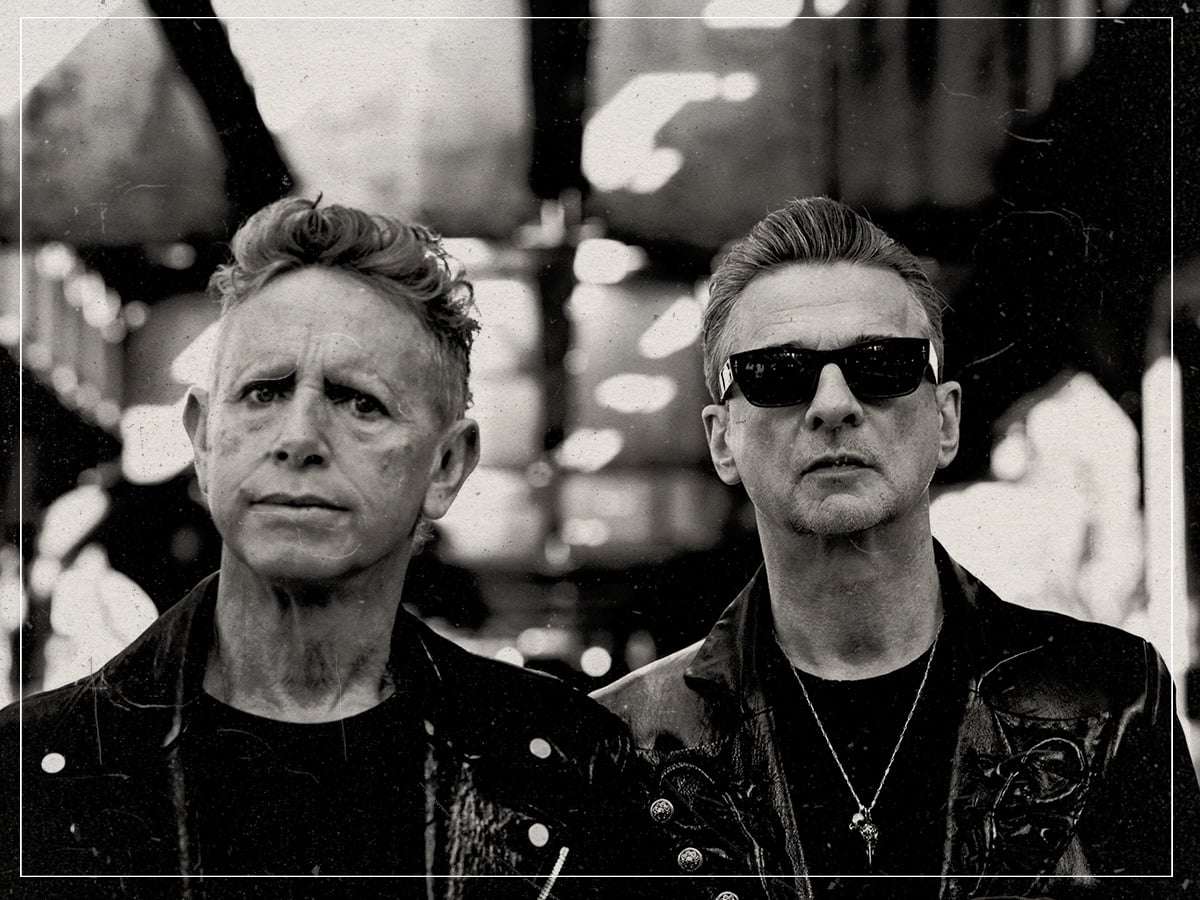
Before Depeche Mode, it was hard to think of anyone who managed to bring such experimental electronic sounds into mainstream, stadium-level spaces. Of course, a few managed to do it, but DM essentially reinvented everything it meant to bridge the gap between so-called niche styles and structures and absolutely smash it with global appeal.
Because of this, it’s also hard to imagine their sound ever not sounding ahead of its time, even when the world has moved on and no longer views things like industrial sounds as innovative, and even then, all their themes and the ways they convey such disillusionment and malaise in their sound will still be as relevant as ever.
The Cure

There are many reasons why The Cure will still be that band many, many years from now. Poetic wordsmith Robert Smith is not only a mastermind when it comes to blending all facets of human existence into music, but he’s also a sonic wizard who knows how to capture the cultural zeitgeist with specific dynamics and tensions without dating himself.
Once again, The Cure will no doubt still be an important name long after Smith’s reign is over, especially when you also take into account the ways the music always hooks into the different pillars of memory and experience, no matter how much the world around changes. It’s a theme that Smith addresses in ‘Switch’: “Every night my world gets quicker / And lighter and shorter / And tighter and slicker / And every night / My truth gets closer to dare”.
David Bowie
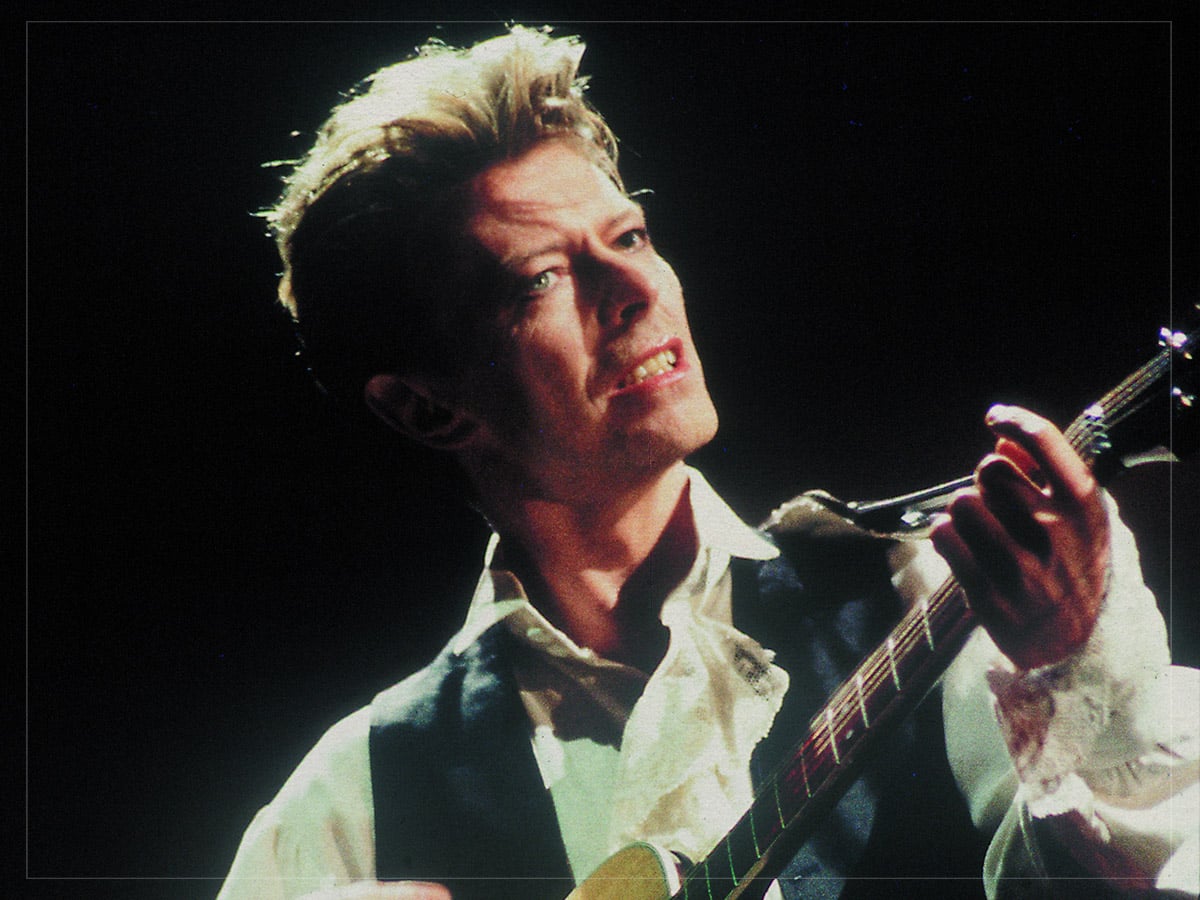
A name without much need for explanation, David Bowie will undoubtedly sound ahead of his time for a long, long period. Aside from the obvious examples, namely, how impossibly excellent his music is, he also proved the artistic value of constant reinvention, a belief that solidified his eternal relevance and importance in any given musical landscape at any moment in time.
Bowie wasn’t just a star player when it came to innovation; he also constantly shifted and transformed with the times without pandering to commercial expectations. In the future, when there’s no doubt more commercial dominance than there is now, Bowie’s impact will be felt immensely, in every space where people are still fighting for real art to come back to the surface.
Devo

Ironically, for a group whose entire manifesto is built around the idea of devolution, the music world never really caught up to the otherworldly output of Devo.
From their outset during the early 1970s, Mark Mothersbaugh, Gerald Casale and the gang were in a league of their own, blending a punk-adjacent attitude with a vastly experimental, subversive sound that parodied, lamented, and attacked the mainstream music industry.
Aside from their undeniable political slant, revolving largely around ideas of consumerism and the neoliberal nightmare of 20th-century America, which has, rather depressingly, not aged a day since Devo’s heyday, their stunning musical sensibilities themselves still sound like the future today, what with their unnatural, sometimes unnerving synth-infused experimental art-rock core.
Never really fitting into one neat box or genre convention, the sound of Devo is still incredibly individualistic, over half a century on from their initial emergence. It stands to reason, then, that 100 years from now their output will be just as individualistic and ahead of its time. What’s more, maybe their power domes and boiler suits will be more in, keeping with the fashion trends of 2126.
Les Rallizes Dénudés
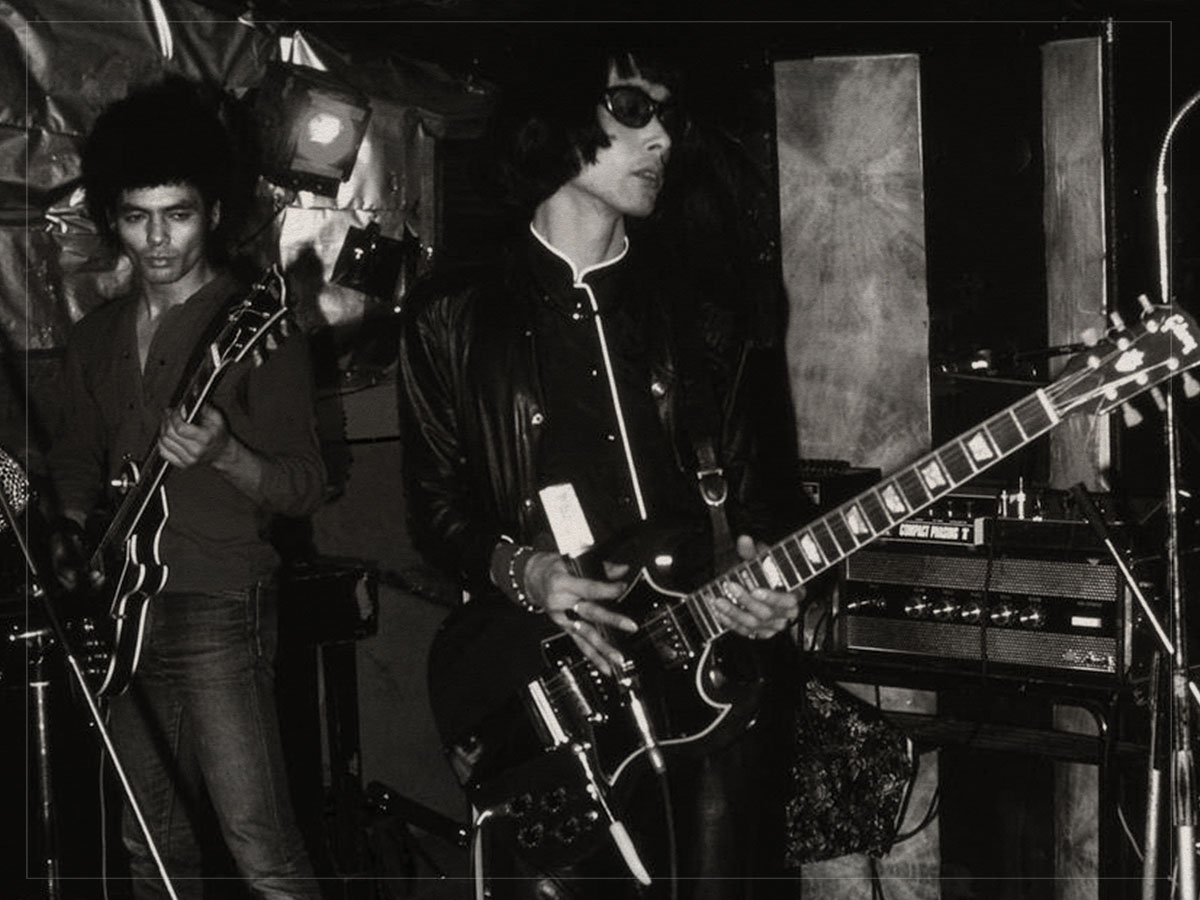
Another band that sounded unlike anything else during their first emergence, Les Rallizes Dénudés’ extensive, and extensively bootlegged, body of work still sounds as if it was delivered on an asteroid from the outer cosmos. With roots in avant-garde theatre, the Japanese students at the heart of the group single-handedly established the realm of psychedelic noise rock, and it is easy to forget that, at the same time that they emerged, the West was still listening to the likes of Lulu and The Turtles. They offered something entirely and drastically different, with the only tangible comparisons being tied to underground hamsters like The Velvet Underground.
That haze of mind-expanding distortion and avant-garde experimentation has rendered Les Rallizes Dénudés virtually futureproof. Even today, there are still parts of the band’s extensive discography and live performances that are still being discovered and dissected, so it seems as though it will be quite a while before the sun finally sets on the archetypal cult outfit.
Dorothy Ashby
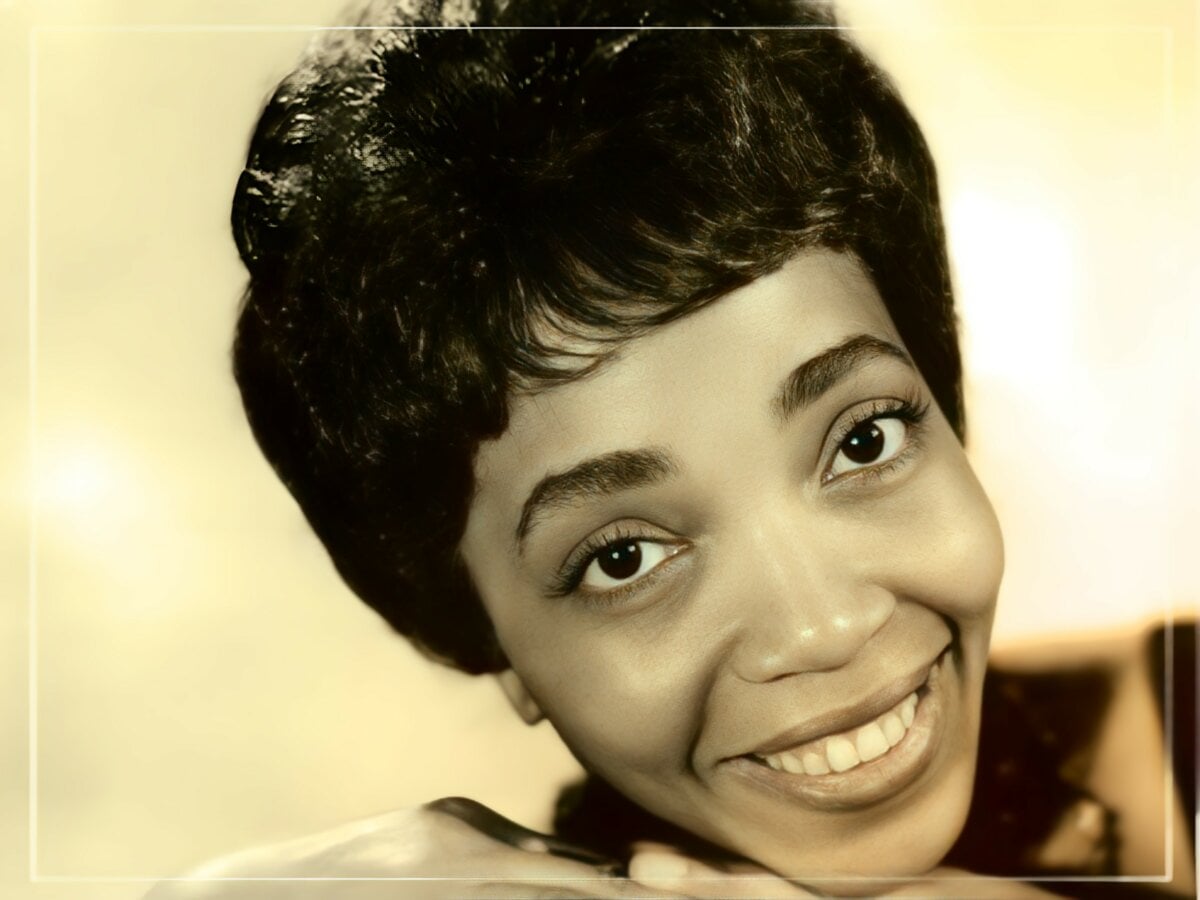
Dating back thousands of years, the harp is one of the oldest instruments humanity has ever known, and yet its ethereal charm still resonates in the modern age, transcending the shackles of time. Once you combine those ancient strings with the experimental stylings of jazz, though, that timeless effect is magnified tenfold, as in the case of Detroit’s premier harpist, Dorothy Ashby, who, with her 1968 masterpiece Afro-Harping, in particular, created the kind of extraterrestrial sound that perfectly suited the space age.
As an album, it has the perfect blend of infectious grooves, intriguing experimentation, and intergalactic charm, the result of which is a record which has aged beautifully over the past five or so decades. Afro-Harping spans borders, genre conventions, and time, uniting the soulful arrangements synonymous with that era of Detroit’s musical output with a globe-spanning sound, indebted to the traditional rhymes of African folk and, of course, the traditionally classical compositions of the harp.
Much like Devo and a few other inclusions on this list, there is still nothing or nobody else that sounds like Ashby, and it doesn’t look as if that will change anytime soon.
Nick Drake

Folk music is one of the oldest human art forms in the world, having been passed down from generation to generation, to be adapted and re-adapted countless times all over the world. There is no indication, then, that folk music will have lost any of its enduring lustre by the time that 2126 rolls around, if indeed music has not yet been banned by our robot overlords. Neither, then, will Nick Drake’s incredible trilogy of albums have lost any of their emotive appeal.
Despite being a little too ahead of his time to be fully appreciated back in the 1970s, seeing him die tragically young, a virtual unknown, his output still sounds as fresh and affecting in the 21st century as it must have done back then, for the few who dared to listen.
At the core of Drake’s output, after all, were ideas of nature, human emotion, and connection, all of which are key to humanity’s existence and therefore haven’t aged much since the early 1970s. Many decades on from the release of albums like Bryter Layter, the power of Drake’s gentle voice still provides solace for thousands of listeners the world over, and it will continue to do so long after we are all dead and gone.
A Certain Ratio
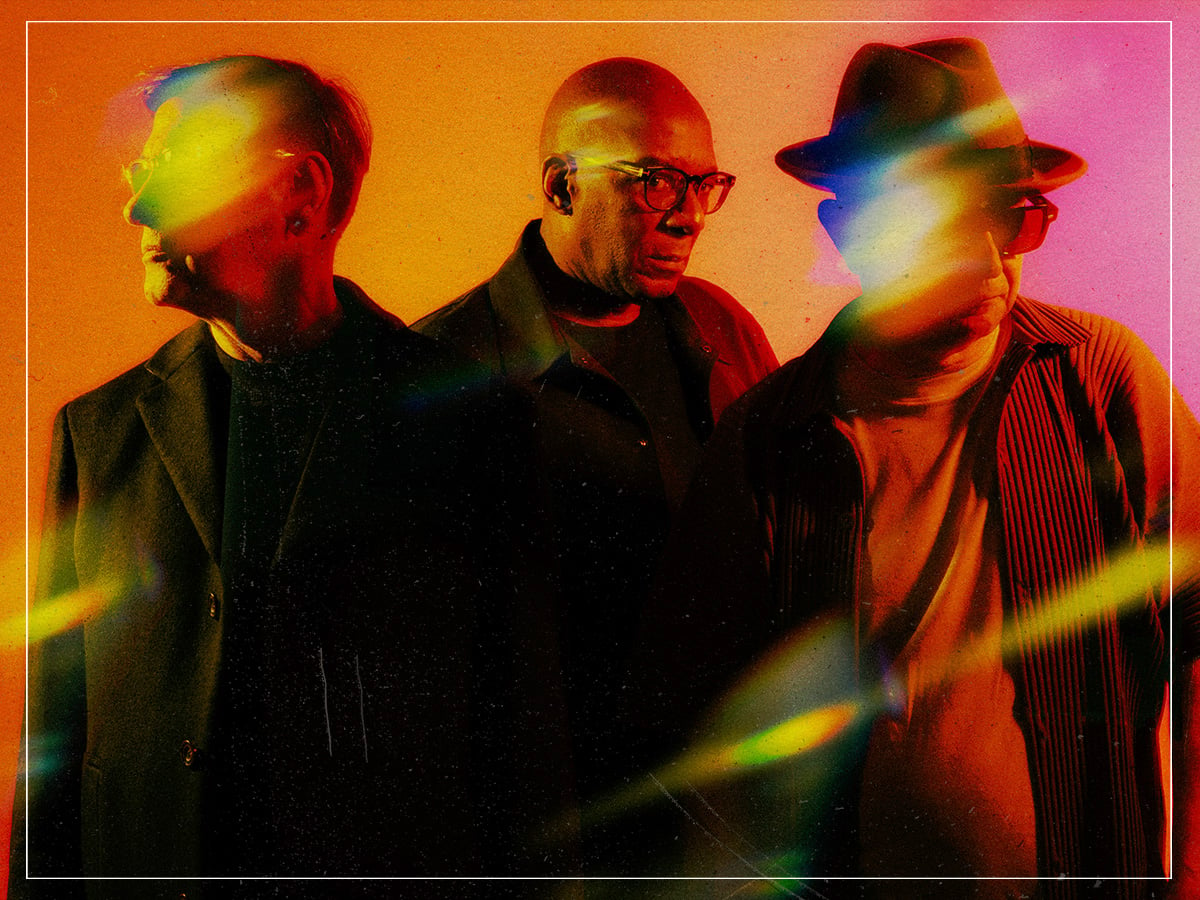
Factory Records’ roster was utterly revolutionary back in the late 1970s and early 1980s, joining together a string of bands putting out some of the most daringly original, progenitive records in the history of independent music. Now, though, the likes of Joy Division, New Order, and even Happy Mondays have been ripped off and derived an unimaginable number of times by unoriginal young groups across the land. Nobody, however, has quite managed to emulate the sounds of A Certain Ratio.
Still going strong to this day, the Mancunian outfit loosely falls under the umbrella term of post-punk, but if you dig into their sound, you’ll find that barely scratches the surface of their output. On records like To Each, for example, they span the spectrum from avant-funk to no wave and even early hints at the future Haçienda dance sound. If you stick on any one of those early records, you would be forgiven for assuming that they were released in recent years; the band were operating lightyears ahead of their time, and their distinctive post-punk-funk blend has lost none of its appeal in the years since it first crawled onto the airwaves in a haze of post-punk subversion.
