


Musical Resurrections: 10 artists who survived career-destroying albums

Any great rock band is only one wrong move away from tanking its entire reputation. For all of the tunes that they notch onto the hit parade, there’s always one looming project on the horizon that takes them from being the biggest name in music to someone that everyone collectively doesn’t care about anymore. Even though acts like Kiss have spectacular flameouts throughout their career, they each managed to get back up and start moving in the right direction once again.
That didn’t mean that the projects before didn’t leave a little bit of a sting. Outside of bad musical chemistry or the occasional lacklustre track, this was the kind of genre switch or serious downgrade that no one was expecting, leaving most listeners either betrayed by what they heard or confused that someone could reasonably think that the final product sounded good.
When listening to their next offering, though, each of these artists took that feedback and aimed it right back at everyone. Whether they went back to the drawing board or went in the exact opposite direction of what everyone thought they would do, it was important to get back in the good graces of the public, and even if they didn’t light the world on fire, the tunes proved they were in it for the long haul.
Because for all of the pressure that comes with releasing an album, every band should learn that it’s not about making a spotless run of material that no one can touch. It’s about taking those rougher moments, learning from them, and then coming out on the other side of it that much stronger.
10 artists that survived career destroying albums
10. Van Halen
The fact that Van Halen had any business after 1998 alone was practically a miracle. They had proved themselves too big for grunge to kill, but once they decided that Gary Cherone was their future, Van Halen III was enough to leave smoking shoes where they had just been. Even though they hung around as a nostalgia act for a few years, they got to at least see themselves off on their own terms when the impossible reunion finally happened.
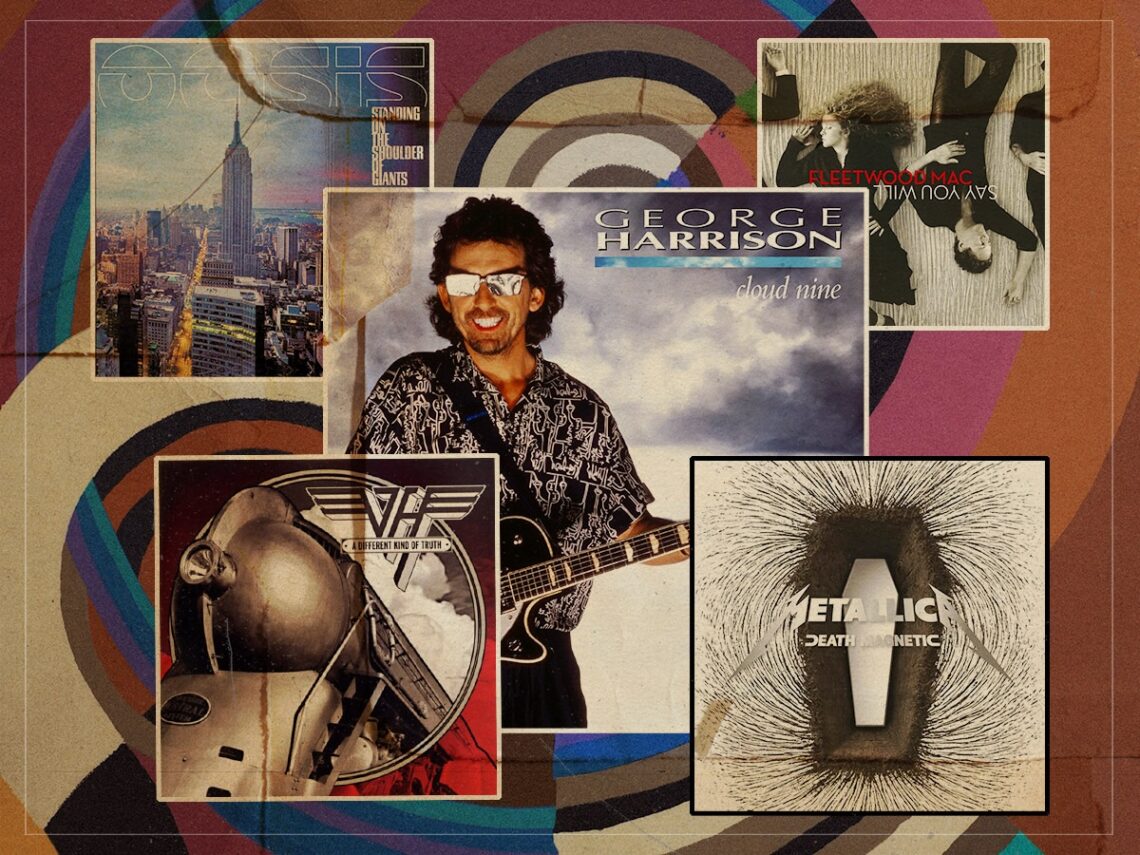
Despite different attempts to get David Lee Roth back into the fold back in the 1990s, ‘Diamond Dave’ and Eddie managed to bury the hatchet for a tour before the guitarist’s son, Wolfie, suggested whipping some tunes into shape. Although A Different Kind of Truth is far from the fireworks show that the Roth era had promised back in the day, listening to the record is like unearthing old gems from the past.
Since a lot of the riffs came from old demo tapes that Eddie didn’t get around to fleshing out, ‘China Town’ and ‘Blood and Fire’ just sound like listening to a live Van Halen concert of all new material, albeit with a singer that can be a little bit squawky. While the tunes might have been better 30 years ago and do have the occasional clunker, it’s nice to see that Eddie was happy to close up shop with Van Halen before his passing.
9. Aerosmith
There isn’t one set definition of what kills a rock and roll band. Sometimes, the project that they are working on is too much for them to survive, and there’s even the occasional track that causes everyone to leave the studio with middle fingers aloft and vowing never to work with their bandmates again. Although Aerosmith was still functional in the early 1980s after Joe Perry, it’s safe to say they were on life support on Rock in a Hard Place. Which made everything that much sweeter when Perry re-entered the fold.
After Perry’s solo projects weren’t selling that well, his girlfriend was the one who convinced him to give it another go with Steven Tyler. While Done With Mirrors is looked at with disdain amongst a lot of Aerosmith fans for not being as good as the glory days, it’s actually the comfortable middle ground between their pop-idol years and their badass roots.
After having no fun for an album and a half, hearing ‘Let the Music Do the Talking’ with all-new lyrics from Tyler is the kind of Stonesy swagger that the group needed to put them on solid ground again. It was far from the Aerosmith of Toys in the Attic, but Done With Mirrors is more of a licking-wounds album before they eventually reinvented themselves all over again for the MTV generation.
8. George Harrison
By the mid-1970s, it’s probably fair to say that George Harrison didn’t like being a rock star anymore. He had become slightly bitter about his role in The Beatles, and by the time he actually broke out of his shell and started encouraging people to get in tune with their faith, he was deflated when people didn’t want to know about whatever religious dogma he had to preach. While Gone Troppo sounded like Harrison didn’t even want to be there half the time, Cloud Nine is where he started to rediscover his love for music.
Then again, the reason that Harrison was able to come back is more likely down to Jeff Lynne. As much as the former Beatle loved writing, Lynne was the one that got him back to sounding like his old self once again, balancing out his preaching on ‘Just For Today’ with pristine pop production on tracks like ‘This is Love’ and ‘Got My Mind Set on You’.
Considering it also features 40% of the Traveling Wilburys, there’s also a bit of playful energy that sounds like a bunch of dads getting together for a jam session. But whereas most people’s dad bands are seen as embarrassing half the time, this is the kind of mid-life resurrection where ‘The Quiet Beatle’ learned to loosen up and appreciate his status as one of the foundations of rock and roll.
7. Liz Phair
There’s a case to be made that Liz Phair spent the entire 2000s throwing her credibility down the drain. Every one of her fans had become used to her making openly honest alt-rock tracks like ‘Never Said’ back in the day, so why was she suddenly trying her hand at being the next Nelly Furtado on her self-titled record? After a massive break from the absolute trainwreck of Funstyle, Soberish was the kind of album that showed her in the perfect place: relaxed.
Looking back on the way that she dealt with her management on Funstyle, it felt like Phair was taking every wrong step along the way, from making half-finished material to intentionally bad songs to piss people off. While I respect the move in practice to get out of a record deal, it doesn’t make it any less grating to listen to. After Prince’s death threw her for a loop, though, Phair knew that she wanted to preserve her legacy the right way.
And while Soberish is far from the kind of project she was set on making in the days of Exile in Guyville, it feels closer to her self-titled record if it were done right, complete with interesting chord changes and the kind of cynical irony that we couldn’t get enough of in the 1990s. Every one of Phair’s career moves in the 2000s seemed like it was coming from a place of pain, so if this really is her last album, it’s nice to hear that she finally found happiness.
6. Def Leppard
Most people who spent the better part of the 1980s in spandex were shaking in their boots the minute that Nirvana arrived on the scene. The hair metal scene had been going on for what seemed like five years too long, and it took Kurt Cobain to eradicate every dopey band off the map so that rock could get back to its roots. So how does a band like Def Leppard get back to their roots when they thrive off of that polished sheen?
Well, the short answer is that they didn’t. Across Slang, Leppard turned in the hair metal equivalent of a grunge record with a more authentic feel, but even they knew that no one was sticking around for much longer. Towards the end of the 1990s, though, things started swinging back with the rise of bright-coloured pop acts and their old producer, Mutt Lange, working with Shania Twain.
After dusting off the cobwebs, Euphoria was the Def Leppard that felt like the most logical step from Adrenalize, complete with the gimmick of a title ending in -ia, just like their classics like Pyromania and Hysteria. Def Leppard always seemed to be teetering on the edge of hair metal half the time, anyway, and when the larger-than-life pop music trend started up again, ‘Promises’ was that Queen-meets-AC/DC sound that many thought was gone forever.
5. Rush
Is it possible to kill a career before you properly get off the ground? Because even though Rush were on their way up as a progressive rock act on Fly By Night, they certainly weren’t headliner material when Caress of Steel came out, boasted zero hits and contained more than a few weird moments. This is usually the time when you try to bring out the lead singles or wait until your contract runs out and start thinking about what blue-collar work is like. But the Canadian icons stuck to their guns for 2112 and somehow managed to get the whole world on board.
Because if you think about it, the idea of this album succeeding arguably makes less sense than Caress of Steel doing all-star numbers. After telling their management that they would make commercial songs, opening up their next project with a 21-minute epic about space federations was them doubling down on their prog-rock weirdness.
Since people found out about their label holding them hostage, the epic story centred around one man’s quest to live his life the way he wants to became their unofficial war cry, with most people buying the record by word-of-mouth and turning them into prog-rock giants all over again. There was no chance of getting the record on the radio, but then again, that’s why Rush always considered themselves the world’s most popular cult act.
4. Kiss
No one really is expected to take Kiss that seriously. This is the same band that has a man who spits blood onstage and a guitarist who shoots rockets out of his guitar, so it’s not like they were suddenly expecting their fans to sit down and take in the music the same way most would with a Pink Floyd record. When they decided to make a lavish conceptual epic, though, the shock rockers should have been dead in the water.
Make no mistake, Music from the Elder is about as close to a career-killer as they come, especially with the four members, still clad in makeup, talking about bringing some made-up comic book story to life. They may have had to learn the hard way that they weren’t cut out for prog-rock, but as soon as Eric Carr joined, Gene Simmons and Paul Stanley had their backs against the wall and came back like a hard rock phoenix.
While the lyrics are still the typical rock and roll cliches, Creatures of the Night is the most metallic the band had ever sounded up until that point, being as over-the-top as possible on tracks like ‘I Love It Loud’ and even managing to bring some melodrama into ballads like ‘I Still Love You’. Considering how well everything fits together here, it’s a wonder why they chose to take off the makeup and rebrand themselves as a hair metal act one album later.
3. Fleetwood Mac
The entire basis behind every Fleetwood Mac album has been about making something out of the most dire circumstances. Something like Rumours should not sound as good as it does given its background, and yet those soaring harmonies hit just as well as they did back in 1977. But with hardly any magic left on Time, the group were clutching at straws until Lindsey Buckingham got a proposition from his producer.
After completing what he thought would be demos for his next solo venture, Buckingham was convinced to make amends with his old bandmates and return to the fold. With Stevie Nicks following right behind him, Say You Will is the result of everyone giving their all to relive the good times once again, whether it’s on the title track or resurrecting some fan favourites like ‘Bleed to Love Her’, which hadn’t been heard since The Dance live album.
Even though it’s a touch on the long side, we should be lucky that we had at least one more project with the iconic lineup before Christine McVie’s untimely passing. The good times weren’t meant to last between Buckingham and Nicks, but having one last dance together is what fans should remember.
2. Metallica
By the time Metallica reached the 2000s, they had garnered a level of success that seemed too big to fail. Even when they had subpar albums like And Justice For All or their Load era, they still came out of it as one of the most popular metal acts in existence. There’s a first time for everything, though, and when St Anger brought us the equivalent of primal therapy for an hour, it looked like Metallica was about to call it quits.
Because outside of Some Kind of Monster, this felt like the last hurrah before the group decided to part ways, especially in certain scenes where they claim to come back stronger and yet play the most painful album of their career. Once they got in touch with Rick Rubin, his focus on them embracing their old ideas was the best advice they could have received going into Death Magnetic.
While the production still had noticeable problems, hearing a snare drum that doesn’t sound like it’s hitting you in the face and Kirk Hammett playing one blazing solo after the next was everything most metalheads had been clamouring for since 1988. After years of flirting with everything from hard rock to alternative to nu-metal, Metallica finally lived up to their namesake and gave fans the kind of heavy music that they built their career on.
1. Oasis
It’s always possible for a band’s greatest success to also be their downfall. Despite selling millions of copies, one project might not be worth the risk in the long run when you take into account all of the baggage that comes with it. And when Noel Gallagher tried his hand at touching the sky on Oasis’ Be Here Now, he managed to skillfully fall back down to Earth on Standing on the Shoulder of Giants.
Then again, there are probably a lot of Oasis fans who hate their fourth outing on principle. Since it’s only half of Oasis on the record and doesn’t have nearly enough bright choruses to go around, this was not the same lads that we had come to know from Manchester. But after years of being in the limelight, this is the first time we hear both Noel and Liam sound vulnerable on record, and that gives way to the most captivating songs in their catalogue, like ‘Gas Panic!’.
Whereas Be Here Now was a cocaine-fuelled party, this is the hangover where Noel’s left to wonder what the hell happened and come to terms with the next phase of his career as another quality rock and roll band. ‘Where Did It All Go Wrong’ might have been a cold look at where their heads were, but having a moodier version of Oasis is still better than 90% of what other groups have to offer.
