


Witchsploitation: when the 1970s became obsessed with the occult

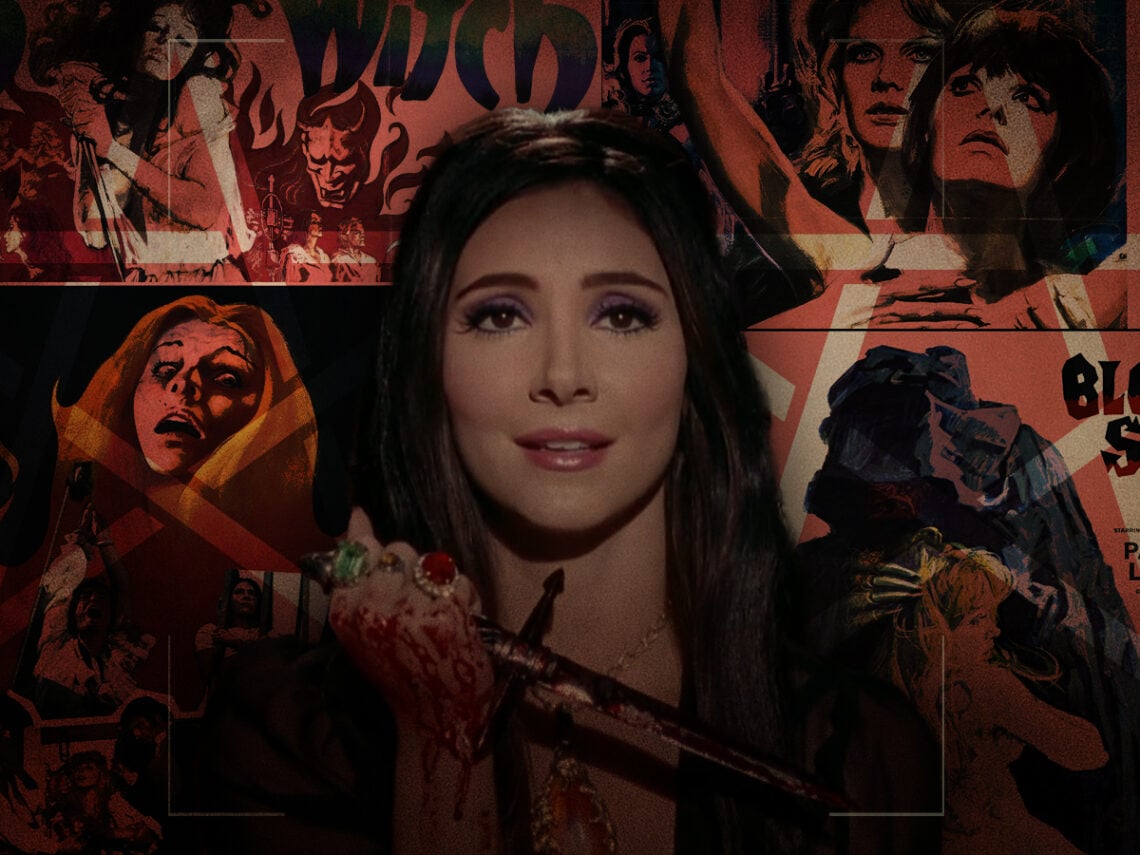
In 2016, Anna Biller’s The Love Witch paid homage to the countercultural fascination with witchcraft that occurred in the 1970s, using a kitsch retro aesthetic and Technicolour, fooling many viewers into believing that this was some forgotten gem from the late ‘60s or ‘70s.
What The Love Witch pays homage to the most, however, is the array of B-movies and sexploitation films that dealt with occult themes back then, which basked in excessive nudity and eroticism, usually for the sake of attracting a male audience, and thus it feels like a more nuanced successor to films that revelled in witchcraft during the dying days of counterculture, especially in Britain, where occultism became the perfect excuse for images of disrobed naked bodies, sex magick, and erotic rituals.
Witchcraft became this hip new thing in the late ‘60s and early ‘70s that young people were increasingly latching onto, with bands like Black Sabbath, Black Widow, and even Led Zeppelin bringing occult symbolism to rock music, while Aleister Crowley, Anton LaVey, and Alex and Maxine Sanders all became well-known figures, although their approaches and beliefs differed.
Following the hippie movement and the Swinging Sixties, the counterculture soon moved away from the hopefulness that was initially championed, with events such as the Manson murders and an overwhelming number of drug-related addictions and tragedies contributing to a once-prosperous era’s demise; of course, it wasn’t going to last.
But at the turn of the decade, with increased sexual liberation apparent in society and thus the silver screen, the counterculture started to become infected by an interest in the erotic side of the occult, and soon it was inescapable. Both documentaries about young people’s increasing fascination with witchcraft and fictional films that banked on the combination of horror, mysticism, and nudity emerged at a considerable speed in the ‘70s, capturing a time in which they were continuously finding unique ways to express societal dissatisfaction and a desire for escapism.

Hammer was still making some great (rather horny) horror movies during this time, like The Vampire Lovers and Twins of Evil, but these were much more focused on vampirism, although that occult-themed eroticism was certainly present. There were a lot of sleazy lesbian vampire films that emerged in the early ‘70s, often with some vague images of rituals and rumours of Satan, but, more specifically, ‘witchsploitation’ could be seen most explicitly with movies like Virgin Witch, a merging of softcore pornography imagery and witchcraft.
Most interesting is its modern setting, unlike many horror movies of the era, which were set centuries before. Virgin Witch utilises Britain’s swinging era as a backdrop, and the Letterboxd description of the film sums it up plainly: “A pair of mini-skirted birds travel to a remote castle in order to land a contract in the modelling agency of the mysterious lesbian Sybil Waite”. It’s cheap, sleazy, and packed to the brim with naked women and a few nudey rituals, but it doesn’t say all that much. It’s clear that its main function is to titillate.


Then there was Baba Yaga from 1973, where witchcraft meets fashion modelling meets BDSM, while a more popular number, The Blood on Satan’s Claw, brought the devil and suspected witchcraft to a rural English village. The latter has its fair share of naughty scenes, but it’s not as cheap and sleazy as something like Virgin Witch; some filmmakers were interested in using the occult for more than sexy rituals. Michael Armstrong’s Mark of the Devil, Ken Russell’s The Devils, and even Don Sharp’s Psychomania are further examples of English directors diverting their attention towards occult themes, using them to say something genuinely insightful about ’70s society, whether through a modern setting or otherwise.
Documentaries, including some mondo titles like Secret Rites or Witchcraft ’70, also explored the decade’s ever-growing obsession with witchcraft, magic, and occult forces, adding to the pile of films focused on such mystical imagery. Clearly, there was something in the air that drew so many people, particularly within counterculture, to the occult, and thus onto cinema screens.
The potential to combine these provocative, shocking themes with nudity and eroticism certainly helped, resulting in the sexploitation films that championed naked rituals and depictions of witches and Satan worshippers, but in general, people seemed attracted to occultism in the media for both the mystery and the refuge it brought; after all, being into something as shocking as witchcraft is always going to be the ultimate form of rebellion.
