


‘The Karnstein Trilogy’: how revolutionary were Hammer’s lesbian vampire movies?

Lesbian representation on the big screen has always been minimal, but you can find a surprising amount of it in retro low-budget horror movies, specifically Hammer’s Karnstein Trilogy, which was released between 1970 and 1971. It tapped into a lesbian vampire craze also reflected in various European productions like Harry Kümel’s Daughters of Darkness and Jesús Franco’s Vampyros Lesbos, both released in 1971. Clearly, horror fans couldn’t get enough of seeing erotic tales of mysterious blood-sucking women during the early 1970s, but whether they were a positive moment in queer cinematic history is far from straight-forward.
The 1960s saw increased feminist activism and female sexual liberation in the United States and Europe, resulting in a culture where female nudity and sex were much less taboo than it was in the past. British cinema in the 1970s was subsequently loaded with cheaply-made and incredibly horny films, from the Carry On franchise to the Confessions of a… series. In many instances, these films featured explicit sex scenes and full-frontal nudity (and plenty of crass ‘Ooh matron’ humour), although they tended to prioritise heterosexual couplings.
Instead, you could find lesbianism in the horror genre, perhaps because it was still more taboo, and with the Karnstein Trilogy – inspired by Sheridan Le Fanu’s lesbian vampire novel Carmilla from 1872 – Hammer released several films that gave viewers rare depictions of queer female sexuality for the time. The first was The Vampire Lovers, which saw Ingrid Pitt play Carmilla, also known as Marcilla and Mircalla, a seductive vampire who preys on local women and subsequently causes them to perish.
She kisses and touches them, with the film showing no shortage of naked bodies, and as she bites her victims on the neck or breast, she wields a strong sense of feminine power that can cause anyone to fall under her spell. Carmilla kills several men, too, but it’s women that she is truly interested in – although it’s clear that the film, directed by Roy Ward Baker, has a male audience in mind.
The women all wear dresses that expose plenty of cleavage, and in the opening scene, we meet a vampire who wears a completely sheer gown with nothing underneath. The Vampire Lovers is designed to titillate, but it’s campy enough to take on a legacy far greater than being a male-gazey lesbian vampire movie. With its gorgeous costumes and sets, the film is genuinely compelling, but you’ll find yourself laughing at the fake dummies used to portray dead bodies as much as you’ll become immersed in the gothic atmosphere that has been finely crafted.
Lust for a Vampire, the next movie in the series, is even more ridiculous, with the opening scene alone inspiring lovers of camp horror to herald it a cult classic. It’s by no means a ‘good’ film, but with outrageously stupid death scenes, you can’t help but find yourself drawn in. Still, Lust for a Vampire approaches lesbianism with an even more fetishistic gaze, with the men in the story practically representing the male viewer – unrestrained and eager – as they fawn over the young women at a finishing school who are likely under the age of 18.
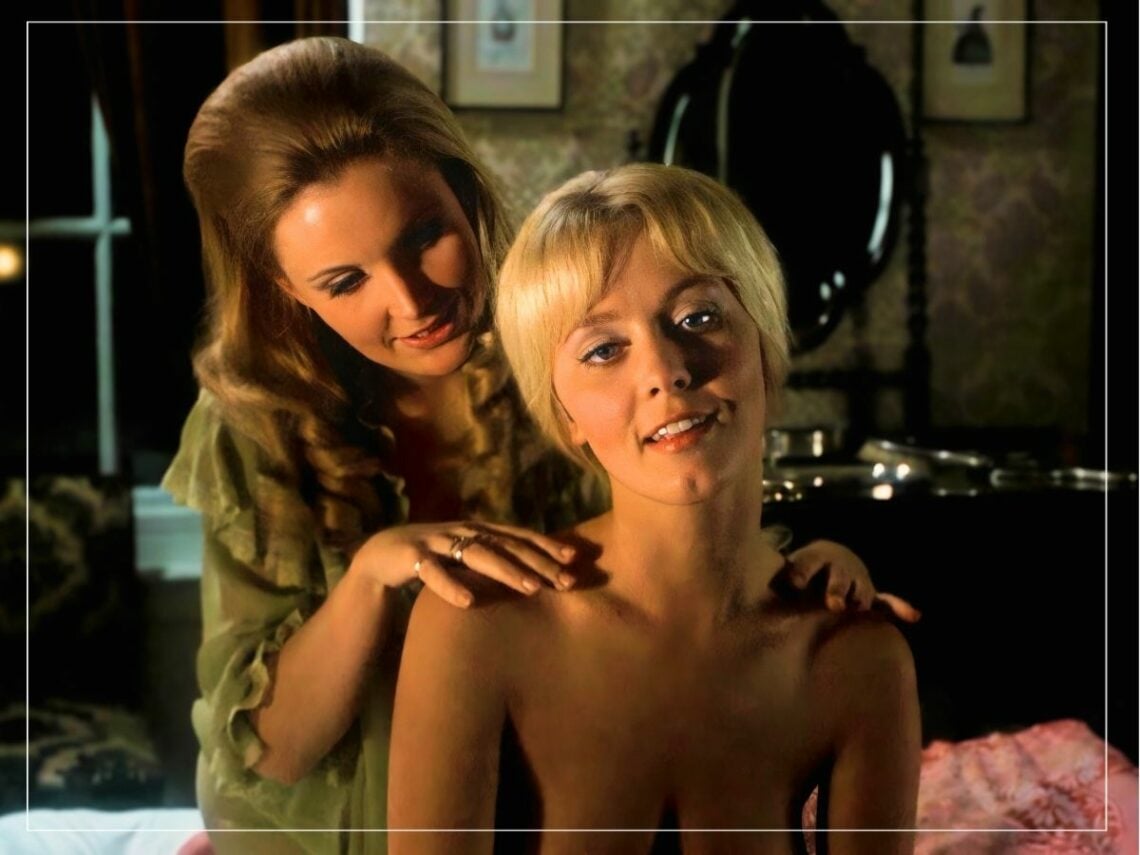
These men treat the women as objects, and so does the camera, clearly relying on the attractiveness of the actors and the excitement of erotic sequences (like when Yutte Stensgaard’s Carmilla gets a massage from another female student, allowing her dress to fall off and expose her naked chest) to sell the film. While the third film in the series, Twins of Evil, doesn’t contain much lesbianism, The Vampire Lovers and Lust for a Vampire reflect a period when the idea of showing ultra-feminine women expressing their sexual desires with one another was guaranteed to pique cinema-goers’ interests. Not much has changed, it seems, but these Hammer films went about it in a rather shameless way.
Still, while the films are a far cry from being feminist works of cinema, it was rather revolutionary for Hammer to depict lesbianism so freely during the early 1970s. Carmilla rejects the expectations placed upon her, preferring to play around with women instead, and as a member of the undead, she faces no real consequences for her actions, which allows her to explore her sexual desires without facing the scrutiny that many women might have suffered at the time for expressing lesbian inclinations.
Carmilla is an independent and apologetic character, and it’s understandable why many female viewers, especially queer-identifying women, might find themselves drawn to the film’s depiction of a feminine-centric world. Thus, these films occupy a complicated place in cinema history. While they reflect a changing time in British society, with queer identities becoming more normalised than ever before and sexually liberated women refusing to deny themselves pleasure, it’s hard to ignore Hammer’s true intentions behind depicting such fetishised images of lesbian sexuality and female nudity.
