


The largely unfunny history of the British sex comedy

British cinema has championed various subgenres over the years that feel irrevocably tied to the country, from folk horror and kitchen sink dramas to sex comedies. The latter genre was massive in the 1970s, dominating the box office with predictable stories centred around nudity and rather explicit sex scenes.
While British people were once known to be rather prudish (at least on the surface), these films showed the true horniness that seemed to be at the heart of British society during the ‘70s. Post-sexual revolution and following the weakening of cinematic censoring across the board during the ‘60s, British film took a sharp turn and headed towards bawdy stories that would guarantee box-office success. Producers pumped them out on low budgets, and they were typically poorly written, focusing on raunchy stories that, more often than not, painted women as nothing more than objects to be consumed.
Since the subgenre’s heyday in the 1970s, British cinema now takes a much more refined approach to sex and nudity, it seems. No longer are sex comedies made as quick and cheap vehicles for viewers – predominantly men – to get off to, as appeared to be the point of most titles that emerged during the so-called golden age of British sex comedy. Looking back at these films, it’s hard to comprehend how the objectification of female bodies was so widespread and popular, but that was the ’70s for you.
Before sex comedies became popular, British people often got their rocks off by watching nudist documentaries. However, this wasn’t enough to satisfy viewers; people wanted to see more sensuality and explicit sex, and the sex comedies that would soon emerge – which could be seen in normal cinemas – perhaps made audiences feel less perverted than if they went to see a porn film. The first British sex comedy, then, is often considered to be 1961’s Mary Had a Little…, although the 1969 film School For Sex is said to be the first British sexploitation movie.
British sex comedies from the 1960s weren’t half as explicit as the ones that emerged in the ‘70s, however, which typically featured considerable nudity and explicit, prolonged sex scenes. The infamous Carry On series emerged in the ‘50s, which featured lots of innuendos, but it wasn’t until the late ‘60s and ‘70s that these movies became much more centred around explicit sexual matters.
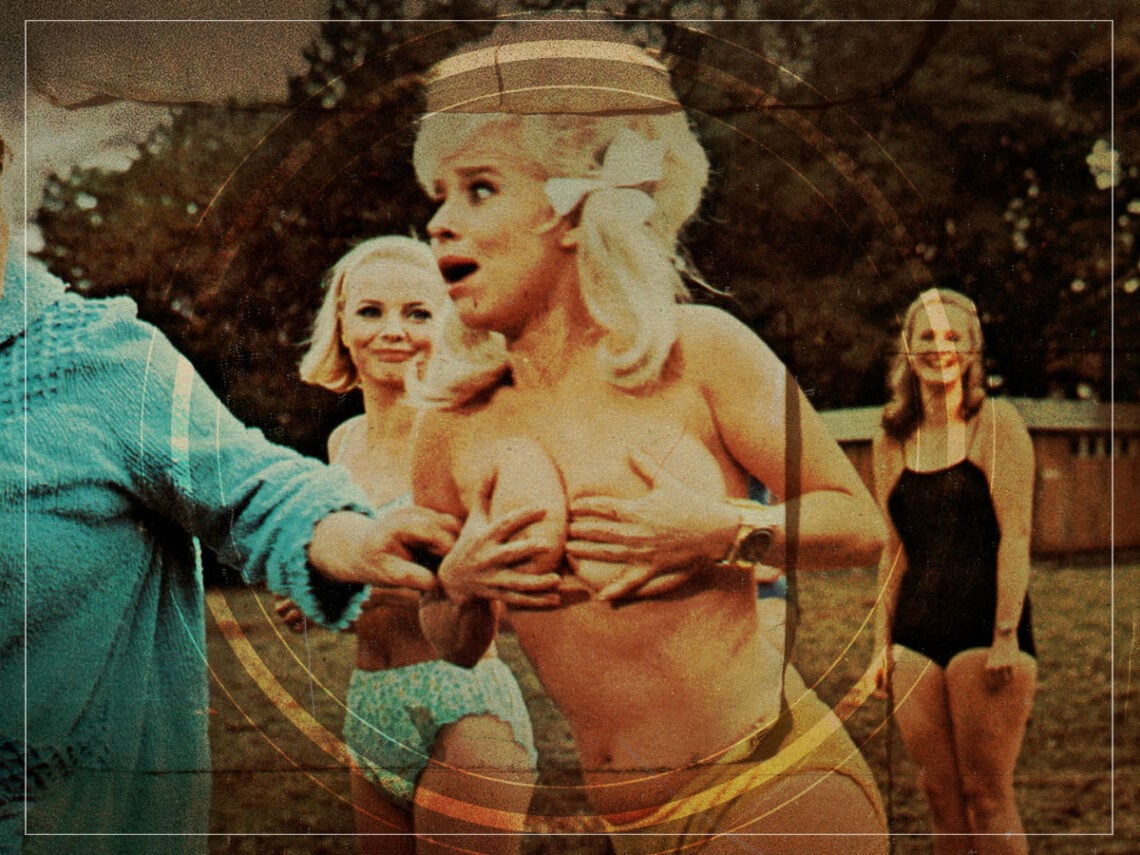
Carry On Camping, released in 1969, is a classic of the series, with the movie following a pair of men who take their girlfriends camping, believing that the campsite they’ve booked is a nudist one. They are mistaken, but they instead pass the time by watching school girls through holes in the shower walls or while they do their bikini-clad exercises. It’s creepy and gross, yet Carry On Camping was a huge success, becoming the highest-grossing British movie of the year. Thus, it demonstrated British people’s love for a horny comedy, and subsequently, many more followed from the Carry On series and beyond.

There were two other prominent series during the ‘70s: Confessions… and Adventures of…, which went down a treat with the British public. In the former, Robin Asquith found himself playing a man who would take on a certain job depending on the title of the film, like Confessions of a Window Cleaner or Confessions of a Driving Instructor. Similarly, there was Adventures of a Taxi Driver and Adventures of a Plumber’s Mate, directed by Stanley Long, which continued the theme of male protagonists in rather normal jobs becoming inundated with sexual offers from women. Whether they be eager customers or horny neighbours, these films typically saw the protagonist bedding multiple women throughout the runtime, entering a world of carefree erotic fantasy.
By having the men in these films play characters who worked everyday jobs that many male viewers could relate to, it made the fantasies within these flicks feel more attainable. Only in a British sex comedy could a man show up to the job and, without fail, be seduced by every single woman he encounters. These films, with other profession-related titles including The Amorous Milkman and Secrets of a Door-to-Door Salesman, were mainly just raunchy spectacles that lacked cinematic merit and, unsurprisingly, complex female characters.
There were certainly movies from the era that revelled in satire of the subgenre itself, but oftentimes, these movies still committed the crimes of the films they were satirising by giving the women nothing to do other than get naked. For the most part, these were just flicks to titillate, with classic British humour preventing the movies from feeling truly seductive and erotic. From Can You Keep It Up For A Week? to Eskimo Nell, The Sexplorers, Come Play With Me, and Emmanuelle in Soho, these movies were not to be taken seriously.
However, behind the scenes, the women involved in these movies often found themselves uncomfortable. They took on the scantily-clad roles because there were hardly any other jobs for female British actors at the time, or they were manipulated into them by predatory executives. This wasn’t the case for all, but it’s quite shocking to think that many female actors were only able to break into the industry by taking on low-budget soft porn jobs.
Most of these films were helmed by men, but there was one woman who made her mark on the British sex comedy – Hazel Adair. She might have been known for creating Crossroads, but she also provided British viewers with some saucy fun with Keep It Up Downstairs, which takes place in a fictional castle called Cockshute. While Adair might not have been the feminist hero the subgenre needed, it was at least reassuring that a woman was in charge of several titles during an otherwise all-male climate.
These days, the only good in revisiting British sex comedies from the ‘70s can be found in their depictions of a society so different to the one we’re currently living in. From the dynamics between men and women to the clothes, the cars, the locations, and even the slang, these films offer a realistic portrait of Britain at the time, although perhaps not through their narratives – they were all pure male fantasy.
