


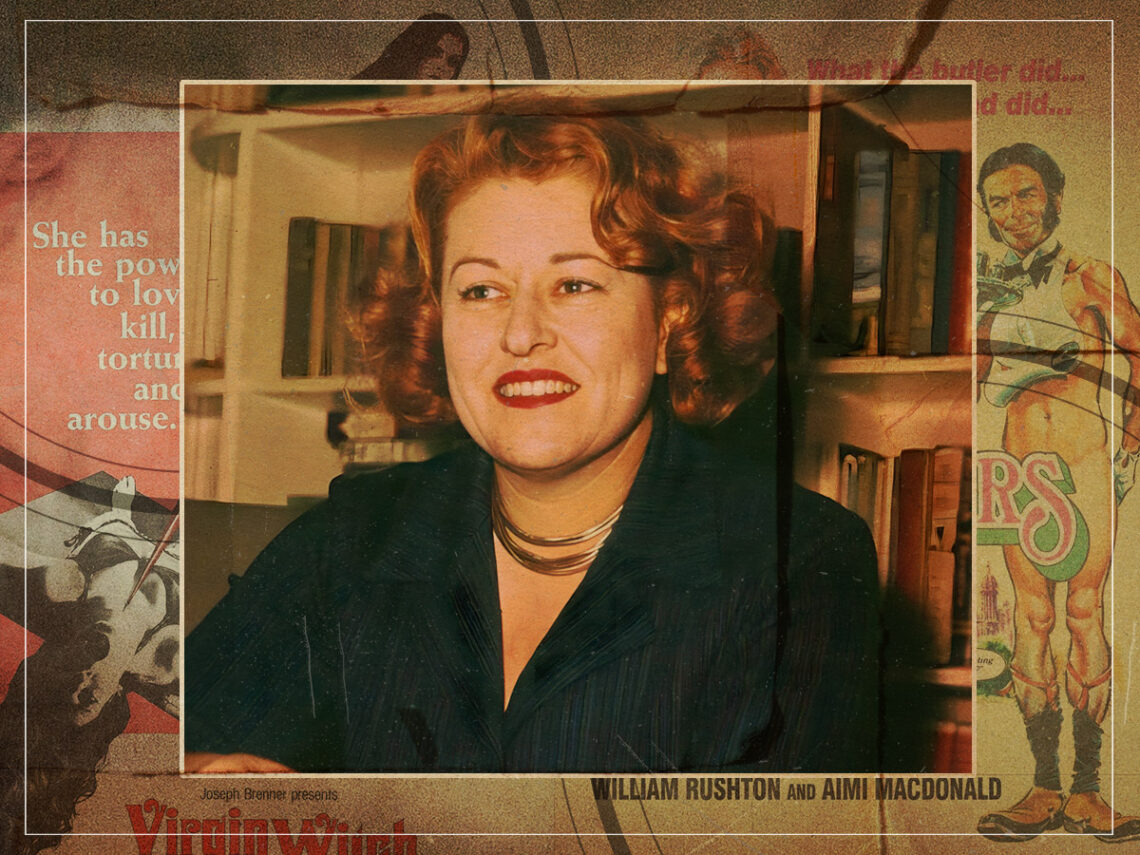
From 1970s soap operas to scandalous erotica: the curious career of screenwriter Hazel Adair

Cinema has always been the arena of men. It’s an industry that has actively discouraged women from becoming filmmakers, instead favouring the viewpoints of male directors, screenwriters and producers. Still, there have been women among this androcentrism who have proved that female filmmakers are just as valuable. Sadly, many of them have been erased or forgotten, their contributions merely a footnote alongside the efforts made by men.
Since women were often unable to receive the same opportunities as men, many female filmmakers had rather unconventional careers. Hazel Adair is a prime example, writing everything from popular soap operas and children’s television to erotic cinema. Born in 1920, she began her career in the arts as an actor, appearing in a few British films in the 1940s.
However, her interest in cinema soon revealed itself to be more behind-the-scenes oriented. She started writing screenplays instead, teaming up with Peter Ling to make Compact, a soap opera about a magazine. However, it was Crossroads, the hugely popular – yet critically derided – soap that would become her biggest success.
Despite running for over 20 years, Crossroads was poorly made and featured terrible acting. It was lapped up by the British public, though, beating lots of other popular (and better) shows to become one of the highest-watched shows in the United Kingdom. Say what you like about Crossroads, but it actually pioneered some rather innovative features for British television at the time, such as including the first black family in a soap and tackling issues like disability, being a single, unmarried mother, and foster care.
Thus, while we might consider Crossroads an incredibly bad and dated show, Adair created something unforgettable. Bold in its stupidity and far-fetched plotlines, Crossroads also weaved in various real-life issues, many of which were taboo, at the same time. The show might not be a fine piece of work, but Adair managed to make something incredibly popular with the public.
However, in the meantime, she turned her attention towards something completely different – erotic filmmaking. No one thought that the middle-aged woman behind Crossroads was capable of making erotic lesbian horror movies and ridiculous sex comedies, but she was. She formed Pyramid Films and soon began writing or producing these sexually-charged movies, which would become staples of that specific era of ‘70s British cinema where cheap sex romps were all the rage.
While most of these films are questionable – they have clumsy scripts, a wealth of gratuitous (mainly female) nudity and preposterous storylines – it was refreshing to have a woman at the helm rather than a man. Adair proved that women were not simply prudish figures who couldn’t possibly conjure up such scandalous, sexy storylines. Unfortunately, though, Adair sometimes resorted to using a male pseudonym – Klaus Vogel – when writing these films. This reflects the period’s attitudes; women were encouraged to get in front of the camera rather than behind it.
Adair wrote Virgin Witch, which follows several sisters as their attempts to become models ends with them joining a coven. The Jean Rollin-esque plot was not widely released because the BBFC initially rejected it, but in the end, critics have been rather complimentary towards the film, which, although it’s not amazing, has its moments as a sexy slice of low-budget horror. Still, Adair didn’t admit to writing the film until five years after it was made.
The filmmaker also wrote Keep It Up Downstairs, a dirty British sex comedy full of crude jokes and lots of nudity. There was even additional footage shot that contained more hardcore sex, although the original still contains a fair amount of nudity and erotic scenes. It features Britain’s answer to Marilyn Monroe – Diana Dors – and Jack Wild (who is better known for playing the Artful Dodger in the 1968 film Oliver!), with the whole film taking place in the early 1900s within a building aptly titled Cockshute Castle.
Clearly, Adair didn’t limit herself to one kind of filmmaking. While her work isn’t held in the highest of esteem, it is important to recognise the contributions she made to British television and cinema during the ‘60s and ‘70s. She might have created low-budget and poorly crafted soaps and erotic films, but Adair’s creations have had a lasting impact. The ‘70s were full of male-created sleazy sex farces, but here were some by a woman. And yes, Crossroads was bad, but it was watched by millions, only rivalling Coronation Street at one point to become the UK’s most-watched soap.
