


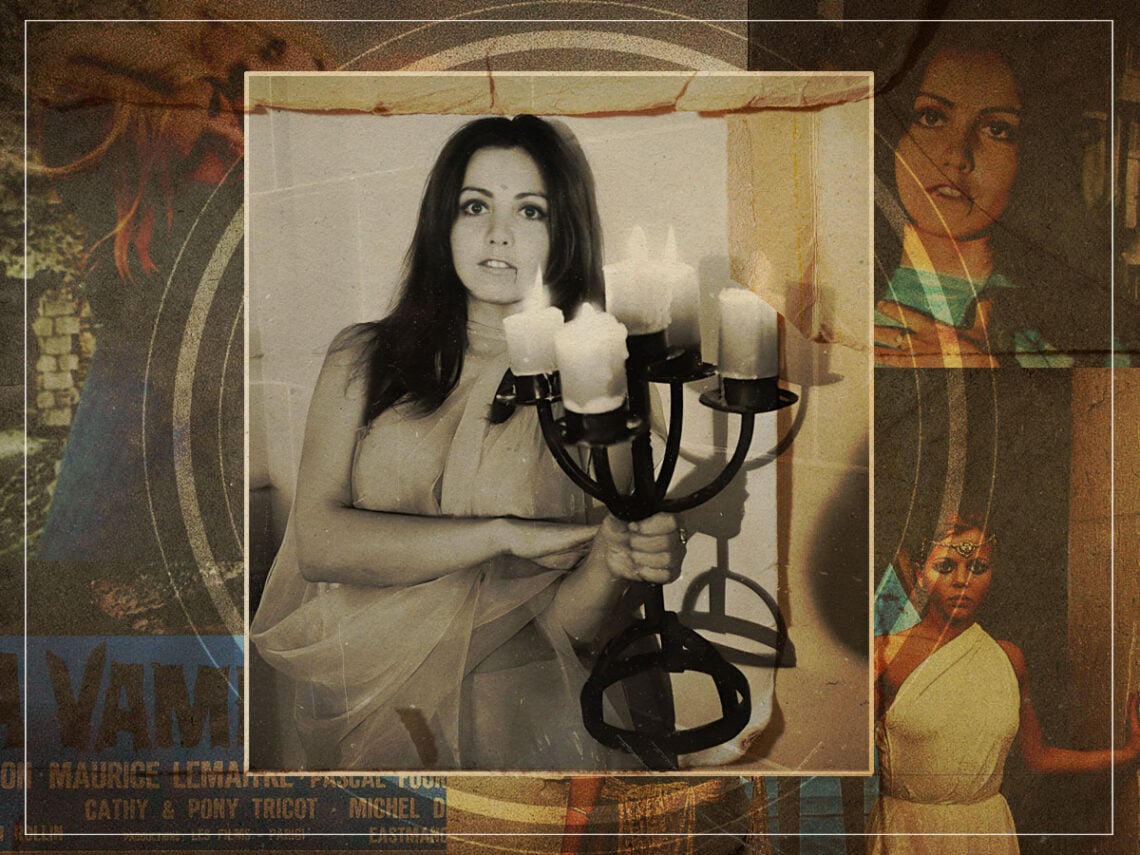
Jean Rollin’s vampiric world: fantastical or exploitative?

As horror developed in the 1960s and ‘70s, sub-genres began to emerge, from slashers to rape-revenge movies. Some have found considerably more popularity than others, while others have occupied a specific niche, like nunsploitation and lesbian vampire movies. The latter was dominated by the work of Jean Rollin, mainly during the ‘70s, whose films remain some of France’s most controversial offerings.
While he also made horror movies that fall outside of this category, Rollin’s work typically all featured beautiful women, often in very little clothing and erotic themes. Shot with an eye for aestheticism, Rollin’s movies tended to utilise striking cinematography and bright colours, leaving many viewers impressed by their enrapturing visual qualities. He incorporated surrealism, too, making many of his films feel like strange, hallucinatory dreams (or nightmares). Subsequently, Rollin has come to be considered a cult figure by many, with his movies heralded as erotic arthouse horror classics, most notably his film Fascination.
Yet, Rollin’s films, notably his lesbian vampire titles, deserve closer examination. Are these fantastical and arty films that deserve to be considered more highly in the horror canon? Or are they exploitative, objectifying movies that pander to the male gaze? His first feature, Le viol du vampire, which translates to The Rape of the Vampire, was received poorly, with the filmmaker reporting that people were angered by the movie. Clearly, in 1968, audiences weren’t ready to see an abstract movie featuring women in revealing dresses acting like vampires. But was it really ahead of its time?
With his next movies, he moved further into lesbian vampire territory. Films like The Nude Vampire, The Shiver of the Vampires and Requiem for a Vampire featured women who engaged in both blood-sucking and lesbianism, but for all their enticing visuals and mysterious atmospheres, there’s little in the way of good plot. It seems like Rollin was wheeling out these movies to use as vehicles for male sexual fantasies, sometimes even casting real pornographic stars in the leading roles (as is the case with 1979’s Fascination). Re-evaluated in later years as psychedelic trips into the world of sex, bloodlust and busty dresses by male critics, it seems Rollin’s films rarely seem to be called out for their misogyny, which is hardly concealed.
In Requiem for a Vampire, we begin with a thrilling car chase featuring two girls dressed as clowns and a mysterious man, who is soon killed. It’s a fun opening that teases an excellent film, but it soon descends into a murky, misogynistic mess as the girls explore an abandoned castle overrun by vampires. There are many uncomfortable sequences, with the worst being a rape scene shot as though it’s some sexy pornographic segment – the lighting and the camera angles make it nearly unbearable to sit through. The film’s overall gothic atmosphere is certainly appealing, but this masks a plotline full of exploitative sequences so clearly designed with male viewers in mind.
Then there’s Fascination, which contains a lot of lesbian sex. Movies from the ‘70s featuring explicit lesbianism are rare, but while there were filmmakers like Chantal Akerman making bold and innovative movies about the experience of being queer, Rollin’s movies were simply perverted male fantasies that depicted lesbianism and naked female bodies as a spectacle. In one scene, two women are seen making out for an extended period before they are interrupted by a man. They giggle and ask him not to murder them, but they joke that raping them would be just fine. It’s the kind of dialogue that takes you off guard; this wasn’t a satirical line in the slightest, and even then, that would still cause eyebrows to raise.
The movie includes one of Rollin’s most recognisable sequences, Brigitte Lahaie’s character, Eva, killing a woman with a scythe. As Eva makes her fatal move, leaving her victim covered in obviously fake blood (in the same vein as many Eurotrash horrors), her cape very conveniently falls open to perfectly reveal one breast. It’s eye-roll worthy; Rollin wasn’t exactly hiding his desire to objectify his female characters.
For many years, Rollin made hardcore pornographic films under a different name, sometimes using the money to fund his movies. Essentially, his work is just arty porn disguised as avant-garde surrealist horror. Sure, he made films that occupied hallucinatory worlds full of fantasy and horror with stunning visuals, but his depiction of women leaves little to be desired. When he made movies that relied less on the objectification of women, such as the erotic but genuinely creepy The Iron Rose, Rollin showed genuine skill and the potential to become a respected horror director who didn’t rely on sexist gimmicks. As a result, his legacy in the industry is a complicated one, but his films are perhaps better left in the past.
