


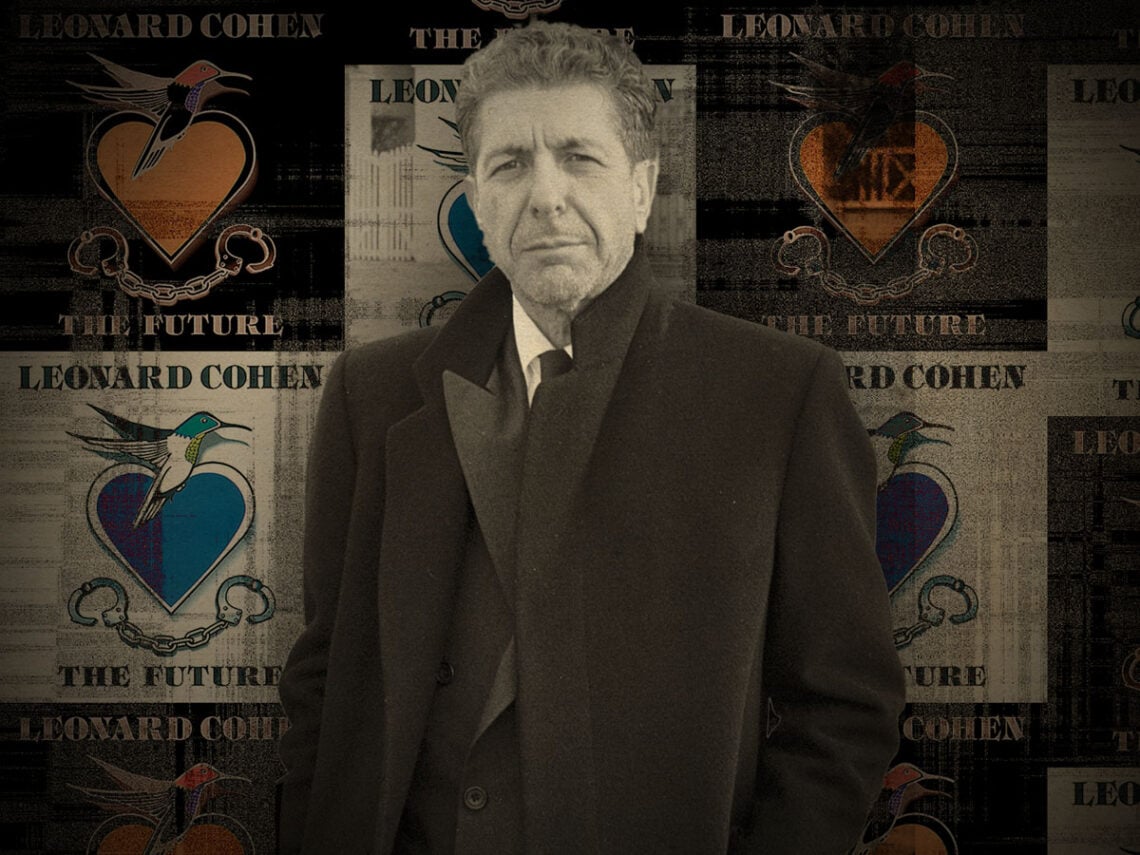
‘The Future’: Why Leonard Cohen’s peak bleakness suited the early 1990s

The year 1992 should have been America’s equivalent to 1997 in the UK, when New Labour, Tony Blair, and Cool Britannia, co-soundtracked by the Spice Girls and The Prodigy, ushered in a brief wave of obnoxious optimism in the country.
Sax-playing ladies’ man Bill Clinton was Blair’s US counterpart, elected to the presidency in 1992 after 12 years of Republican control of the White House. There was, to be sure, plenty of excitement about Clinton’s sudden emergence and his progressive potential as the country’s first Baby Boomer president, but that enthusiasm was heavily tempered by events from earlier that year, when the country’s ongoing struggles with racial inequality were on full display once again.
The verdict of innocence for the white LAPD officers caught on video beating African American motorist Rodney King led to massive riots on the streets of Los Angeles, and combined with an economic recession, helped spell doom for the lame-duck incumbent George Bush Sr.
While very little of the music on the radio at this time was outwardly political, it was certainly reflecting something about day-to-day life in America, that the bottom had gradually dropped out of the old dream. From the gangsta rap of LA and New York to the heavy, angst-ridden rock coming out of Seattle, the country seemed to be reckoning with itself again after the coke-fueled excesses of the 1980s.
Even an old curmudgeonly songwriting veteran like Leonard Cohen, fresh off his 1988 comeback record I’m Your Man, found himself freshly inspired by these circumstances, especially as he spent more of his time in Los Angeles, experiencing the literal mudslides, earthquakes, fires, and civil unrest outside his own window. To be fair, none of these things was going to drastically change Cohen’s already well-established worldview, not even a new romance with a much younger Hollywood actress, Rebecca de Mornay, could do that.

Dating back to his earliest folk records in the late 1960s, Cohen was known as a bit of a prince of darkness, and found himself routinely approached by friends and strangers alike, with the cheeky greeting: ‘Cheer up, Leonard’.
“Do you know how unpleasant it is when you’re feeling quite cheerful for someone to say ‘cheer up’?” Cohen told the Daily News in 1992, “It’s never an appropriate salutation!”

Looking into the darkness, it turns out, was simply part of Cohen’s secret sauce for living a happy life: he never put his head in the sand when it came to the ugly realities of mankind, but he could detach himself a bit from it, like a painter recreating a distant city on the horizon. This kept his lows from being too low, and similarly prevented too much pesky optimism from clouding his judgment when a political wall came down, or a new president seemed like a cool guy.
On November 24th, 1992, just three weeks after Bill Clinton was elected, Cohen released his ninth studio album, titled The Future. It was one of the longest albums of his career, and many of the songs had similarly lengthy gestation periods, evolving through years of rewrites and edits and new scribblings. Right at the front of the record, though, was the statement piece, the title track, which was a satirical but absolutely devastating outlook on things to come, delivered in the style of a gothic soul lounge act with a backing choir of unironic gospel singers. It was basically the polar opposite of Clinton’s election theme song, Fleetwood Mac’s ‘Don’t Stop Thinking About Tomorrow’.
“Give me back the Berlin Wall,” Cohen grumbled in a baritone, “Give me Stalin and St Paul / I’ve seen the future, brother / It is murder”.
Whereas hip hop MCs were reporting on the broken world around them, and grunge singers were reaching into the depths of their own existential crises, Cohen stepped into the moment and leap-frogged all of them with a bleakness bomb on a global scale, cleverly basking in the inevitably of man’s destruction rather than warning everyone about it like his old hippie friends used to:
“Things are gonna slide in all directions / won’t be nothing we can measure anymore”.
‘The Future’ was basically a 58-year-old Leonard Cohen’s anarchist punk moment, only replacing the rage of youth with world-weary resignation. “When they said ‘repent’,” Cohen repeats throughout the song, “I wonder what they meant”. The social commentary sounds like it might be a chastisement of people for a loss of morality, but Cohen actually compared it more to a shared forgetfulness, similar to how the collapse of the Roman Empire had cut people off from crucial knowledge that had previously been widely available.
“Masons forgot how to build certain kinds of arches, it was lost,” Cohen told Song Talk in 1993, “So it is in our time that certain spiritual mechanisms that were very useful have been abandoned and forgotten. Redemption, repentance, resurrection: all those ideas are thrown out with the bathwater.”
Speaking to Entertainment Weekly shortly after the album’s release, he freely admitted that his penchant for these sorts of dark observations might fit the cultural moment more than he’d initially realised. “A catastrophe has taken place, but now we’re waiting for the flood,” he said, referring partially to the LA riots and partially to everything else, “That whiff of homicide and destruction is in one’s psyche now.
“I say this now, and nobody raises an eyebrow,” Cohen continued, “But I’ve been saying it for a long time… The human predicament has no solution. We were tossed out of the garden; this isn’t paradise”.
The Future was, indeed, a surprisingly big success for Cohen, selling over a million copies worldwide, despite the obvious lack of a summertime pop hit. Part of the groundwork for its good fortune might have been laid a year earlier, though, when Cohen’s appeal with younger artists and audiences was pushed to the forefront with the release of the tribute album I’m Your Fan.
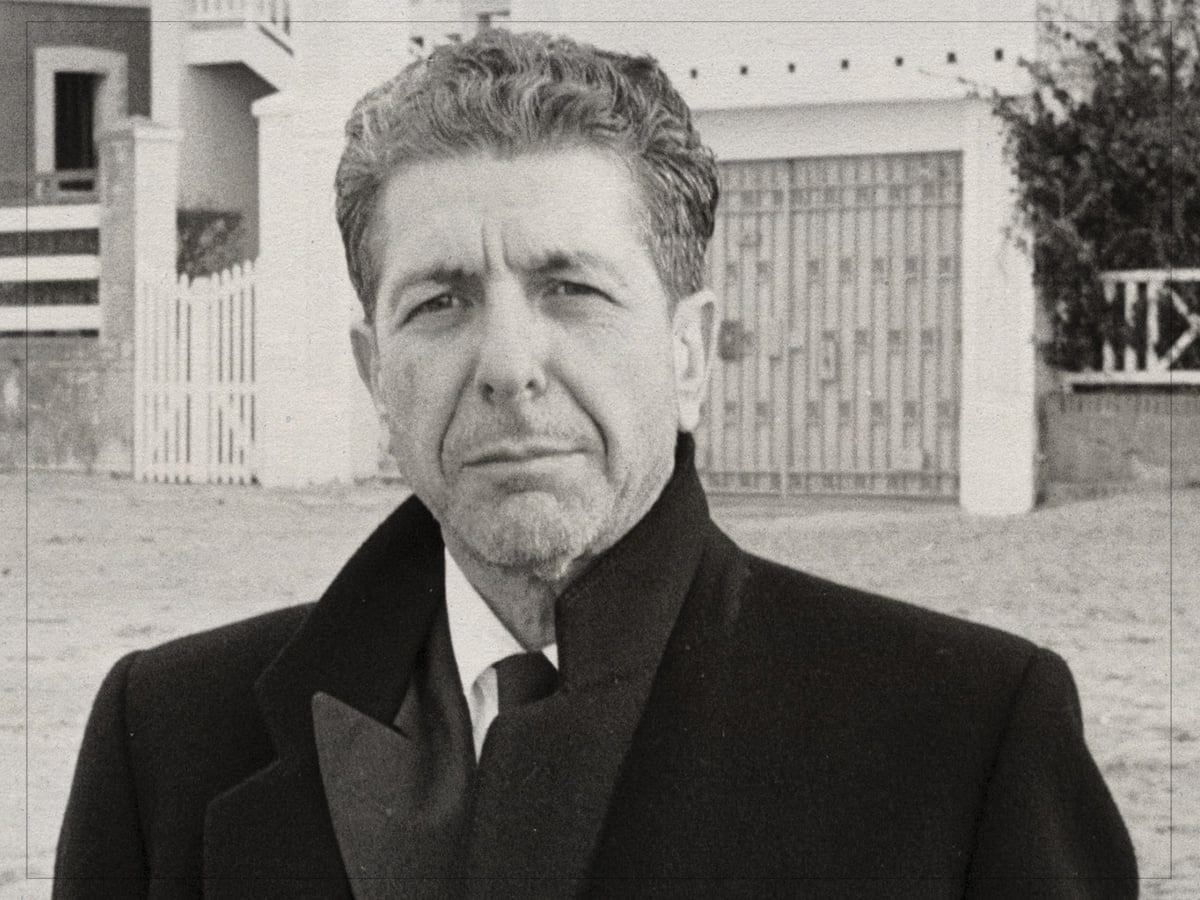
His songs had a timeless resonance that a lot of the music of his late ‘60s and early ‘70s contemporaries did not, and it had made him a somewhat under-the-radar influence for both the ‘80s indie and 90s alt rock waves, as evidenced by the contributions on I’m Your Fan from Nick Cave, REM, Pixies, Lloyd Cole, and Ian McCulloch, among others (embarrassingly, the record is almost entirely free of female voices).
Cohen was thrilled about the tribute record, joking, “I have been resurrected, but no doubt I will be cast to oblivion again very shortly”.
His influence was clearly present in the songwriting of America’s most popular band of the moment, as well, with Nirvana’s Kurt Cobain later commenting that, “When I was depressed and sick, I’d read things like Molloy Dies [sic] by Beckett, or listen to Leonard Cohen, which would actually make it worse”.
Cobain’s Cohen-referencing lyric on the 1993 track ‘Pennyroyal Tea’ might well have been inspired directly by listening to The Future a few months earlier: “Give me a Leonard Cohen afterworld / So I can sigh eternally”. After Cobain’s death, Cohen said he was sorry he never got to meet him, noting, “I see a lot of people at the Zen Centre who have gone through drugs and found a way out that is not just Sunday school. There are always alternatives, and I might have been able to lay something on him.”
Like a lot of the albums in the Leonard Cohen catalogue, The Future, as a whole, isn’t quite so pessimistic as it initially seems, and certainly none of the other tracks somersaults into the bleakness quite like the title track. Arguably, the song with the greatest legacy from this record, in fact, is ‘Anthem’, which includes one of Cohen’s most quoted lines, intended as a message of self-forgiveness and acceptance of imperfection: “There is a crack in everything / That’s how the light gets in”.
Speaking to Reuters in 1993, he tried to explain, as he did many times throughout his career, how a famously doomed view of society can be paired with a general sense of peace inside himself. “I have lived in a state of panic from the beginning,” he said, “which has altered very little from my first moment of consciousness to tonight. But I’m contented with my panic. I’m very familiar with it now. It seems like the natural landscape for me to live on.”
