


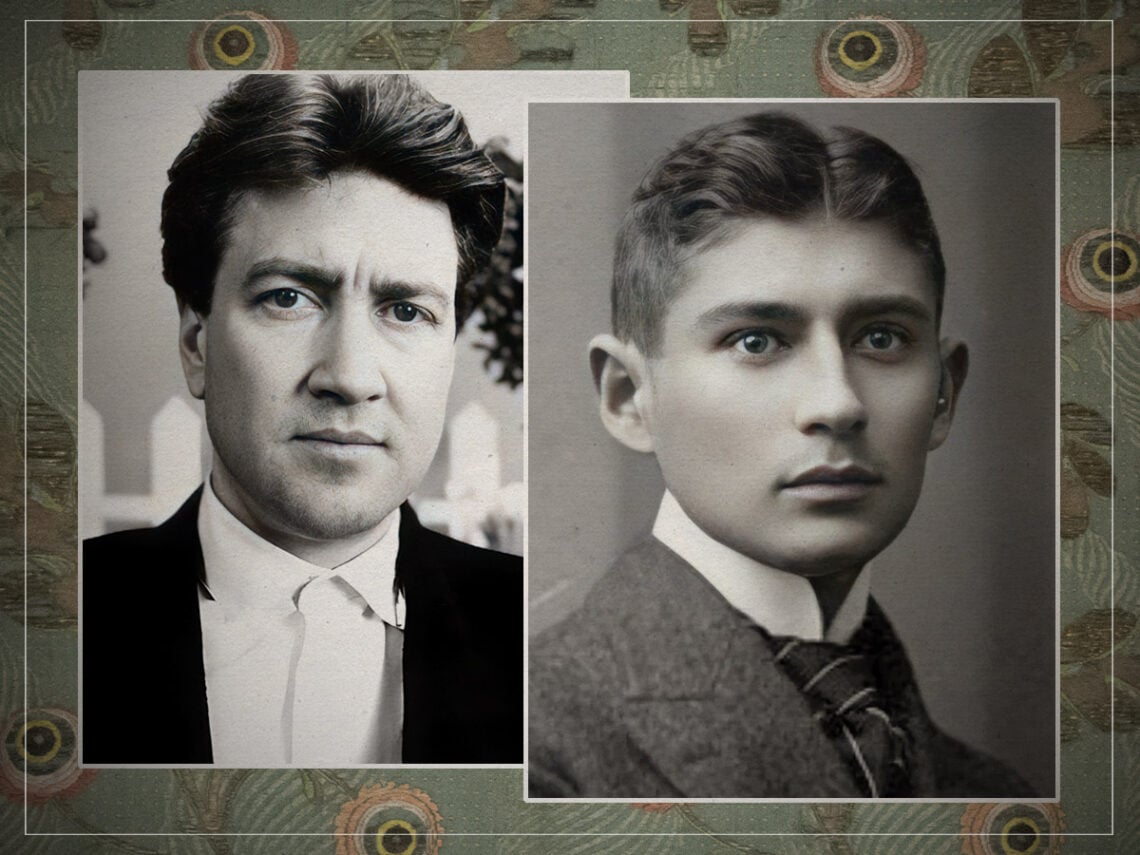
“I almost don’t like saying it”: why David Lynch thought Franz Kafka could be his brother

David Lynch was a true artist in every sense of the word. He didn’t limit himself to one medium, exploring the deepest recesses of his creative impulses through film, painting, music, and writing, and as a result, he found a legion of dedicated fans who resonated with the dark beauty he put into the world.
After making a series of haunting short films, like the grotesque animation Six Men Getting Sick and eerie projects like The Amputee and The Alphabet, Lynch directed his debut feature, Eraserhead, which became a popular midnight movie, although widespread critical opinion was much more mixed. Released in 1978, the film wasn’t like anything that many viewers had seen before; it was a curious dive into the most surreal aspects of the human psyche, with Jack Nance’s Henry Spencer embodying many of Lynch’s own anxieties in regards to fatherhood and the divide between the interior world and society, and dreams and reality.
Elements of Lynch’s own life inspired the film, but he also had the work of certain artists in mind, perhaps subconsciously, while crafting the narrative. One of the most prominent influences that fans have noted is Franz Kafka’s The Metamorphosis. In the writer’s classic 1915 novella, protagonist Gregor Samsa finds himself turned into an insect, unable to go to work or communicate with his family.
Meanwhile, in Lynch’s film, Henry experiences a similar sense of alienation from those around him, and there are various parallels that can be drawn between the two stories in the way that both Kafka and Lynch use surreal and uncanny imagery to convey isolation and discomfort. It’s no surprise, then, that Lynch considered Kafka someone he could’ve been related to, finding himself spiritually connected to the writer.
Talking to David Chute in 1986, Lynch revealed, “The one artist that I feel could be my brother—and I almost don’t like saying it because the reaction is always, ‘Yes, you and everybody else’—is Franz Kafka. I really dig him a lot. Some of his things are the most thrilling combos of words I have ever, ever, ever read.”
It would’ve been amazing to see Lynch adapt one of Kafka’s stories for the big screen, but the filmmaker ultimately thrived best when he was working from original ideas (if Dune is anything to go by). Still, if Lynch could’ve done any author’s work justice, it would’ve surely been Kafka’s. In fact, he was interested in adapting The Trial, but that’s something that never came to fruition.
Instead, the director channelled his love of Kafka into Eraserhead: “Henry, the hero of Eraserhead, gets into Kafka’s world a bit. Henry is very sure that something is happening, but he doesn’t understand it at all. He watches things very, very carefully, because he’s trying to figure them out. He might study the corner of that pie container right there by your head, just because it’s in his line of sight, and he might wonder why he sat where he did to have that be there like that?”
Concluding, “Everything is new. It might not be frightening to him, but it could be a key to something. Everything should be looked at. There could be clues in it.”
