


The strange and surreal world of David Lynch’s short films

It wouldn’t be wrong to suggest that many people see short films as a lesser medium compared to feature-length films. They’re typically associated with amateurs and students, perhaps marking the start of a filmmaker’s career who has since gone on to much better things. However, there are many established directors who have utilised the medium to their benefit, creating bite-sized yet poetic short films that allow them to explore new ideas without the pressure of a huge production, like David Lynch, who was, quite frankly, obsessed with the format.
While he wasn’t afraid of long-form content, having successfully made television shows like Twin Peaks and lengthy movies such as Inland Empire, which comes in at three hours, Lynch frequently returned to short films. In many cases, they were only a minute or two long and rather indecipherable, leaving fans to wonder what was possibly going through Lynch’s mind when he conjured up the ideas laid out in front of them.
Many of these extra-short films were uploaded to his YouTube channel, DAVID LYNCH THEATER, which is a goldmine of bizarre clips that perfectly sum up the master of the surreal. One of the strangest short films featured on the channel is Pierre and Sonny Jim, which features two inflated white gloves with faces drawn on them in Lynch’s recognisable style, attached to the top of sticks wearing shirts. They make distressed high-pitched noises as they shake and struggle for air, with one of them eventually disappearing at the bottom of the screen, leaving the other crying out in grief.
Is the film a commentary on the dangers of arguing and refusing to listen to what the other person is saying – simply talking over one another? And why has Lynch used names that are found in Twin Peaks, specifically for child characters? At first glance, the short feels like visual nonsense, but Lynch tests the audience with his abstract ideas, leaving the film open to wide interpretation. Even if you can’t figure out an explanation for the film, it’s an unsettling two minutes that emphasises Lynch’s experimental mind, pushing the boundaries of what we might consider cinema.
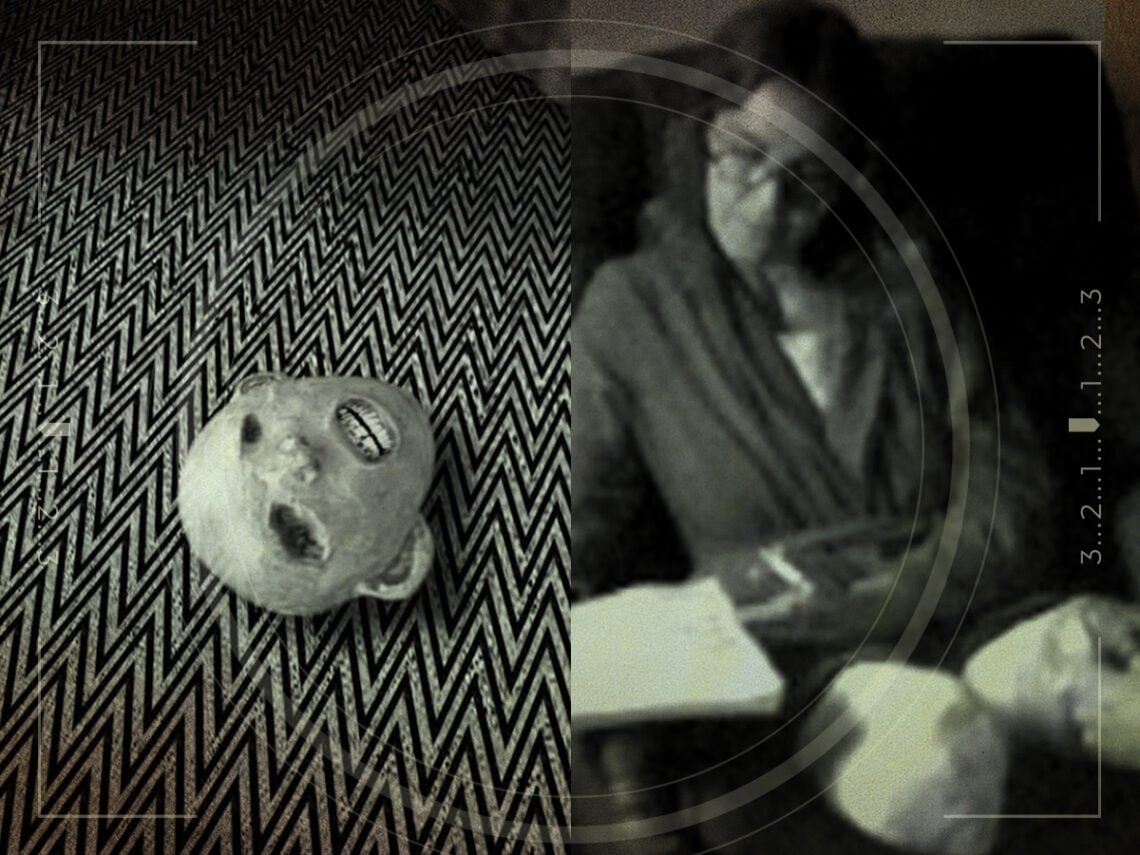
Then there’s The Adventures of Alan R, in which a severed animated head lays on the floor repeating the phrase, “I am not going fishing.” Is Lynch asking us to watch these shorts with context of his other work in mind, as is perhaps the case with Pierre and Sonny Jim? Lynch wrote in his book Catching the Big Fish, “Ideas are like fish. If you want to catch little fish, you can stay in the shallow water. But if you want to catch the big fish, you’ve got to go deeper. Down deep, the fish are more powerful and more pure. They’re huge and abstract. And they’re very beautiful.”

By showing a head disconnected from a body – a fragmented figure who appears to be in pain and discomfort – and having him refuse to go fishing, it seems as though Lynch is conveying the feeling of artist’s block, using the film to process the very issue. Or perhaps he made it with some other idea in mind. You can never be too sure with Lynch.
The filmmaker has made some rather off-putting and bizarre short films during his time, like Premonitions Following an Evil Deed, which he filmed on the Lumiere brothers’ original Cinematographe, and Coffee with Barbie, in which he films a doll’s head as he discusses coffee with it. When you think about it, if you stumbled across one of these videos with no context as to what it was or who made it, you’d probably be seriously concerned. Yet that’s the beauty of Lynch, who wasn’t afraid to bring to life even the smallest and strangest of idea.
With early shorts like Six Men Getting Sick, The Amputee or The Alphabet, which are longer than the ones listed above, Lynch demonstrated his penchant for eeriness and crafting an overwhelmingly strange and unnerving atmosphere. These films, especially the latter, allowed Lynch to discover his personal style as a director, with interesting and rather horrifying sound design, surreal imagery, and a general sense of unease pervading over the viewer.
Lynch has also made various mid-length shorts, like the 27-minute-long The Cowboy and the Frenchman, the 43-minute-long Rabbits, and perhaps most well-known, WHAT DID JACK DO?, which can be found on Netflix. These films are just as strange as his super short films and feature-length movies, and none more so than Rabbits, clips of which can be found in Inland Empire. Several humans wearing rabbit heads sit on a sofa and talk, sometimes ominously moving around, with a laugh track occasionally sounding. In one sequence, the whole scene is bathed in red, as a demonic voice begins talking. It’s arguably one of the most terrifying pieces of cinema Lynch has ever made, and we can only assume it’s a surreal commentary on domesticity and its inherent absurdity.
So, while Lynch was a master of long feature films, his experimental approach to filmmaking also transferred perfectly to shorts, even those that were just one minute long. Many of his short films can feel indecipherable, even pointless at times, but Lynch’s surreal style shines through each one, no matter the length, and it’s a real testament to his idiosyncratic approach to cinema. There is meaning to be found in all of Lynch’s shorts, sometimes you just have to dig a little deeper and open yourself up to the endless possibilities he presented us with.
