


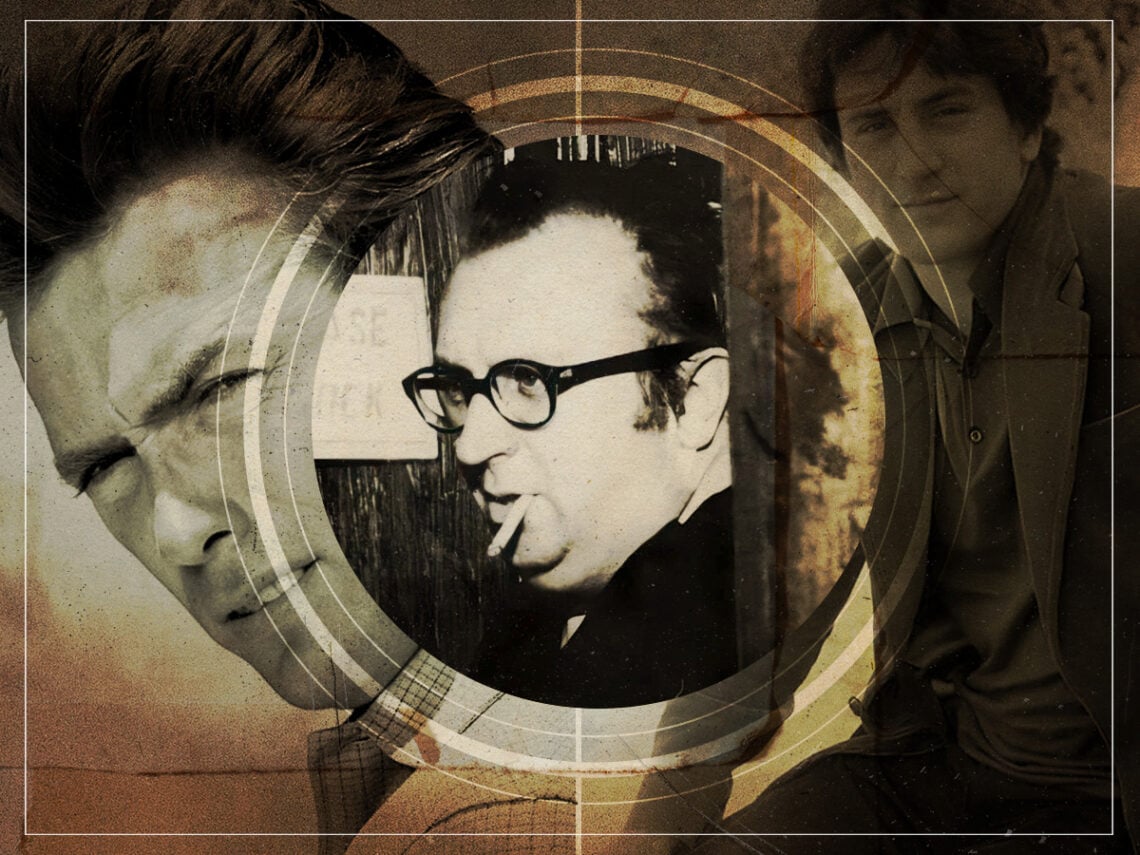
Why Clint Eastwood refused to reunite with Sergio Leone: “I like to know the joke”

In 1966, Clint Eastwood and Sergio Leone were hard at work bringing the final part of their seminal Dollars trilogy to the big screen. The Good, the Bad, and the Ugly arguably proved to be the best of the bunch, and it provided a fitting ending to the spaghetti western series that made Eastwood a superstar.
Towards the end of production on that film, Leone floated an idea to his star about a new project he wanted to develop. The Italian director had read Herschel Goldberg’s 1952 memoir The Hoods, which the Jewish-American mobster wrote while serving a sentence in Sing-Sing prison. Goldberg, better known by his pseudonym Harry Grey, captivated Leone with his story of rising through the ranks of New York City organised crime.
To Leone, Grey’s life story provided the perfect basis for a gangster epic that could be part of a new trilogy telling the story of America through the ages. As for Eastwood’s prospective involvement, the steely-eyed star remembered, “He had this idea about doing a gangster movie. He said, ‘What about Irish gangsters? You could play an Irish gangster.’ Long before The Godfather and all these things came out.”
The idea may have tempted Eastwood, if only Leone had developed it into something more concrete than, “Hey, let’s make a gangster movie.” Instead, he let it languish for several years, with Eastwood admitting, “It was always just there, hanging there.”
In this period, the Dirty Harry star also started to become uncomfortable with Leone’s working method as a whole, which tended to consist of a fairly vague treatment, followed by developing the script on the fly. Unfortunately, by this point, Eastwood had made a lot of television, which was scripted and shot in a similarly loose, ever-changing manner, and it didn’t sit well with him. He’d agreed to make The Good, the Bad, and the Ugly based on a treatment, but that was only because he’d already worked with Leone twice before, and he didn’t intend to do it again.
“As time went on, I didn’t think it was a wise thing to do, with him or anyone else,” a rueful Eastwood confessed. “I like to know the joke. I don’t want someone to tell me a joke and not give me the punch line.” For Eastwood, having the guardrails of a finished script and a full idea of his character enabled him to experiment and improvise, because he would have “a clear line on where I’m headed.” Without that certainty, though, he tended to feel lost and frustrated, and that didn’t help his performances.
After Leone’s gangster idea was put on the back burner, he made another play to secure Eastwood’s services. This time, it was for westerns entitled Once Upon a Time in the West and Duck, You Sucker! which he envisioned as the first and second parts of his America trilogy. However, Eastwood had already decided he wasn’t on Leone’s wavelength anymore, and he didn’t want to typecast himself either. “They were just repeats of what I’d been doing,” he explained. “I didn’t want to play that character anymore.”
Fascinatingly, though, Eastwood also admitted that he didn’t care for the director’s artistic vision on these projects, which departed quite dramatically from the Dollars trilogy. “He wanted to go more into a kind of spectacle thing,” Eastwood explained in Conversations with Clint. “I think Leone more envisioned himself as a David Lean à la Italiano, and that’s understandable. He just wanted to make bigger, more elaborate projects.”
Ultimately, Eastwood was proved right about Leone wanting to make more elaborate films. It took until 1984 for him to release Once Upon a Time in America, that vaguely-formed gangster movie he’d told Eastwood about 18 years earlier. It was an epic in every sense of the word, not least thanks to its bladder-annihilating four hours and 29 minutes runtime, trimmed to three hours and 49 minutes for the US theatrical release. Its reception at the time was mixed, but over the years, the Robert De Niro-starring epic has been hailed as one of the greatest movies of all time, perhaps even giving The Godfather a run for its money.

Never Miss A Tale
The Far Out Clint Eastwood Newsletter
All the latest stories about Clint Eastwood from the independent voice of culture.
Straight to your inbox.