


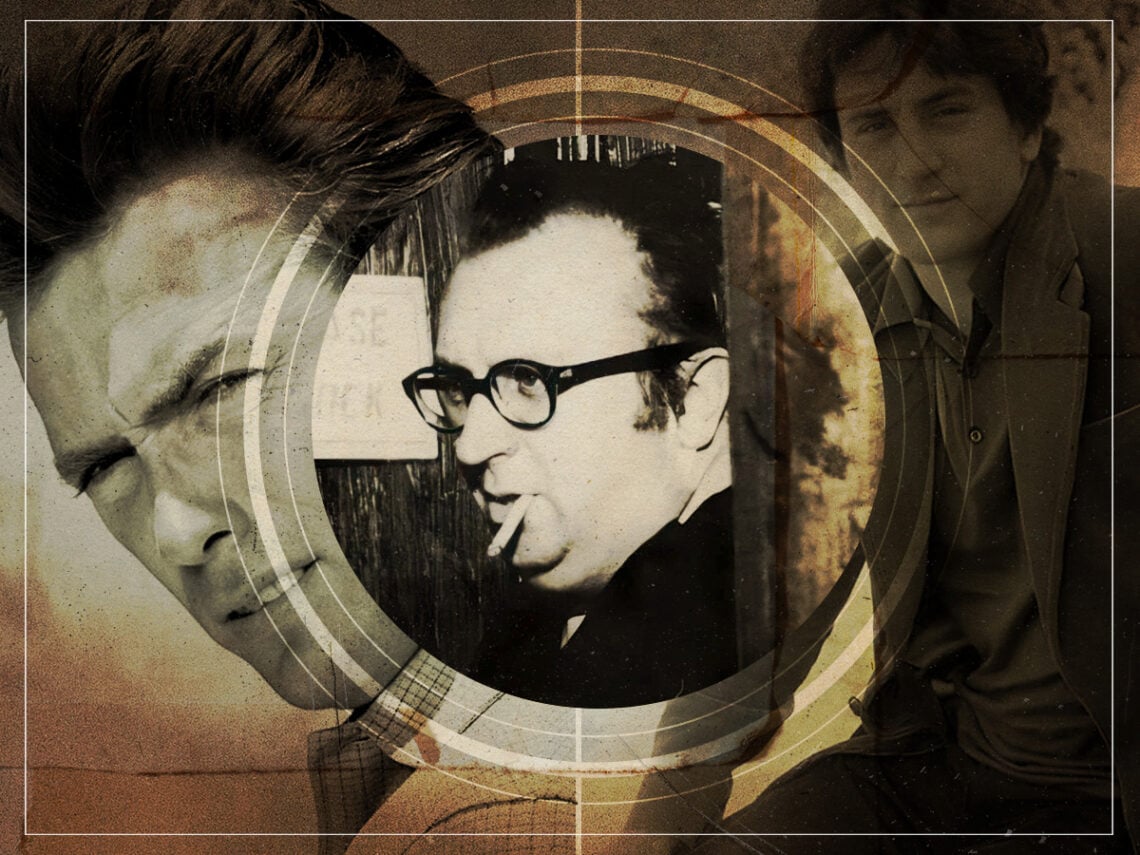
Sergio Leone on the differences between Clint Eastwood and Robert De Niro: “They don’t even belong to the same profession”

Being an actor is often a very different thing to being a movie star, a sentiment which left Sergio Leone completely unconvinced that Clint Eastwood and Robert De Niro even did the same job at the end of the day.
The legendary pair are both icons of the industry who’ve won Academy Awards, played countless unforgettable characters, delivered more than their fair share of knockout turns, and been pivotal to some of Leone’s finest work, but the filmmaker maintained that they should give two different answers when asked what they did for a living.
That’s not to say he was out of turn, because as mentioned, there’s definitely a difference between being an actor and being a movie star. The former pride themselves on doing the best possible work and digging deepest into the characters they play, while the latter are the marquee names relied on to put butts in seats on opening night.
More than a few names have deftly straddled the divide, but Leone wasn’t convinced that either Eastwood or De Niro fit the bill. Of course, he’d know better than most having plucked the star of his seminal Dollars trilogy from the semi-obscurity of American television before turning him into an international sensation, before leaning on the latter to bring the pathos to Once Upon a Time in America.
De Niro couldn’t play The Man with No Name, and Eastwood definitely couldn’t embody David ‘Noodles’ Aaronson, and yet Leone brought the best out of both. In order to do so, he opted to play to their strengths, outlining the starkly opposing merits of his two most famous leading men in an interview with American Film.
“It’s difficult to compare Eastwood and De Niro. The first is a mask of wax. In reality, if you think about it, they don’t even belong to the same profession,” he said. “Robert De Niro throws himself into this or that role, putting on a personality the way someone else might put on his coat, naturally and with elegance, while Clint Eastwood throws himself into a suit of armour and lowers the visor with a rusty clang.”
In its loosest interpretation, Leone suggests that De Niro’s immersive approach saw him wear his characters like a second skin, whereas Eastwood prefers to rely on his tried-and-trusted persona that sees the parts he play moulded to fit the mythology he’d built up around himself.
“It’s exactly that lowered visor which composes his character,” he offered of Eastwood’s approach to further his analogy. “And that creaky clang it makes as it snaps down, dry as a martini in Harry’s Bar in Venice, is also his character. Look at him carefully. Eastwood moves like a sleepwalker between explosions and hails of bullets, and he is always the same: a block of marble.”
Having apparently had enough of such vivid wordplay, Leone opted to cut right to the chase. “Bobby, first of all, is an actor,” he explained by hitting the nail squarely on the head. “Clint, first of all, is a star.” It’s not against the rules to be both, but the Dollars director evidently didn’t think De Niro or Eastwood were capable of pulling it off in the conventional sense.

Never Miss A Tale
The Far Out Clint Eastwood Newsletter
All the latest stories about Clint Eastwood from the independent voice of culture.
Straight to your inbox.