


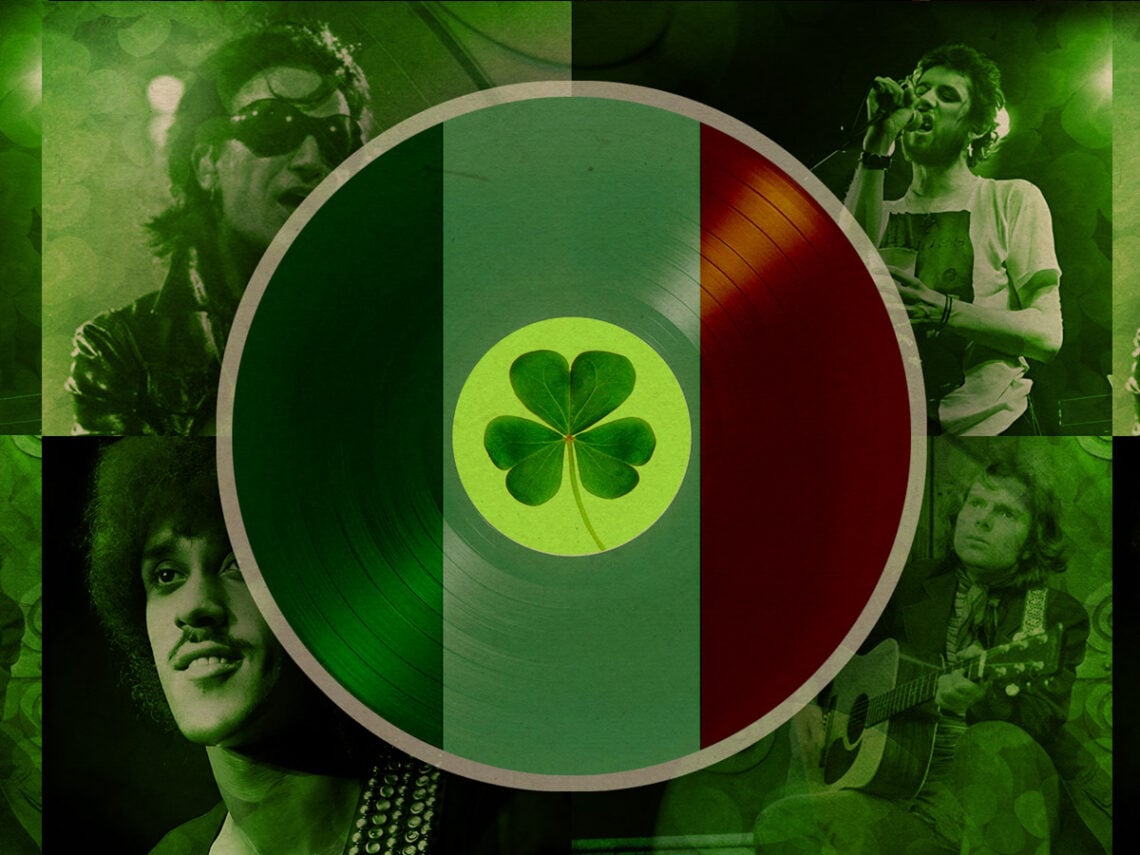
Who wrote ‘Whiskey in the Jar’?

Having become an anthem of sorts for multiple acts over the years, ‘Whiskey in the Jar’ is the sort of song that one could reasonably describe as being timeless, and that can be true in a very literal sense when it comes to the history of the folk tune.
Initially made popular through a version recorded by Irish folk act The Dubliners in 1968, over time, the song has become something of a staple not just in Irish culture, but around the world in various communities. Of course, its references to the “Cork and Kerry mountains” and British occupation make it distinctly Irish, but that doesn’t mean that its effortlessly singable chorus can’t be embraced by those from further afield.
Adapting the version that The Dubliners produced in the late ‘60s and giving it a more distinct rock flavour, Thin Lizzy would then go on to make the song even more popular with their 1972 cover of the song, with frontman Phil Lynott adapting the lyrics in a few ways and adding in references to other notable Irish folk songs such as Ewan MacColl’s ‘Dirty Old Town’. Their version would end up being the most commercially successful, peaking at number six in the UK chart, and rather understandably topping the charts in their home nation for a total of 17 weeks.
While The Dubliners and Thin Lizzy both recorded their interpretation due to their Irish heritage, American thrash metal icons Metallica seemingly recorded their own version of the song in 1998 due to being fans of Thin Lizzy, although there does exist a variation on the song dating back from the American Civil War called ‘We’ll Fight for Uncle Sam’, which borrows the same tune from ‘Whiskey in the Jar’… To put it simply, the song is immensely popular around the world for various reasons, but how exactly did it get to be so renowned in the first place?
You may have noticed a deliberate avoidance of stating where the song originates from, instead choosing to focus on the more modern interpretations of the song – a history lesson on the track’s origin would be lovely, but there’s a lot of confusion over the matter that makes providing a definitive answer near impossible.
Where does the song ‘Whiskey in the Jar’ actually come from?
What we do know is that the song is of traditional Irish origin, and a rough date can be placed on the time period it stems from due to the fact that it references real-world events that are known to have taken place on an exact date… Records show that Patrick Fleming, a notorious highwayman who was hanged for robbing a number of high-profile figures within the Catholic church, was executed on April 24th, 1650, and because the entire song is filled with references to his crimes and his captors, we at least know that the song is more recent than the mid-17th century.
Historians have also pointed to the fact that playwright John Gay’s The Beggar’s Opera, which was written in 1728, takes inspiration from the same story, and while this could be a coincidental borrowing of the source material, it’s also likely that Gay could have heard the song being sung in the streets prior to producing his work.
While the song is undoubtedly likely to have received multiple interpretations in the interim, the earliest known recording of the track is said to date back to 1940, when New Hampshire resident Lena Bourne Fish was recorded by Frank and Anne Warner as a field recording, rather than in a studio environment. Her version, commonly referred to by its alternative name of ‘Gilgarrah Mountain’, is a scrappy interpretation of the folk song, but one that evidently shows how the song had made its way across the Atlantic.
It’s remarkable that historians have yet to find definitive proof of the song’s origins, given how immensely popular it has become over time, with in excess of 200 recorded versions of the song, and countless more iterations drunkenly belted out in Irish pubs over the last four centuries.

Never Miss A Tale
The Far Out Classic Rock Newsletter
All the latest Classic Rock content from the independent voice of culture.
Straight to your inbox.