


‘I Hope That I Don’t Fall In Love With You’: Inside Tom Waits’ timeless 1973 bar song

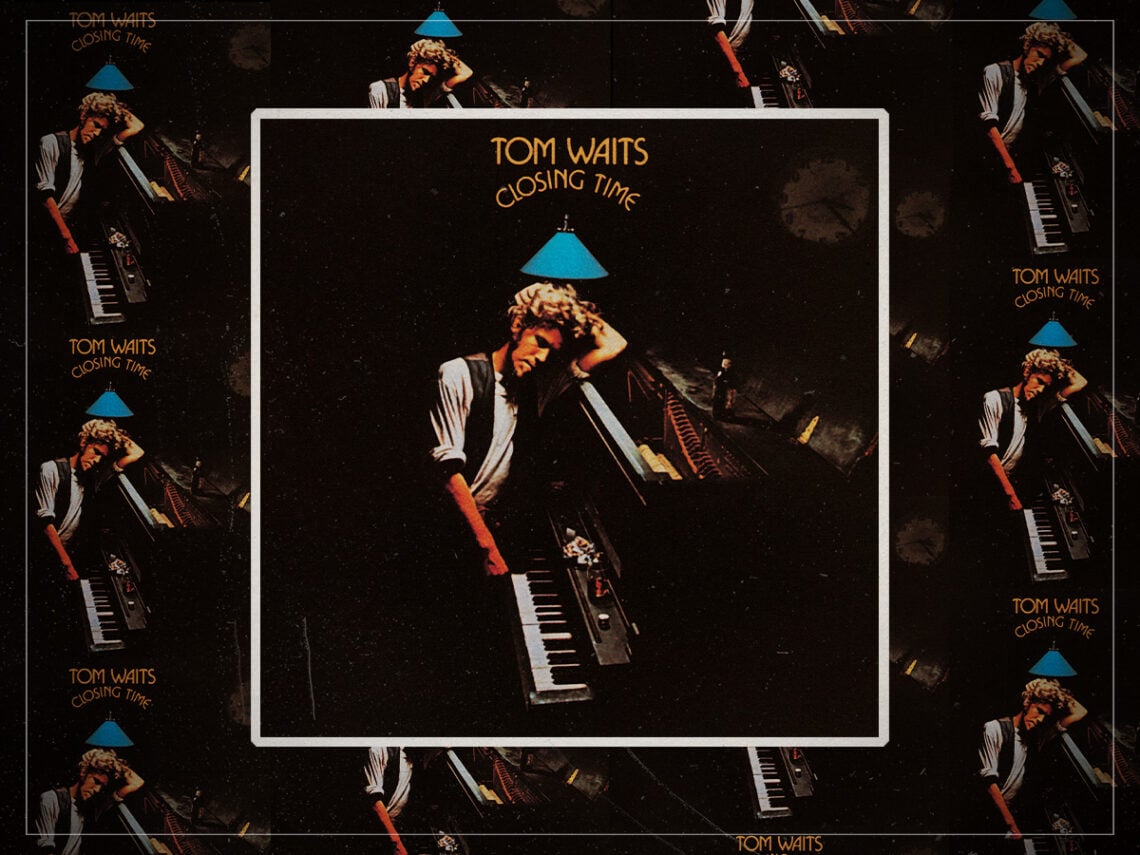
On the cover of Closing Time, Tom Waits‘ 1973 debut album, the singer sits with his elbow resting atop a piano, lit only by a blue pool table lamp overhead.
On the piano sits a bottle of beer, a shot of rye, cigarettes and an ashtray, and a candle, while the piano itself is barely visible, save for the glow of its keys, and Waits, himself, is half-concealed by a shadow, glowing only so much as to capture a forlorn look on his face. It is, frankly, the perfect image, capturing the mix of sensitivity and mystery that he would continually hone as a storyteller.
The image also introduces Waits in his exact vision: on this cover, he is the ultimate bar crooner, a man wistfully singing of days gone by, of loves lost and questions left unanswered. Looking at him in this image, it is easy to forget that he was only 23 at the time, with much of his life still to live, but he sings as though he has lived tens of them, the weight of experience already felt, to the point wher we can imagine the dimly-lit bar, filled with cigarette smoke and a cast of characters just like Waits himself, lost and looking for a common soul.
He assumes the role of troubadour, just a man and his chosen instrument, singing of his own life and the ones that surround him. What makes Closing Time so evocative is this very intimacy, as when Waits sings, say, of one of his lost loves, he could easily be singing about you, too. The gravel in his voice and the haunt of a simple melody make the feeling all the more real.
One of Waits’ finest examples of this is communicated through ‘I Hope That I Don’t Fall In Love With You,’ the second song on Closing Time that finds its strength in a simple rendition of the classic lovesick tale. “You take all the bar songs in the world and put ‘em together,” he once described the song, “they’d stretch all the way to Kansas City, I guess, millions of them. This is just another one.”
Ever so humble as Waits seems, ‘I Hope That I Don’t Fall In Love With You’ stands as one of his most popular songs for a reason. For one, it is vulnerable to an almost uncomfortable degree, with the title alone a confession that most people would be apprehensive to admit. Opening the song with the same line, Waits’ voice rattles as we are transported into his memories of his lover placing her heart on display, as he describes: “I had a beer, and now I hear you callin’ out for me”.
We are transported into a crowded room, filled not just with people but with the awkward unease of wanting to know someone, but with the lingering fear of getting too close. Waits describes himself as an “old clown” who can ease his lover’s frown, admitting, “Before the evening’s gone away, I think that we could make it”. Even in the lingering unease, there is a bit of hope.
“Well, the night does funny things inside a man,” he concedes, “These old tom-cat feelings that you just don’t understand,” blurring the line between love and lust. He watches as she lights a cigarette, confessing, “I wish I had the guts to bum one, but we’ve never met”. His lover is, in fact, a stranger who has consumed Waits’ mind. As he sings, he notes that they both seem lonely; she has been left alone by whichever man she arrived with, and Waits seems to already stand alone. Outside of tense eye contact from afar, the two do not speak, as he sings, “I hope that you don’t fall in love with me”.
By closing time, it’s too late as Waits has lost track of the woman, and he is left with everything left unsaid and, at last call, with no choice but to order another round. The final line, “And I think that I just fell in love with you,” breaks the tension that has unfolded, and he is left with all of the sentimental baggage that he was desperately trying to avoid. The song becomes an ode to unspoken truths: nobody wants to be alone, staring into their glass at a bar, spoken for only through passing glances. But as fate has it, this is exactly where Waits is left to reckon with his emotions.
