


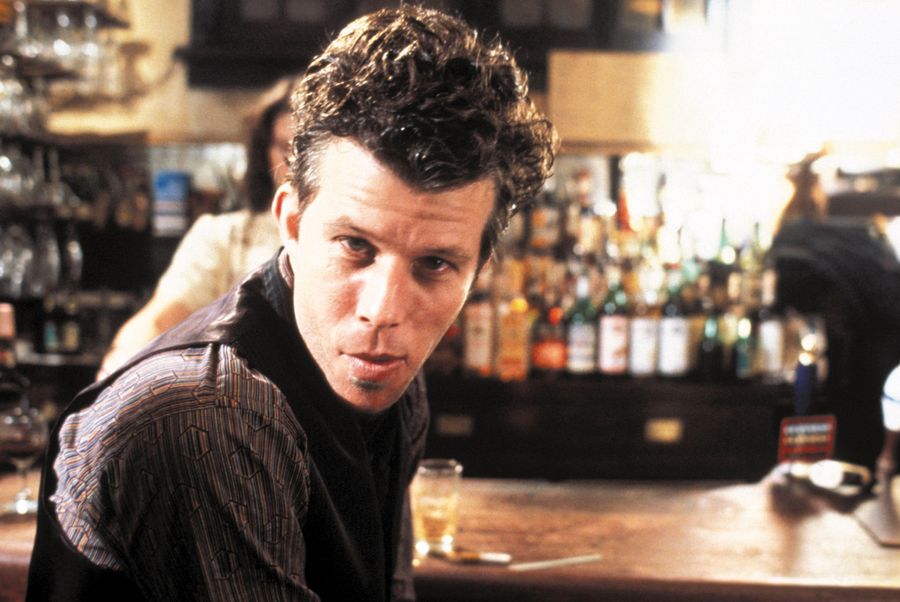
Tom Waits – ‘Closing Time’

As if to assert the ruggedness of this album from the get-go, Tom Waits and his producer Jerry Yester elect to open things on the damp footnote of a grumbled four-count. It’s a digression that might try its best to imply a level of dogeared imperfection to come, but the beauty of everything that follows on Closing Time proves – as Serge Gainsbourg once put it – that ugliness is, in a way, superior to beauty because ugliness endures.
In this case, that endurance is signified by an essence as timeless as a drunkard falling in love with their favourite stool. Croaked and hazy, ‘Old 55’ lurches into view in the same way that a school teacher with one year left before retiring might roll out of bed on the first day of term. It is a reluctant album opener and that, paradoxically, is absolute perfection in the imperfect postmodernist world where Waits operates/reclines.
The song is, for my money, a tale about Waits – or some other disenfranchised character prone to wearing jaunty hats – leaving his new lover’s place in the morning. He drives through a promising dawn with a freshly acquired optimism lending the sleepy morning traffic a poetic hue – only slightly shaded by the trifling complaint that he’d still rather be in bed than groggily bumbling into the reality of the grind. Each additional car piling behind his post-coital precession further invigorates his love for his latest romantic partner; such is the way amid the rose-tinted throes of the morning after a blossoming encounter.
Waits’ track works wonderfully, not just because of the luscious melody on offer or his eternally underrated vocals – which all too often are noted for their gravelly texture alone without remark on the quality – but also because there is a lived-in sense of depth there. There is genuine jubilation in the mix alongside the gruff edges of early morning weariness after a late night—this time, for once, a late night that bore promising fruit for our usually downbeat protagonist. The details of this scene might not be expressed in the perfunctory sense, but it’s a mark of Waits’ postmodernist style as a songwriter that such corroborations seem to be easy to extrapolate from his poetic combination of craggy words and wistful melodies.
The creaking crescendo of Wait’s instrumentation, as he stretches out his creases, and yawns his way towards a key change in the early exchanges, is the perfect collision of music tuned to match the mood of the story in a meta marriage that tessellates to form a whole expressionist picture. This is how Waits continues to weave his beguiling little tales throughout. They are hazy – but how often in life are you graced with Motown clarity? – and they capture the poetry of everyday scenes in amber like an Edward Hopper painting.
With ‘I Hope That I Don’t Fall in Love With You’ he reserves the audience a stool at the bar to witness his five-pints romance first-hand. In ‘Virginia Avenue’ he lassos you in with a sleazy broken bassline that puts damp cobbles under your sodden shoes and the halo of glowing streetlights above. In ‘Martha’ he lets you pick up the receiver in the other room to eavesdrop on his nostalgic call from a phonebooth in some Autumnal city where the brown leaves are falling like snow. And in ‘Grapefruit Moon’ he draws open your blinds to gaze up at a moon that may not be there and think about bittersweet what-could-have-beens that you may never have even had.
Therein lies the true beauty of Closing Time: it is brimming with a sense of empathy. You might not have had the experiences he croaks about or know the downtrodden characters he eulogises in his quirky tales, but his sumptuous refrains allow you to hobble around in their broken-heeled shoes for a humbling moment. The melodies are the sort that makes it halfway towards Tin Pan Alley before pausing to prop themselves up on a lamppost for a moment to steady their wavering jazz-inflected stride.
Closing Time is a recently drunken album, pitched perfectly in that mellowed-out period when the world is regaining its magic after a deadened lacuna. It waltzes you along the alleyways of everyday life in the less opulent end of the city, passing the old guys looking pensive in phonebooths, young kids pining outside of their darling Rosie’s window clutching a battered bouquet in one hand, a small flask of rye in the other, and an ice cream man who may or may not be in the business of selling frozen confectionery.
It might not be as jazzy as Waits wanted it to be, but every note on the record is pitched just right to create a mellow amble of adult lullabies—the sort that tell you what it would be like if the walls at Nighthawks could sing, swing and offer up lilting violins and gorgeously gratuitous sax. In this loving process, Waits hits the musical empyrean of sullen city streets, grasping the painterly poetry behind Leonard Cohen’s mantra for the disenfranchised: “Well, never mind, we are ugly, but we have the music.” In this case, we have some of the most human and beautiful music ever coaxed from the ether onto bulky old acetate.
