


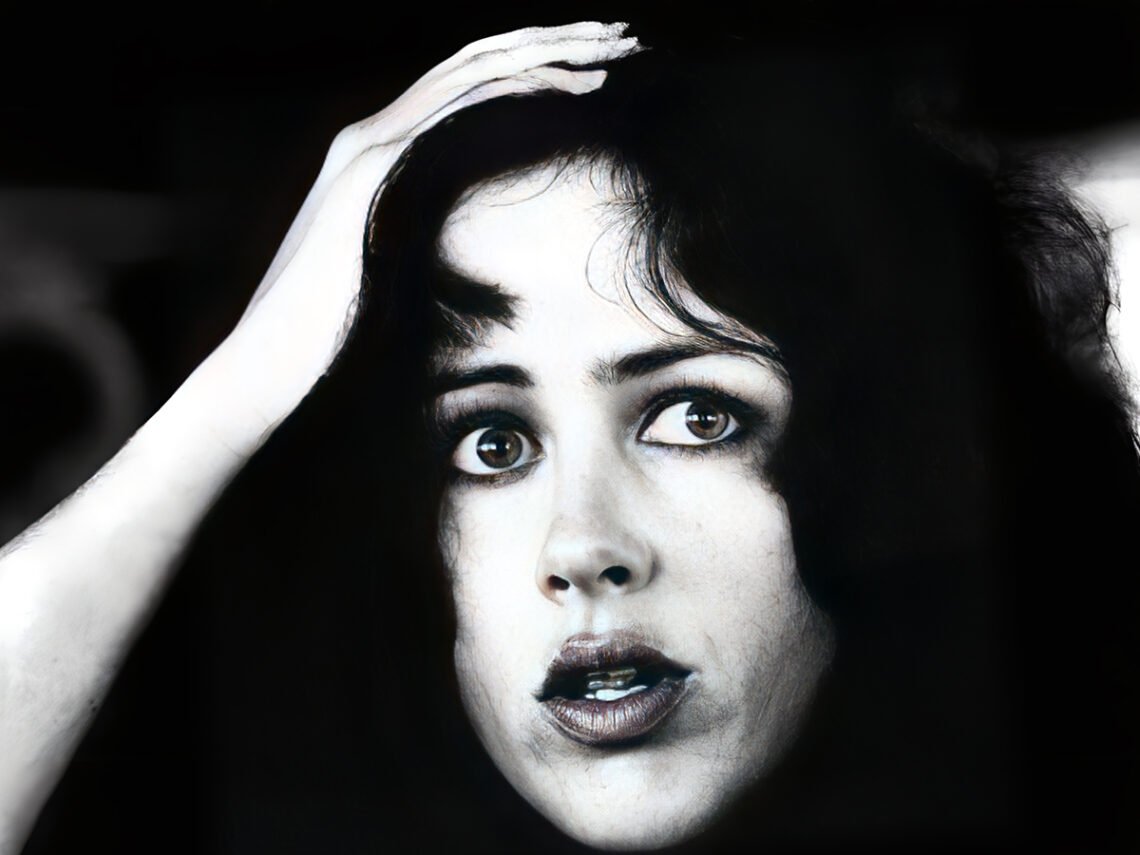
‘White Rabbit’: The Grace Slick vocal performance that defined a generation

While it’s hard to measure their success in terms of chart performance, Jefferson Airplane were undoubtedly one of a handful of bands that helped to define the counterculture movement of the 1960s. Emerging from the Bay Area of San Francisco at a time when attitudes towards sex and drugs were rapidly shifting in a positive fashion among the youth of America, their free, psychedelic sound encapsulated this newfound freedom, and at the heart of it all was frontwoman Grace Slick.
Her booming vocals and magnetic presence was a huge part of why they were able to establish a cult following, and the fact that their music was so dramatically different from what was dominating the mainstream at the time helped the disenfranchised young adults who were searching for something new to latch onto find everything they were after.
The band, of course, would go through many transitional periods later in their career, becoming Jefferson Starship in the 1970s, and later just Starship in the 1980s, and with these name changes came complete overhauls in their identity. Their stylistic metamorphoses were somehow always prescient, with the band jumping aboard every new movement in music and culture and becoming an early adopter, demonstrating that the band always had their fingers on the pulse.
This does make picking out a single performance of Slick’s as being the most generation-defining, as for better or worse, much of her output defined different generations in markedly different ways. You could make an argument for Starship’s ‘We Built This City’ having defined all of the worst aspects of ‘80s pop rock and the commercialisation of popular music, but it wouldn’t be fair to isolate what many consider to be the lowlight of her career as being the moment that helped sum up an entire era.
To find her most positive impact, you have to return to the Airplane era in the ‘60s, and their two most popular tracks that were released in this decade. Their second album, 1967’s Surrealistic Pillow, remarkably saw the band break through from obscurity into the spotlight in America, and bore their two biggest hits of this incarnation – ‘Somebody To Love’ and ‘White Rabbit’.
While the former is a fine example of Slick’s impeccable vocal talents and the grand songwriting ability of the group, it’s ‘White Rabbit’ that truly defines the late 1960s and all of the societal changes that were going on at the time. In terms of the performance itself, it begins with Slick offering a hushed vocal line over a marching drum beat that demonstrates the depths of her lower contralto register, but as the song evolves and becomes more emphatic, so do her vocals, working its way up to a bellowing eruption at the song’s climax.
However, it’s the lyrical content that is just as important to the song’s significance. With its not-so-subtle references to psychedelic drugs that are illustrated through imagery from Lewis Carroll’s Alice In Wonderland, ‘White Rabbit’ takes you on the most mind-bending trip with form-altering pills and giant apparitions, and captures a surreal mood that no other songs from the period did to the same degree. It takes influences from jazz and classical music and distorts them into this psychedelic melange, which at the time would have been a groundbreaking move that others were afraid to attempt.
The crescendo’s repeated line, “feed your head”, can also be taken as a slogan of sorts and a call to arms for listeners to go out and experience the world through engaging with media and drug use—an instruction to expand their minds beyond their current capacity and see the world through the same lens as them. The fact that the band also managed to sneak these references to drugs past censorship boards and receive radio play was also astonishing, considering how strict stations were at the time in their mission to stop the spread of pro-drugs messaging.
‘White Rabbit’ defined an era, an entire movement, and the work of a band with just one two-and-a-half-minute blast of inspired songwriting, but if there’s anything more arresting than the music and lyrics, it’s the magnificent vocal performance that Slick delivers on the track.
