


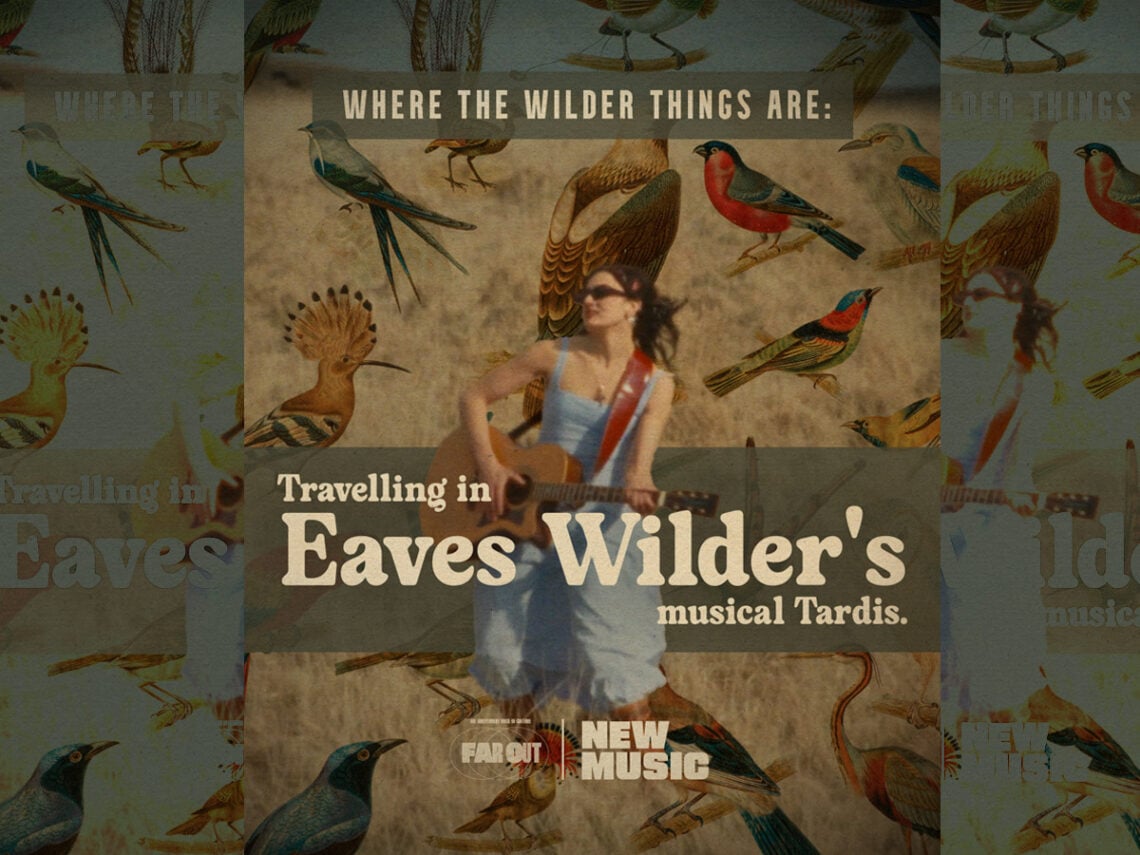
Where the wilder things are: Travelling in Eaves Wilder’s musical Tardis

Let me paint you a picture: Your humble music journalist is sitting with the radio on, typing away, when Eaves Wilder’s name is mentioned, along with a run of tour dates, one of which is a festival the said journalist already has a ticket to.
I didn’t stop what I was doing when I heard that Wilder was playing a festival near me. Instead, I just listened a bit more intently than I usually would, maybe I turned the volume up a touch, not much else. With that, her track ‘Hurricane Girl’, which happens to be the opening song on her new album Little Miss Sunshine, started playing.
It’s a pretty humble introduction. A clean guitar is strummed sweetly, and Wilder’s crisp vocals dance over the top of it. ‘Nice,’ thinks the music journalist, ‘Maybe I’ll pop into whatever stage she’s playing when the time comes.’
After about 30 seconds, that introduction drifts off, it’s all but forgotten, and taking its place are a couple of notes on a bass guitar, followed by one of the biggest riffs to come out of this side of millennia. Notes of Cream, Led Zeppelin, and Black Sabbath bleed through speakers, and suddenly, whatever I was writing at the time didn’t seem important anymore. I closed my laptop, set the radio back a minute, and gave the song my full attention.
‘Hurricane Girl’ is a huge-sounding rock song, no doubt about it. That guitar line that runs throughout the whole thing, paired with Wilder’s dominating vocals, scattered drum fills and a rhythm that would get the stiffest of necks head banging, it’s clear she has no intention of beating around the bush when it comes to creating something that will literally stop you in your tracks. Fast forward a couple of weeks, and I’m chatting to Eaves Wilder, a conversation which it only seems appropriate to start by asking about that riff.
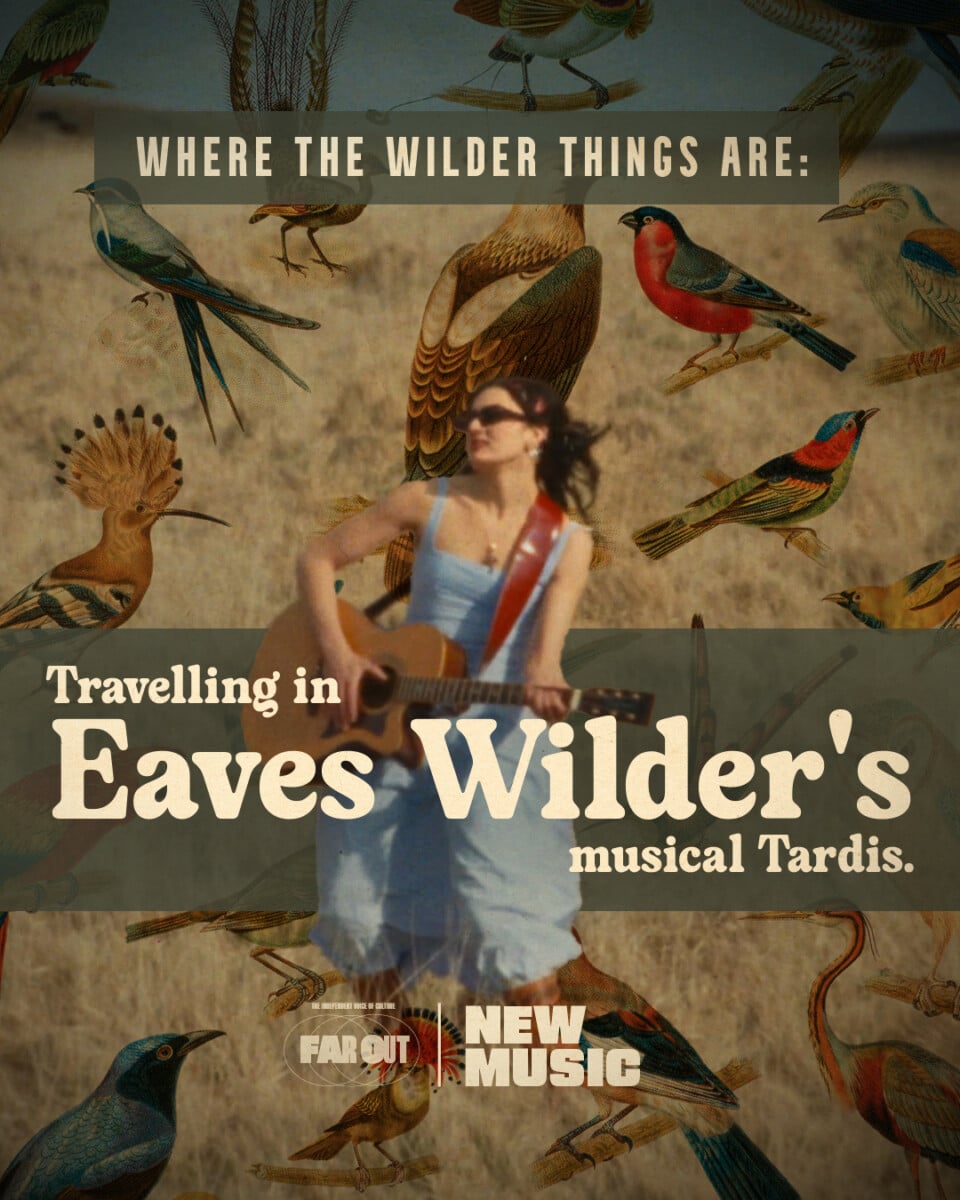
“I just wanted to write a massive fuck off riff. The kind of riff that hopefully stops people from working,” she declared, and well, mission accomplished, explaining, “I really enjoy music like that. It’s funny, I started off so into Riot Grrrl, which is very anti cock rock and classic rock in some ways, and then I’ve kind of done it in reverse, now I’m absolutely obsessed with that sound.”
While her playing style evokes images of rock legends, Wilder admitted that the guitar isn’t her first instrument. She can play, but it’s not what she’s most comfortable on, and so riffs like that in ‘Hurricane Girl’ are initially written on the piano and then transferred over to the six-string.
“I didn’t think it was attainable for me to make a big riff because I play guitar but I’m not really a lead guitarist, I just got a guitar plug in on logic and I started playing it on piano,” she elaborated, “I thought ‘OK, great, now I can just make those complex riffs and I don’t have to learn how to play them on guitar, I can just do it’. That’s kind of how it started, just as a challenge to myself.”
This writing style is more obvious on some songs from her debut than others. The following track, ‘Just Say No’, has a lick running throughout where it’s difficult to tell whether she’s playing on a synth filled to the brim with distortion, or a standard electric guitar with a fuzz pedal.
“It was probably both,” she told me, “That’s how I do it, I tend to write it on a synth, and then I’ll get my guitar out and duplicate it on a pedal board. I really like that you couldn’t tell because I love sounds in songs where you can’t tell where they’re coming from or what they are, I love that about production.”
Whether it’s a synth or guitar, Wilder has put together one hell of an album, absolutely packed with atmosphere and a real variety of influences. While it might have been the ‘70s style power-packed riff that originally caught my attention, when you listen to the rest of the album, there’s a ton of different sounds at play. Some songs drift closer to shoegaze, some are closer to indie rock rather than classic, and other tracks use beats that would be better suited on a hip hop track than a rock one.
“I don’t really see myself as an indie rock artist, there’s so much music that I’m into, I love big break beats, I love the Prodigy, I love rap music,” she told me, “I was quite inspired by the beats that The Beastie Boys would have, and I really wanted to do something break beat-y and electronic.”
All of those influences are on full display and then some. Wolf Alice, Jane’s Addiction, Pearl Jam, all ring through, even as Wilder speaks to me, and she’s surrounded by Beatles memorabilia, a band who inspired her to explore conceptual themes on the album. However, something which isn’t present on her new record is the piece of music which she said was one of the first scores she ever connected with: the Doctor Who soundtrack.
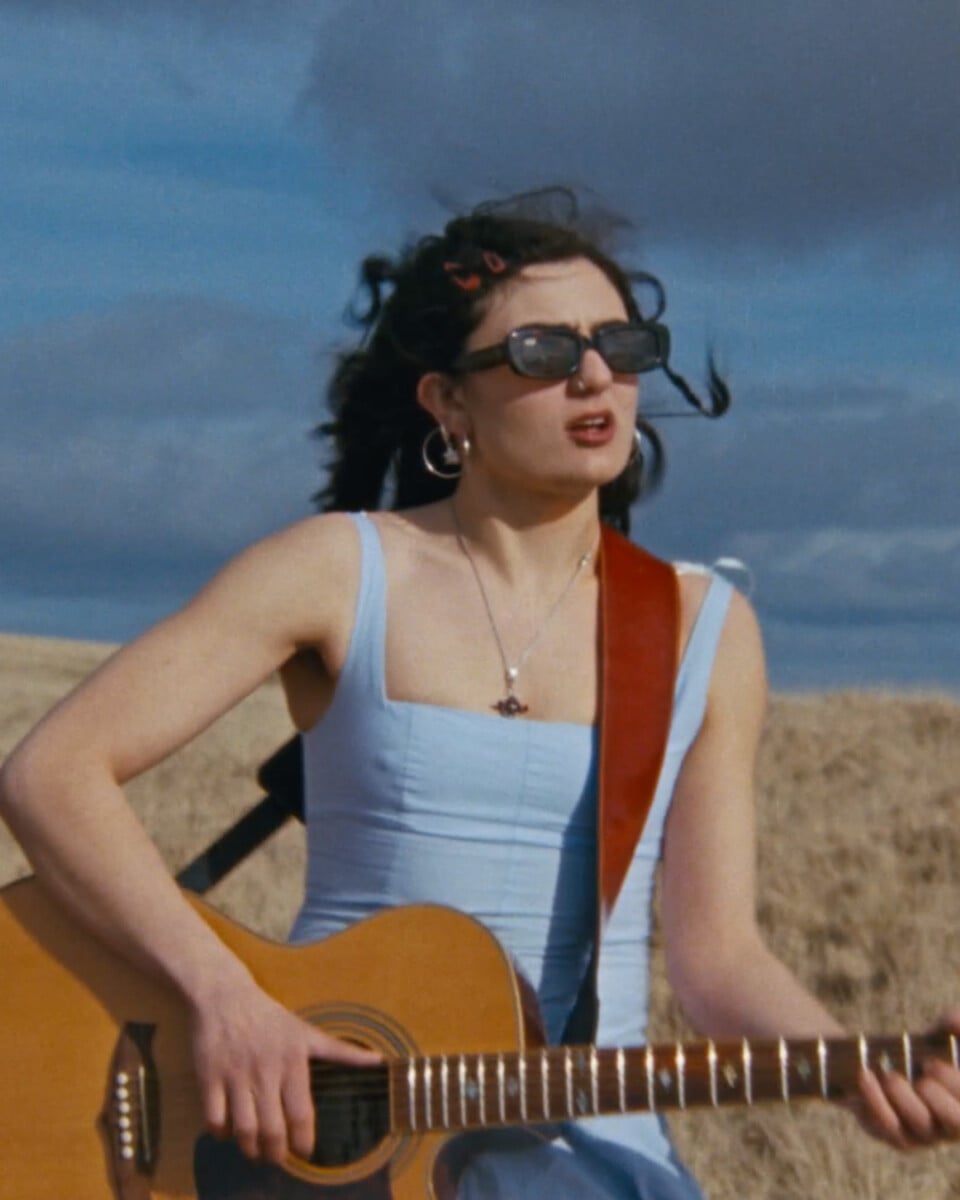
“I was obsessed with the Doctor Who score for a long time, and that was my first music obsession,” she said. When I pointed out that that didn’t quite come through on the record, Wilder laughed, adding, “I’m saving that for album two, when I can afford to get a bit weirder with it”. On reflection, though, when you dive more into what inspired Eaves Wilder to put Little Miss Sunshine together, maybe themes of Doctor Who are more present than you think.
The need to make an album came out of a need for what she eventually discovered was direction and purpose. After talking to struggling friends, continuing to feel the social effects of Covid, and finding it hard to discover a community to call her own, Wilder was at a loss, and she began looking into nunneries that she could apply to in a bid to belong somewhere.
“I found one, I found a good one,” she laughs about it now, “I brought it to my boyfriend, and he was like ‘You know, you’re never going to be able to have a beer again, you’re gonna have to break up with me, you can’t smoke weed or have a cigarette’. I think what I really was actually feeling, maybe I’m overthinking it, but I do think it was a response to how bad everything’s got right now. In terms of capitalism, I was like, ‘Fuck, I’m never going to be able to move out, I want to move to a commune’. I think basically what I wanted was a commune and a sense of community. I don’t feel like anyone has that right now, and I don’t think my generation has ever had the opportunity to have that.”
“The pubs are too expensive, clubs are full of fucking shit house music and really annoying bangers, and we haven’t got anywhere to go […] I don’t know what we’re meant to be doing, but it feels like we’re not doing it.”
She continued, taking me back to before the writing process had even begun, “Everybody I knew that’s my age was just freaking the fuck out. Everyone was so depressed. Everyone who was at uni was like ‘I’ve fucked it, this degree doesn’t even matter, and I’m gonna be in debt for the rest of my life’. Then everybody who hadn’t gone to uni was like ‘I’ve fucked it, I don’t know how I’m gonna start getting a job’.”
On top of the general anxiety that the younger generation feels, Wilder said their fear is only added to by a constant bombardment of reminders that times have never been worse. The term ‘unprecedented’ is hurled around to a degree which is…well…unprecedented, and yet, despite such societal devastation, Wilder continues to be optimistic, recognising that she wouldn’t have been any happier in the generations which came prior.
“I can’t be like ‘I was born in the wrong generation, I should’ve been born in the ‘60s’, I would have been so miserable in the ‘60s,” she said, “Or the ‘90s, the way they treat female musicians. I am lucky, but I just don’t think [this generation has] got anywhere to go. The pubs are too expensive, clubs are full of fucking shit house music and really annoying bangers, and we haven’t got anywhere to go […] I don’t know what we’re meant to be doing, but it feels like we’re not doing it.”
Wilder found direction in creating this album, as it allowed her to do a few things. The first was to find a sense of purpose in attempting to create something, having a complete LP be the end goal, and her routine shaped itself around that end goal. It also allowed her to process her feelings, as the songs became an amalgamation of everything she was going through at the time.
“It’s such a cliché, but it definitely is a way for me to process my feelings,” she said, “A lot of these songs wouldn’t exist if anyone else had been in the room, because they sound quite upbeat, but I actually think every song is quite dark. No songs are actually about anything very happy; they’re all about things that were torturing me at the time. I don’t think I’m in a place where I’m open enough with my feelings to be able to do that with anyone else there.”
What it also granted Wilder was the ability to escape. Little Miss Sunshine is essentially a concept album, as she was able to create worlds within these tracks, places where she could run off to and find that community which she dreams of. She said, “I don’t think I made it for the sake of it. Looking back, I think the whole album is about escapism, and I think I inadvertently made this place for me to escape to because I wasn’t enjoying my life.”
You can hear that on songs like ‘The Great Plains’, where Wilder sings about wanting to become a cowboy, live off the land and look after herself without the distractions of the modern world. Those big American landscapes stand tall in every corner of the song and loom over you as you listen. There are a lot of other worlds within the album that inspired her when she was putting it together as well, from scenescapes to books to movies.
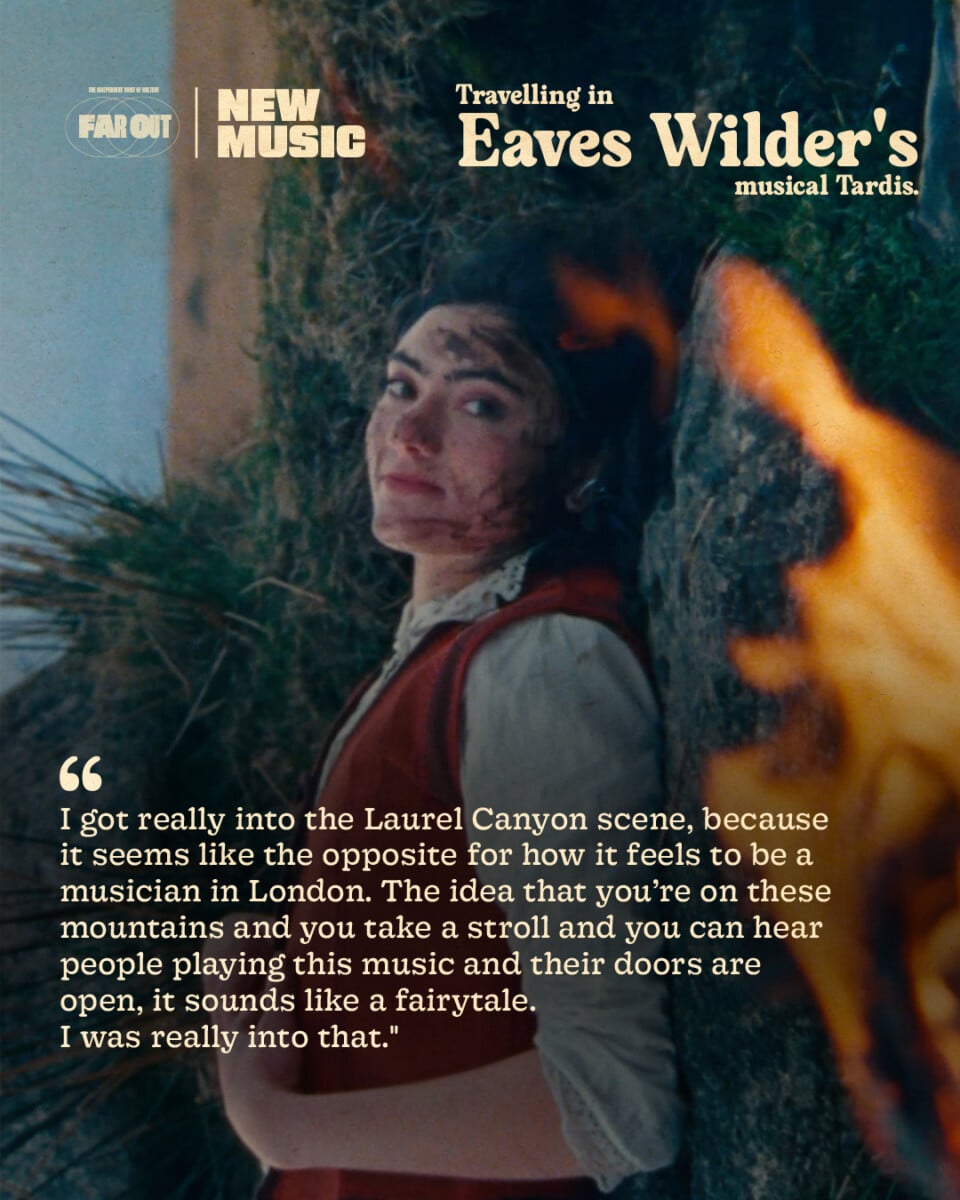
“Going back to the community thing, I got really into the Laurel Canyon scene, because it seems like the opposite of how it feels to be a musician in London,” she said, “The idea that you’re on these mountains and you take a stroll and you can hear people playing this music and their doors are open, it sounds like a fairytale. I was really into that.”
Other exercises in escape included trying to bring the music from Daisy Jones & The Six to life, while also attempting to channel Penny Lane from Almost Famous and imagine what kind of songs she would write. Little Miss Sunshine is a blend of fact and fiction, of reality and escapism, and it sounds a lot better than the band Penny Lane obsessed over in the movie. “Still Water, or whatever the shit band is, she was so much cooler,” said Wilder.
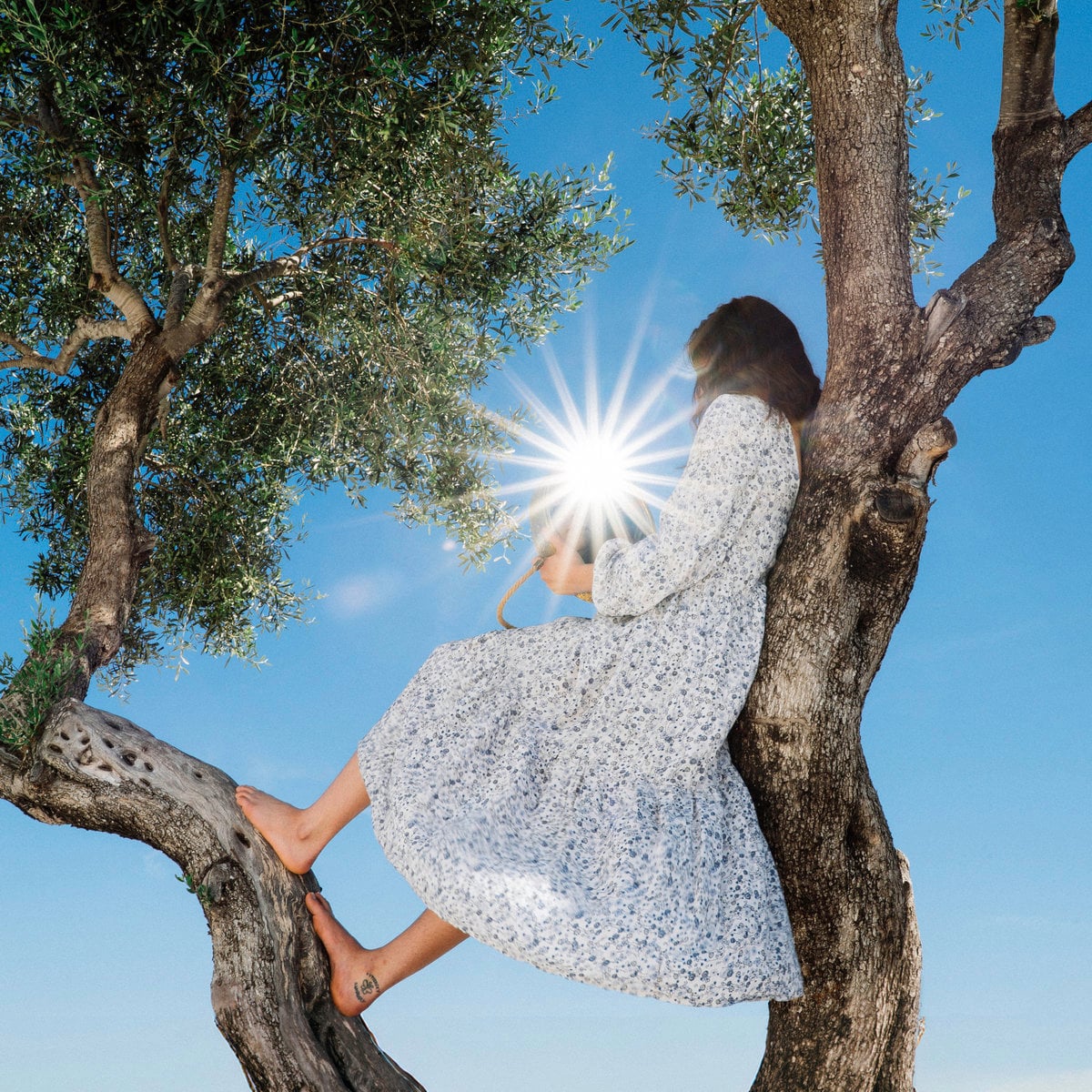
On the face of it, when you listen to Eaves Wilder’s debut album, you get a great piece of music put together by someone who is no doubt an incredibly talented musician. The guitar, the keys, the vocals, the range of musical influences, it’s a truly stunning experience. Wilder wears her influences on her sleeve, but in doing so, she doesn’t create a carbon copy of those she’s a fan of; all of the bands referenced previously are in this album somewhere, but they also would never have made music like this.
When you dig deeper, you realise you’re travelling around worlds created by a mind that’s tired of this one. The reckless nature of the modern age, and the particular challenges that we face as a result of it, whether that’s overwhelming dread, financial struggles, dwindling communities or societal uncertainty, all drove Eaves Wilder to hop in a musical spaceship and take flight amongst the stars. You can’t hear the Doctor Who theme tune in Little Miss Sunshine, but this piece of music doubles up as Wilder’s very own Tardis, one that travels throughout space and time and can ship her off to wherever she desires.
“Shit, I finally figured out a way to be the Doctor without having to go anywhere or do anything,” she said, “That’s fucking brilliant.”

Never Miss A Beat
The Far Out New Music Newsletter
All the latest New Music from the independent voice of culture.
Straight to your inbox.