


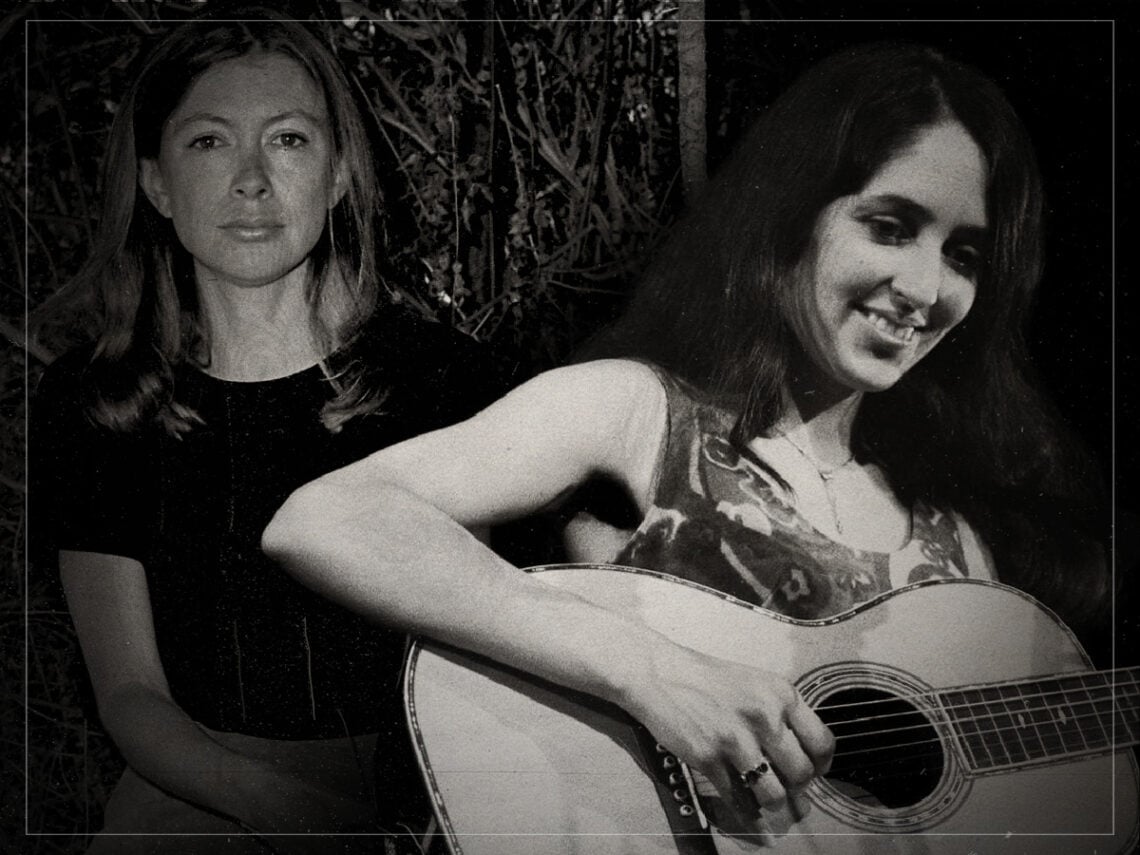
When Joan’s Collide: Joan Didion’s dissection of Joan Baez

If anyone were to dismantle the countercultural idealism of the 1960s, it was Joan Didion, who, in her eloquent dissections of the culture’s most shifting moments and their creators, platformed her internal questioning for all to consider.
Her first essay collection, Slouching Towards Bethlehem, assembles her arsenal of critiques, chronicling her fascination with American culture at a time ripe with innovation and promise. She was no subject to its glamour, though, using her words and analysis to drop into the skin and bones of the country’s most prominent figures and moments, however marred by scandal they may have been.
In 1966, Didion was asked by the New York Times to profile Joan Baez, the singer, who had long been the darling of the folk scene, with her live debut at the 1959 Newport Folk Festival transforming her into an overnight icon of the age’s reverberating mantra of peace, love and unity. Her social and political involvement preceded her music career, beginning when she was a child, as she absorbed the effects of the Civil Rights Movement and the continuing anti-war sentiments, all of which led her towards her decision to open the Institute for the Study of Nonviolence, a small school in California’s Carmel Valley, in 1965.
The institution was under scrutiny by the Monterey County Board of Supervisors, raising the issue of whether or not the school violated a section of the county’s zoning code, which prohibited the use of land that was “detrimental to the peace, morals, or general welfare of Monterey County”. Didion’s resulting essay, ‘Where The Kissing Never Stops’, is a brilliant study of Baez, a figure that is, at once, so open and yet so misunderstood, wherein, through her lens, she appears in the courtroom as a neutral, though striking presence.
“She is extraordinary looking, far more so than her photographs suggest,” Didion describes, before naming, “her most striking characteristic, her absolute directness, her absence of guile”. Fascinatingly, the author seems to be immediately taken with the young singer, in a rare showing of partiality, but this is not to imply that her stark analytical gaze does not remain intact; it most definitely does, especially when she dissects the inner workings of Baez’s school, writing of the “loving” gazes that the young students unwaveringly share, as almost suspiciously kind.
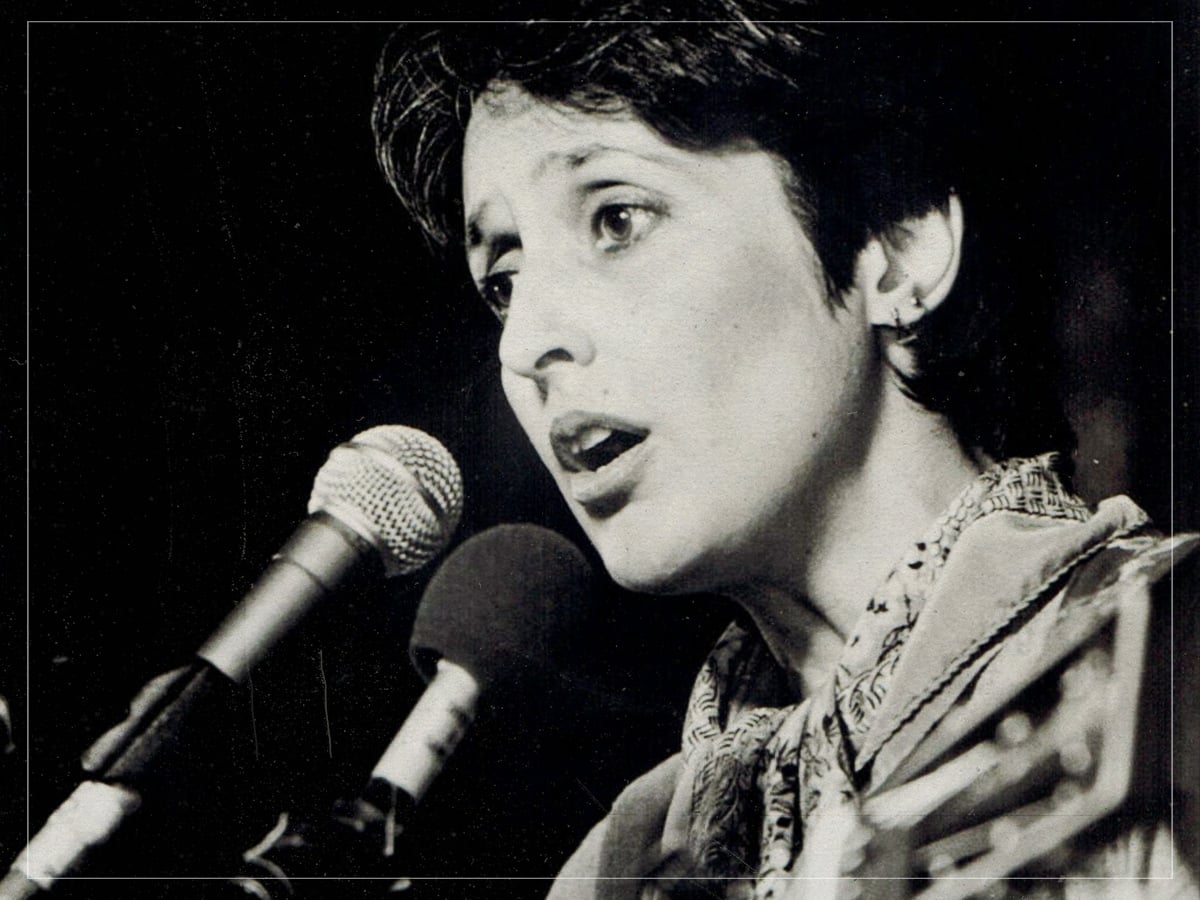
She is openly critical of Baez’s teaching partner and president of the institute, Ira Sandperl, describing him as having “the general look of a man who has, all his life, followed some imperceptibly but fatally askew rainbow”, and is equally perceptive of the singer’s breezy contentment, as her questions of where her career is headed are met with vague indifference, writing, “Exactly where it is she wants to be seems an open question, bewildering to her”.
In Baez, Didion met a young woman who had the pressures of societal expectation mounted on top of her efforts towards change, in a way, not entirely dissimilar to the writer’s approach to her art form. “Joan Baez was a personality before she was entirely a person,” the writer empathised, “and, like anyone to whom that happens, she is in a sense the hapless victim of what others have seen in her, written about her, wanted her to be and not to be.”
In her study of her character, Didion is afflicted by the preconceived tropes cast like a net over the singer’s true self, adding, “The roles assigned to her are various, but variations on a single theme. She is the Madonna of the disaffected. She is the pawn of the protest movement. She is the unhappy analysand… Above all, she is the girl who ‘feels’ things, who has hung on to the freshness and pain of adolescence, the girl ever wounded, ever young.”
However, Didion does not reach the heart of Baez’s politics, which are so vague in her perception that there is an evident frustration, wherein she quotes the latter, “Everybody says I’m politically naïve, and I am”. Still, it seems that she understands Baez in a way that few have, a way that even those closest to the singer, Sandperl, their students, and her family may not have achieved. She sees that music is a mere conduit for Baez’s signals for change and that perhaps her disillusionment with fame stems from a desire to remove herself from expectation, entirely.
“She did not want, then or ever, to entertain,” she wriote, “She wanted to move people, to establish with them some communion of emotion”, recognising her vulnerability, which is communicated through an empathetic view, and thus she realised that this vulnerability is what makes her the poster child for the counterculture, the reason why so much faith has been placed in her.
‘Where The Kissing Never Stops’ is a triumphant analysis of culture, as Didion’s portrayal of the singer and her efforts stands as some of her finest work, where she finds Baez at the centre of a radicalisation that even she, in all of her activism, could not have predicted.
