


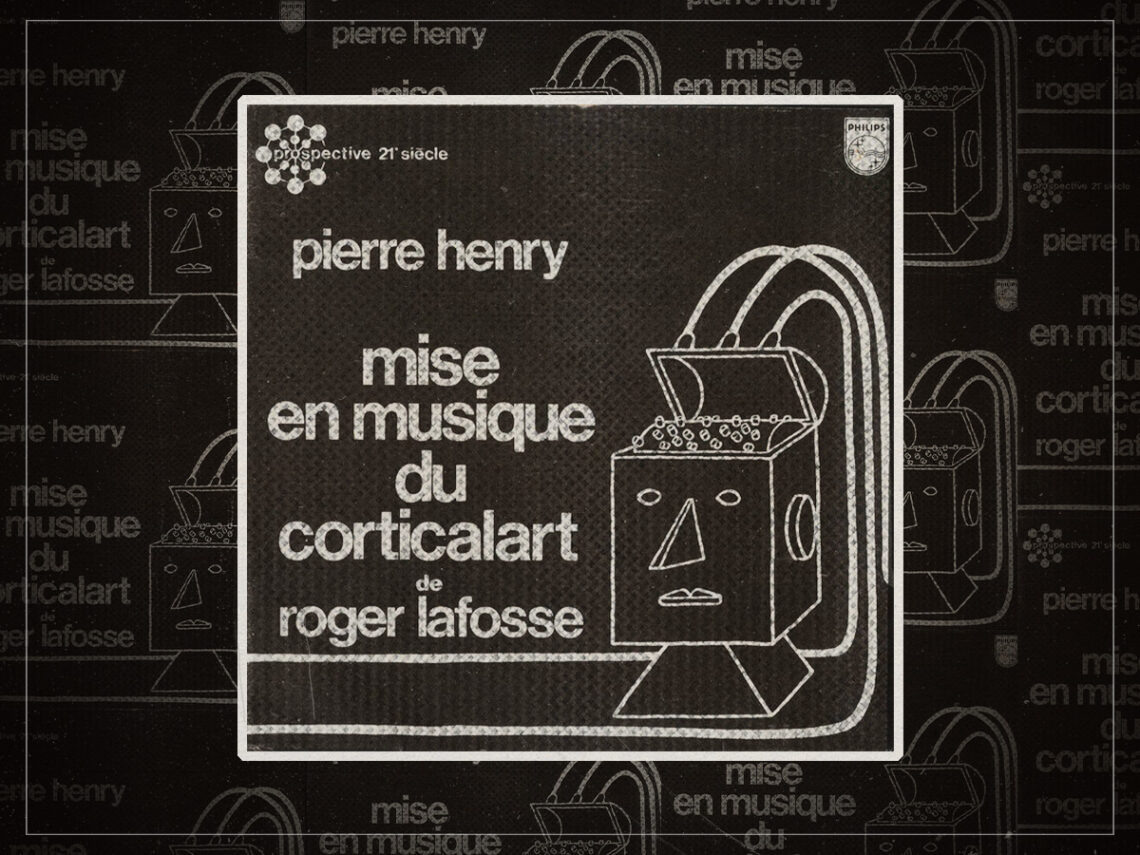
What was the first real noise album?

Although you’re always going to get naysayers who firmly believe that noise music is, in fact, not music, and is simply, as the former part of its name suggests, just noise, it still has a long and storied history as an experimental art form that requires a large amount of bold innovation to go into it.
You might immediately jump to artists from Japan such as Merzbow, Incapacitants or The Gerogerigegege as being some of the most important figures in making music that transcends the extreme, with all of the above having made some of the most punishing soundscapes in varying forms since the 1980s. Whether it’s guitar feedback and other man-made chaos or digitally manipulated sequences of industrial fuckery, these are all easily described as noise, or as some may argue, harsh noise.
But regardless of whether you want to split hairs over whether there should be a ‘harsh’ applied beforehand or not to denote whether it is true to the original concept of noise or a more mutated descendent of this transgressive sound assault, these figures at the heart of the Far East’s dominance of the genre are far from the first to have ever made ears bleed with their rambunctious compositions.
In reality, noise is simply a form of music that avoids traditional structure, tonality and any regard for what might be considered pleasant, and instead aims to challenge the listener and present them with something that is as far removed from commercial music. You won’t ever find yourself singing along with it, and you still may find something to be curious about buried beneath the insanity if you approach it with an open mind, but one common misconception about noise music is that, by nature, it must be noisy.
Sure, modern noise tends to go down this route due to how amplification and distortion can make one already loud sound even more grotesque and deafening, and there’s a real temptation to use noise as a vehicle to shock the listener. However, its origins, which date back to the early 20th century and classical composers like Luigi Russolo or slightly later musical thinkers like John Cage, didn’t necessarily always turn things up beyond 11.
Early works in noise music tended to be made with acoustic instrumentation, before mid-century technological advancements made it possible to create even more avant-garde sounds with computerised instrumentation, but for the longest time, it was only individual works that were being made, and it wasn’t until 1971 that the first true noise album was ever released.
So, what was the first true noise album ever released?
Pierre Henry, a French composer best known for his work within the field of musique concrète, had long been dabbling with the concept of utilising noise in his works before releasing a full-length album, and in 1971, he issued Mise en musique du Corticalart de Roger Lafosse, an album that utilised the Corticalart device as a means of turning human electrical impulses into audio signals.

The noises heard across the album are repetitive, phasing in and out of focus constantly and quite jarring to listen to, but at the same time, it’s also a highly futuristic-sounding record that feels as though it shouldn’t have been possible to make as early as the 1970s. The album itself was recorded at the Musée d’Art Moderne de Paris and overseen by Henry as the machine transmitted its signals to electroacoustic instrumentation that had been set up around the room.
While it may not be the strongest work in the history of the genre, it’s a fascinating listen to see how far it has come, and to understand how a composer like Henry, who was a contemporary and classmate of 20th-century composer Olivier Messiaen, could so boldly confront the norms of composition and dismantle it to the point of barely being recognisable.
