


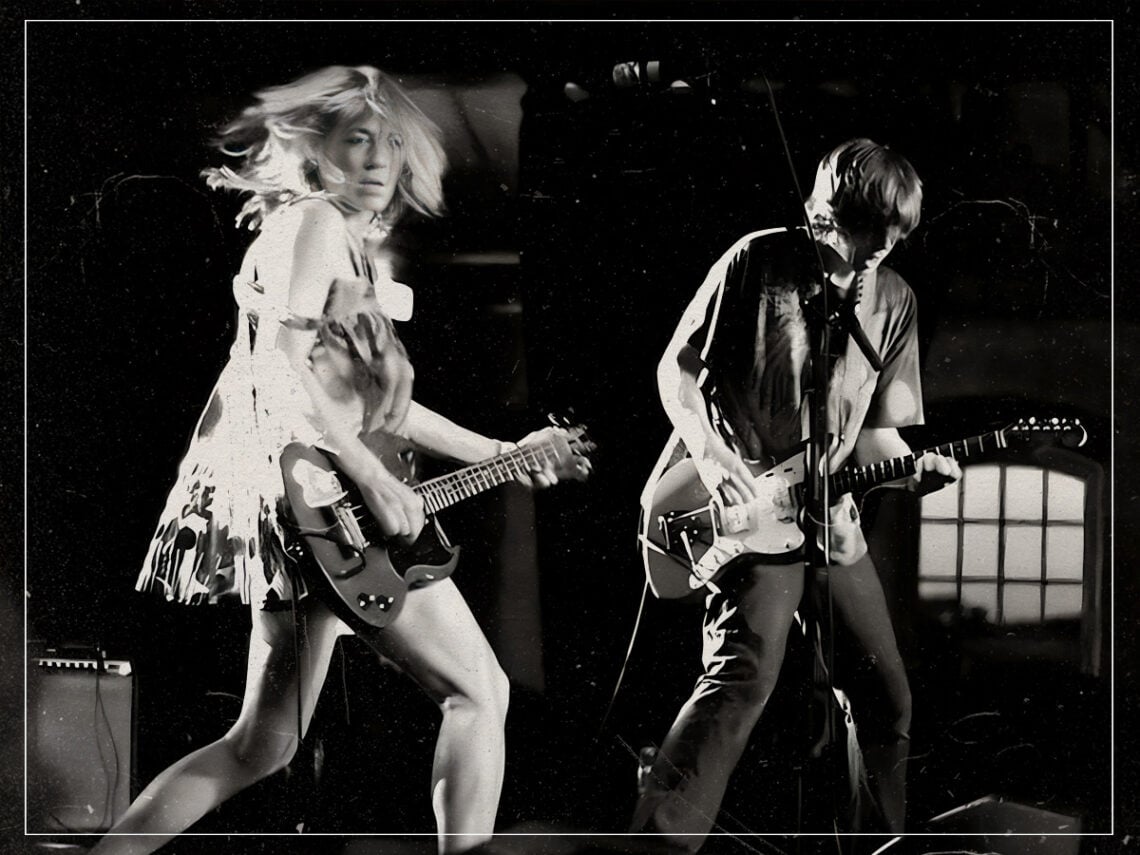
Michael Chapman: how a Yorkshire folk singer helped to form Sonic Youth

Sometimes, a band perfectly encapsulates the feeling of a place in a certain moment in time. That’s definitely the case with Sonic Youth.
From their often unnecessarily confrontational attitude to their penchant for innovation and slight superiority complex, it is difficult to think of any band as intrinsically linked with the cultural fabric of New York as Sonic Youth. Their upbringing in the shadow of the city’s no wave scene set them on a path to cult heroism. Without the faraway land of Yorkshire, though, the group might never have come to be.
At the risk of sounding like my father, the world has a great deal to thank ‘God’s Own Country’ for. Cinema, steam locomotives, sparkling water, Jane McDonald – all of these things and more would not exist without the rolling green and pleasant hills or dark satanic mills of Yorkshire. Yet, despite the industry prowess and Channel 5 stars, the county really shines in its musical output.
From the indie mastery of outfits like Arctic Monkeys, The Housemartins, and Pulp, to the booming voice of one Joe Cocker and the subversive post-punk of Gang of Four and the Delta Five, the region’s musical offerings have always been rather diverse. Lingering among the melee, Michael Chapman is among its finest obscure exports.
Rarely capable of being pinned down to one specific genre, the Hunslet-born Chapman cut his teeth in the Leeds jazz scene – a scene which, incidentally, is still going strong to this very day – before embracing the separate realms of folk music and the progressive rock boom of the early 1970s.

Although the songwriter, whose best work arose during his time on the legendary Harvest label, never achieved much in the way of commercial success, his impact is best felt in those who cite him as a major influence. That list spans the sonic spectrum from Supergrass to Bridget St John, but one particularly surprising Michael Chapman fan club came to call themselves Sonic Youth.
Never a man to hide his musical influences in a cloud of secrecy, Thurston Moore has often spoken of his utter adoration for Michael Chapman, going so far as to cite his expansive discography as a major contributing factor in the development of Sonic Youth. Such was their hero worship of the Leeds songwriter, in fact, that they made the pilgrimage to Massachusetts in 1998 to see him perform, as Chapman once recalled to The Guardian.


“Sonic Youth turned up. I’d heard of them, vaguely,” Chapman said. To be fair to him, even vaguely knowing the youthful band at 57-year-olds in the late 1990s placed him in a rare club. Reportedly, Moore told Chapman that his 1973 record Millstone Grit was a common touchstone for Sonic Youth.
“He [Moore] blames the feedback extravaganzas on there for them forming,” Chapman said.
Those feedback extravaganzas, as Chapman called them, were rooted in the experiences of a 1971 US tour that didn’t exactly go to plan, culminating in one of the songwriter’s most endearingly abrasive records, and a so-called ‘folk rock’ album that sounds totally unlike anything else you might find in your local record store’s ‘folk’ section. It perfectly captured the grit of grunge to come.
Revisiting the album, it is easy to see the influences that Moore and Sonic Youth took from Millstone Grit, with tracks like ‘New York Ladies’ seeming to predict the rise of the experimental noise odysseys that would captivate the city’s underground scene years later. Sonic Youth might be hailed as the innovative heroes of noise rock, but they wouldn’t have sounded the same without Michael Chapman, one of Yorkshire’s greatest musical experimenters.
