


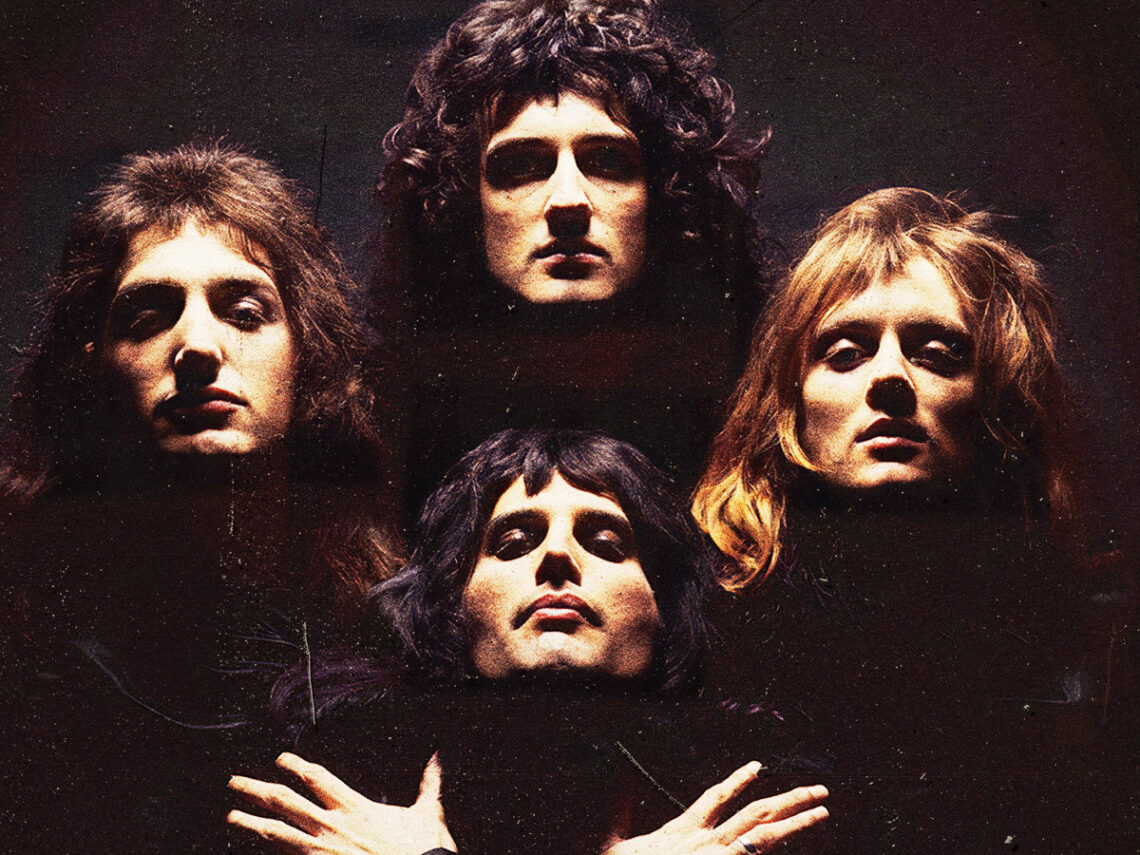
What is a Scaramouche, and will it do the Fandango?

Many aspects make Queen’s ‘Bohemian Rhapsody’ their definitive song.
A distillation of their colourful theatrics, oscillating dynamics, and Freddie Mercury’s power as a songwriter and performer, it brought together the band’s best elements in one manic whirlwind.
Decades on from its release, the song remains a strange mythical beast. Unlike most other chart-topping rock songs, it is brimming with surreal, indecipherable lyrics that have left audiences scratching their heads ever since. Perhaps the most famous line from the song is “Scaramouche, Scaramouche, will you do the Fandango?”. Despite its infectious essence, the phrase has long been the source of puzzlement for listeners.
Given the operatic undercurrent of the song, it will come as no surprise to some to discover that the line’s origins arrive from this inherently dramatic form of theatre. The song is noted for parodying opera elements and includes ornamental choruses, sarcastic recitative – a type of narrative operatic singing – and distorted Italian phrases found in classic opera.
As well as Scaramouche, across ‘Bohemian Rhapsody’, Mercury references topics such as the fandango, Italian astronomer Galileo Galilei, Figaro, a character from the French play The Barber of Seville, the Lord of the Flies Beelzebub, and the Islamic phrase, Bismillah.
So who is Scaramouche? Derived from the Italian word Scaramuccia, which means “little skirmisher”, he is a stock clown character from the 16th-century comical theatrical arts of Italian literature, also known as commedia dell’arte. The role combined characteristics of the traditional servant Zanni, the masked henchman Il Capitano, with a mixture of classic villainous traits. Usually donning a black Spanish dress mimicking a don, he was traditionally beaten by Harlequin for his bragging and cowardice.

One of Scaramouche’s roles is to influence the audience to do his bidding. Over the years, he has also been portrayed as both shrewd and foolish and has taken on many forms. He was famously played by 19th-century English acting legends Joseph Grimaldi and his son J.S. Grimaldi on numerous occasions.
Now that we have the identity of Scaramouche down, all we need to find out is what on earth is the fandango. Well, it’s a lively, triple-metre partner dance originating in Portugal and Spain in the 1720’s. By the end of the century, it became fashionable among the European aristocracy and was included in ballets, operas, tonadillas, and zarzuelas.
So, when Mercury asks Scaramouche to do the fandango, it fits snugly into the broader operatic spirit of the song, and it’s not hard to imagine the old cad doing just that to the plinky rhythm of the section. In short, the classic line pretty much translates to: villainous character, will you do a dance?
What is the meaning of ‘Bohemian Rhapsody’?
Freddie Mercury always refused to explain what ‘Bohemian Rhapsody’ meant and whether it had any significance, playing down any suggestion it was anything other than fantastical nonsense. Since its release in 1975 and their frontman’s passing in 1991, the band has also remained protective of the song’s actual meaning.
Suggesting that the track does contain subtle references to his late friend’s personal traumas, guitarist Brian May said in 2005: “Freddie was a very complex person: flippant and funny on the surface, but he concealed insecurities and problems in squaring up his life with his childhood. He never explained the lyrics, but I think he put a lot of himself into that song.”
May also revealed that the group agreed the core of a lyric was a private matter for Mercury. Elsewhere, drummer Roger Taylor said in a BBC Three documentary that the meaning is “fairly self-explanatory with just a bit of nonsense in the middle”.
How many copies has ‘Bohemian Rhapsody’ sold?
The 1975 hit topped the UK Singles Chart for nine weeks when released and then hit the summit again for another five after Mercury’s death. By 2018, the Official UK Charts company reported that the song had sold over two and a half million copies in Britain and over six million globally. Then, by December of that year, following the release of the Freddie Mercury biopic Bohemian Rhapsody, the song was recognised as the world’s most-streamed song of the 20th century, with over 1.6 billion streams.
Excluding charity efforts, it is the biggest-selling British single of all time. In 2021, it was also certified Diamond in the US, with digital sales and streams equalling ten million units. Not bad for what producer Roy Thomas Baker called a “joke”.
Recalling the creation of the song, he explained, “‘Bohemian Rhapsody’ was totally insane, but we enjoyed every minute of it. It was basically a joke, but a successful joke. [laughs] We had to record it in three separate units. We did the whole beginning bit, then the whole middle bit and then the whole end. It was complete madness.”
His insight even helps to lift some of the mystery, showcasing how it should be seen as a suite more so than a single song. As he concluded, “The middle part started off being just a couple of seconds, but Freddie kept coming in with more ‘Galileos’ and we kept on adding to the opera section, and it just got bigger and bigger. We never stopped laughing … It started off as a ballad, but the end was heavy.”
