


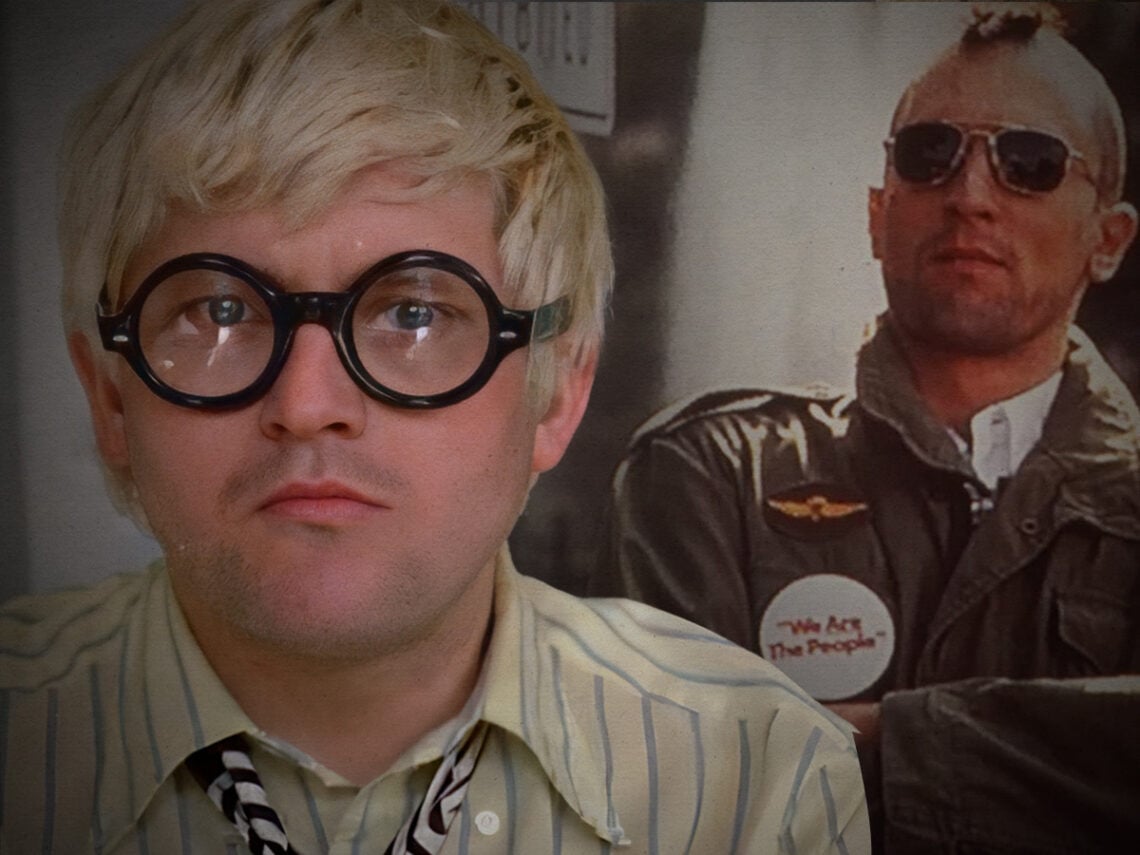
Was David Hockney the real inspiration behind 1976’s ‘Taxi Driver’?

In addition to being a devoted cinephile, Martin Scorsese has an appreciation for many different forms of the arts. One of these may well have been the key jumping-off point he used to create the iconic aesthetic for Taxi Driver.
Of course, a hard-boiled crime thriller about an insomniac loner patrolling the streets of New York City in his trusty yellow cab before befriending a teenage sex worker, romanticising a political campaigner, and planning an assassination isn’t quite lifted directly from the canvas and transplanted onto the screen, but the DNA of David Hockney nonetheless seeped its way into the film’s cinematography.
The script was born from Paul Schrader’s own tormented experiences. “I lost my job, left my wife, left the girl I left my wife for, didn’t have a place to live, was drinking considerably, was living in my car, and had a gun in the car,“ the writer told David Smith. “This went on for a couple of weeks.” However, that darkened descent is only one hand in the movie. The other hand is holding a brush, and it comes from Yorkshire’s rather more chipper, late artist, David Hockney.
One of the most lauded artists of his generation, Hockney refused to let himself be constrained by a single form, applying his innate gifts to everything from portrait and printmaking to photography and experiments with technology, when his personal life became the subject of a 1973 biographical documentary, A Bigger Splash, Scorsese took note.
Deriving its name from Hockney’s painting of the same name, director Jack Hazan infused the feature’s documentarian stylings with elements of fiction and fantasy, offering insights into the artist’s personal and professional mindset in the wake of an extended separation from fellow creative, regular muse, and partner Peter Schlesinger.
Not exactly identical to Taxi Driver, then, but an eye-opener for Scorsese nonetheless. The Raging Bull director’s film was a fictional feature developed over a number of years alongside screenwriter Schrader and fine-tuned into a masterpiece with Robert De Niro on iconic form opposite Jodie Foster in a star-making turn, but there were several moments where Hockney’s shadow loomed large over the visuals.
“I was also thinking about Jack Hazan’s movie A Bigger Splash about David Hockney,” Scorsese told the Directors Guild of America when reflecting upon Taxi Driver‘s aesthetic. “Again, there was just something about the way the images were framed, something very objective, a lot of head-on shots, which influenced the way I shot Travis’ cab pulling up to the grocery store before his first murder; it’s meant to look like a newspaper photo, to have the objectivity of a Weegee photo.”
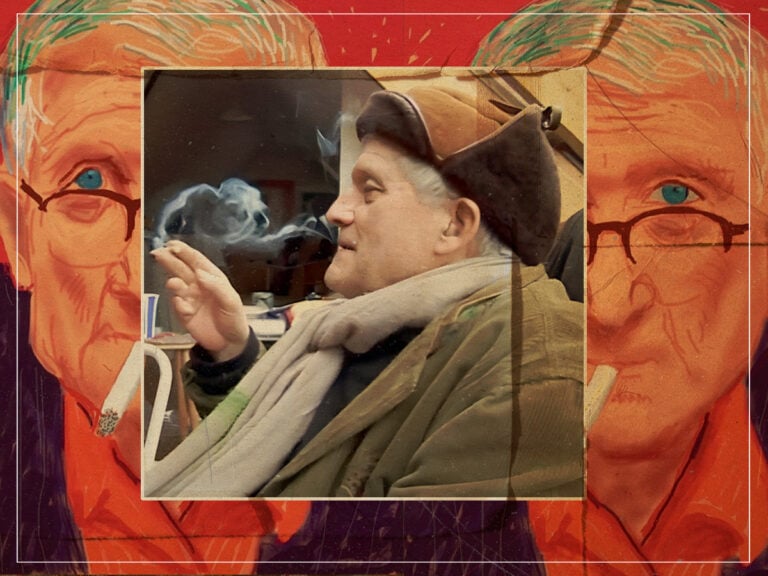
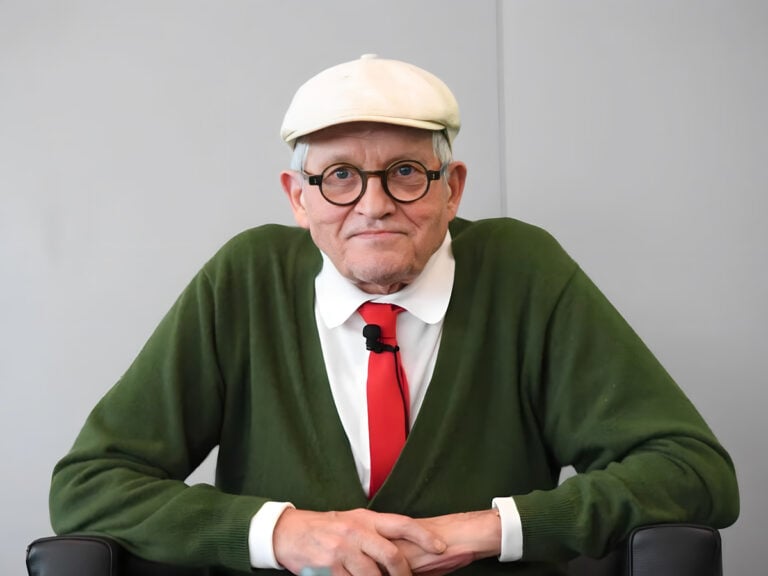
Hockney’s playfulness, after all, still has a resonant feel. Whether he is illuminating the green fields outside of Bradford with child-like tones or even etching a vivid, almost-dreamlike depiction of Harry Styles, you still get the sense that these scenes are very really, it is just the interpretation that is changing.
That’s vital when it comes to understanding Bickle’s wayward fall. Scorsese manages to harrowingly reveal his journey towards a twisted interpretation of a fractured world. So, while Hockney might seem rather more playful than anything Taxi Driver offered, looked at through that lens, his art serves as the perfect inspiration point.
It’s far from being the most obvious comparison, but it does become more pronounced when considering that objectivity is one of Scorsese’s preferred methods of framing De Niro’s Travis Bickle throughout the film. Taxi Driver builds up a head of steam towards a blood-soaked finale, and there’s always an air of fantastical realism to its protagonist’s various misadventures, a sentiment that’s entirely applicable to the way A Bigger Splash sought to dig under the surface of Hockney.
There may not be any characters, scenes, or settings plucked from the artist’s life and times and dropped into Scorsese’s 1976 classic, but the director used the sense of perspective present in A Bigger Splash to inform the way he approached the authenticity of the entirely fictional Bickle.
As Hockney put it, “What an artist is trying to do for people is bring them closer to something, because of course art is about sharing. You wouldn’t be an artist unless you wanted to share an experience, a thought.”
