


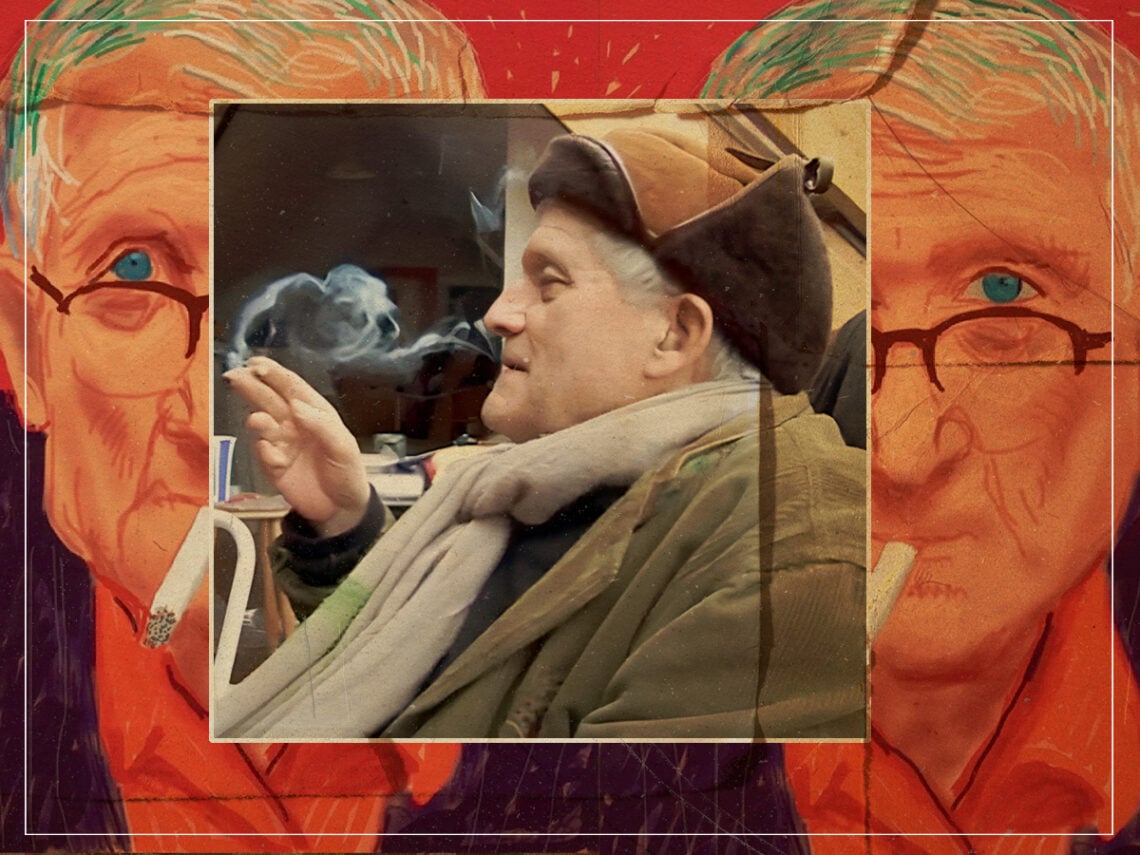
“It is a wonderful, touching work”: The 1943 masterpiece David Hockney loved above all others

He’s one of the most celebrated artists of the modern era, and David Hockney has accumulated more than his fair share of stories along the way.
The late Bradford-born artist, who sadly passed away today, was a leading figure in the pop art movement of the 1960s, helping to shape the shift towards postmodernism. Across a career spanning decades, Hockney has explored almost every facet of human experience, from desire and intimacy to the beauty of the natural world.
He first broke through in 1961 as part of the Royal Society for British Artists exhibition, ‘Young Contemporaries’, which also saw the likes of Peter Blake, Pauline Boty, and others burst onto the scene. Together, this set demonstrated that there was a new standard within British art and that the ancient conception of form was to be torn apart and reconfigured.
Unlike many of his contemporaries, Hockney remained active well into his 80s. Throughout his career, he has drawn on a wide range of influences, meaning his work extends far beyond pop art alone. Elements of expressionism, photography, collage, cubism and plein air landscape painting all appear across his vast body of work. That range is part of what makes Hockney’s catalogue so fascinating, with each period revealing a different side of his artistic curiosity.
While Hockney was always fiercely independent as an artist, he never hid his admiration for Pablo Picasso. Throughout his career, he returned time and again to Picasso’s work, fascinated not by any single style but by the freedom with which he approached art. For Hockney, Picasso was a rare figure who could constantly reinvent himself while remaining unmistakably Picasso, whether he was painting cubist experiments, intimate portraits or monumental historical scenes.
Another significant facet of Hockney’s work is that he possessed a synaesthetic association between sound, colour and shape, imbuing it with a vivid edge that, at points, is so profound it even rivals that of the great Wassily Kandinsky. This inherently mesmerising essence has seared many of his works, from the landscape of Going Up Garrowby Hill to the serene Portrait of an Artist (Pool with Two Figures), into the collective consciousness, inspiring many to try their hand at visual art.
Given that Hockney’s craft was so varied, the influences behind it have long been the source of discussion for his fans. Then, in 2011, when speaking to The Guardian, he revealed the identity of his all-time favourite painting, Spanish master Pablo Picasso’s 1943 work Mother and Child, First Steps, one of his lesser-known pieces.

That is partly what makes his choice of Mother and Child, First Steps so revealing. Many artists might have pointed towards one of Picasso’s more famous masterpieces, but Hockney was drawn to a painting centred on an ordinary human moment. Beneath the technical innovation and cubist experimentation, he recognised something timeless and deeply familiar. It spoke to Hockney’s own sensibilities as an artist, where even his most ambitious works often find their emotional weight in everyday experiences and quiet observations.
Noting the emotional depth the cubist form allowed Picasso to convey in the work, Hockney explained: “Picasso captures a totally universal subject that everybody has experienced and witnessed. Today, thousands of depictions will be made of this subject all over the world, most with a camera: Uncle Charlie teaching little Edna to walk, photographed by mum. But most will not be able to show us what Picasso does. The child, both thrilled and frightened; the anxious mother, whose supple hands clasp the child’s still awkward fingers. Cubism allows him to give us that detail. It is a wonderful, touching work.”
