


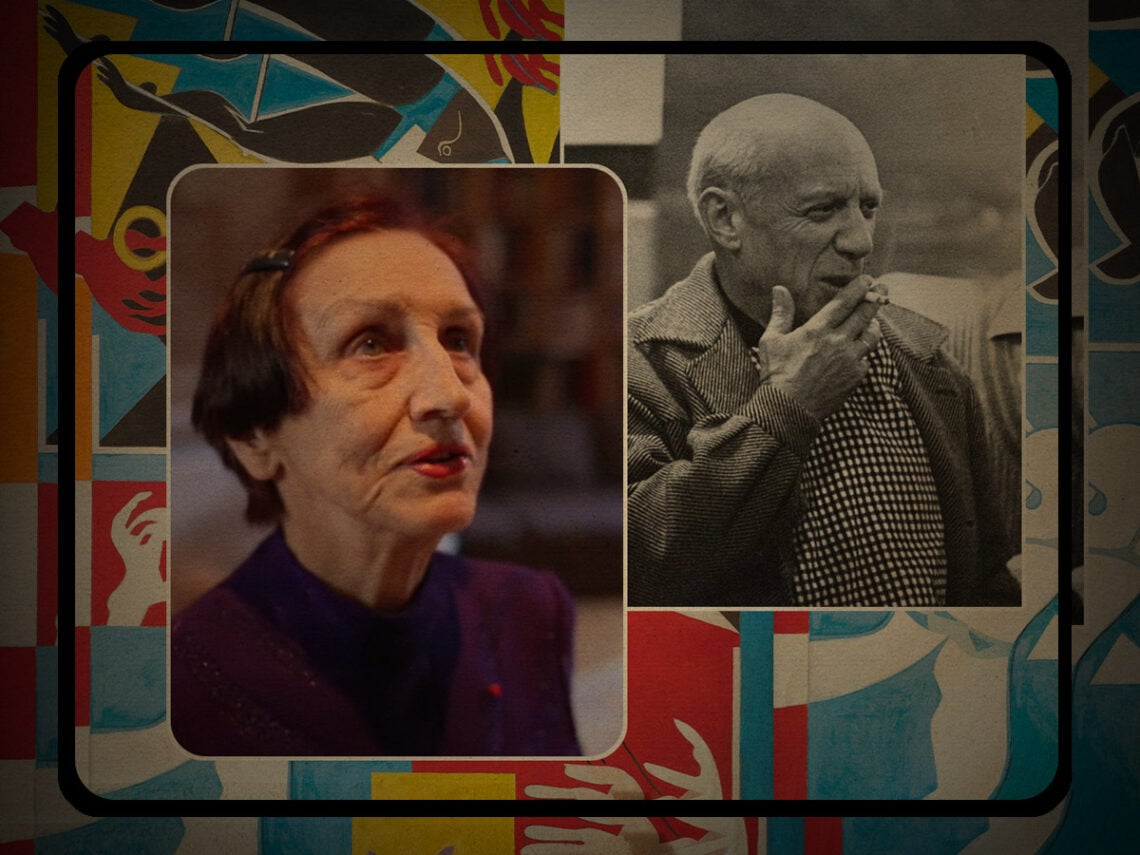
Françoise Gilot: the story of the only woman to leave Pablo Picasso

The term “muse” has been co-opted and misconstrued for centuries. Consider women like Marianne Faithfull and Anita Pallenberg, so-called “muses” who, as artists in their own right, moulded The Rolling Stones’ image in the esoteric.
Or, think of Andy Warhol and his many muses, from Edie Sedgwick to Candy Darling, women whose likenesses were captured and manipulated into art pieces of their own. Is the title of “muse”, then, empowering or degrading? Perhaps the beauty, as they say, is in the eye of the beholder.
Few women know the paradox of the role of the muse better than Françoise Gaime Gilot. A French painter and writer, Gilot became world-renowned for her work across artistic mediums, particularly watercolours and ceramics. She began painting at the age of five, tutored by her mother, a watercolour artist, and their art teacher, Mademoiselle Meuge.
Growing up in a household that emphasised education, Gilot’s father, Emile, had her homeschooled, where she was introduced to the realms of Greek mythology and the works of the gothic through Edgar Allan Poe, the poetics of Charles Baudelaire and the symbolist visions of Alfred Jarry. But she would soon choose her artistic pursuits over her father’s dreams of her becoming a lawyer.
By the age of 21, Gilot was a multifaceted presence, but her talents were doomed to pale once she met Pablo Picasso, the man who would become her partner and, in turn, adopt her as his muse. 40 years her senior, the 61-year-old artist’s career had been prolific for decades. Across mediums of painting, sculpting, printmaking and ceramics, Picasso’s co-founding of the Cubist movement and innovation and development of numerous artistic styles made his name and work synonymous with 20th-century art.

Gilot met Picasso in Paris in 1943, and Gilot would move into his home three years later. They would remain together for a decade, and during this time, both of their artistic pursuits flourished. Picasso would paint La femme-fleur in Gilot’s likeness, prompting a series of paintings and sketches depicting her as a “woman-flower” vision. While Picasso influenced Gilot’s work in cubism, her distinct style developed, adopting a more natural form that contrasted her partner’s angular work.
Gilot became increasingly active in the post-war artistic milieu of Europe’s rapidly evolving scene. A notable work during this period, Adam Forcing Eve to Eat an Apple, was immediately provocative for its reimagining of the Biblical tale, questioning the inherent blaming of women. Whether she would subscribe to the term or not, Gilot’s work from its earliest stages was inherently “feminist”, unafraid to channel her suspicions of authority and convention into works that further revolutionised artistic mediums.
Reflecting on her time with Picasso in her 1964 memoir, Life with Picasso, Gilot shed light on the dual nature of their relationship, often fraught with tension. “He did not know me well at all,” she maintained. “I am very secretive. I smile, and I’m polite, but that does not mean that I am in agreement, or that I will do as I said I would do. It’s just a screen. He thought I would react like all his other women. That was a completely wrong opinion. I had other ideas. I did not put my narcissism in being represented by him. I couldn’t care less.”
The pair would have two children during their time together: a son, Claude, born in 1947 and a daughter, Paloma, born in 1949. On the streets of Paris, Gilot was often subject to harassment by Picasso’s legal wife, Olga Khokhlova, a Russian former ballerina; Gilot also suffered physical and mental abuse at the hands of Picasso. Much of this mistreatment was spurred by Gilot’s relationship with Henri Matisse.
“Matisse was my god,” Gilot once said of the painter, who was an old friend of Picasso’s.
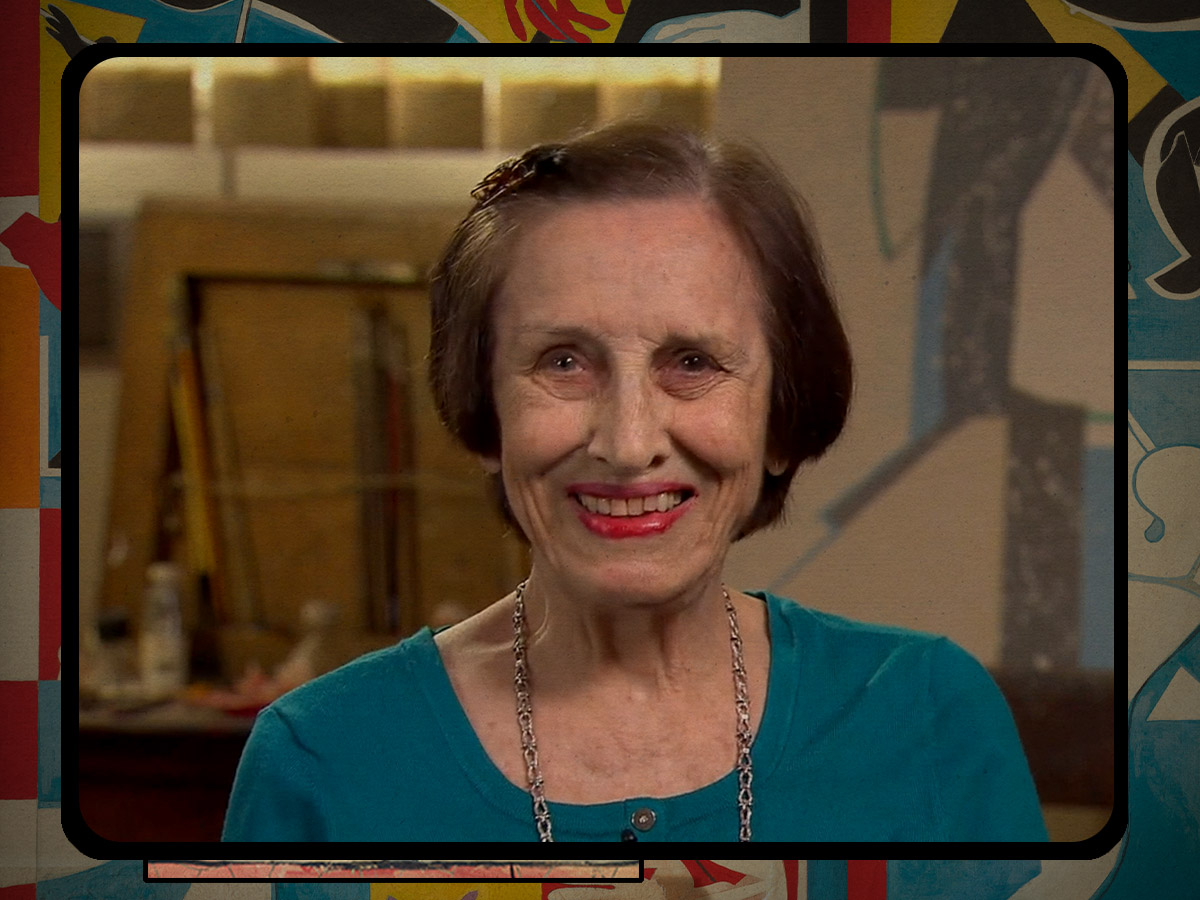
Meeting in the south of France, Matisse also adopted Gilot as his muse, painting her with pale blue skin and green hair. In retaliation, Picasso destroyed Gilot’s most prized possessions, including artworks, books and letters from Matisse. He sabotaged his partner’s career by demanding that the Louise Leiris Gallery stop representing the young artist, and requested that her invitation to exhibit at the famed Salon de Mai be revoked.
Gilot would finally leave Picasso in 1953, becoming the first woman to leave the troubled artist and never return. Her career flourished in his absence: she circled back to her fascination with Greek mythology in her ‘Labyrinth Series’ and wrote Life with Picasso in tandem. Picasso attempted, and ceremoniously failed, to stop its publication, and proceeded to cut contact with Claude and Paloma. The two children used the profits from the book to build a case to become their father’s legal heirs.
Gilot’s career would continue to span eight decades, with thousands of works, some of which were exhibited in the likes of New York’s Metropolitan Museum of Art, the Museum of Modern Art, and Paris’ Centre Pompidou. She would live to be 101 years old, passing away in 2023.
When once asked why her taste in romantic partners veered into the “outrageous”, Gilot responded with, “I think I am just as interesting as they. Lions mate with lions. They don’t mate with mice.”
Ever defiant against authority, Gilot transcended her fate and pioneered artistic visions of her own, disrupting the mould of the “muse” in her pursuit of greatness.
