


The 1983 hip-hop record with Basquiat artwork that became a collector’s holy grail

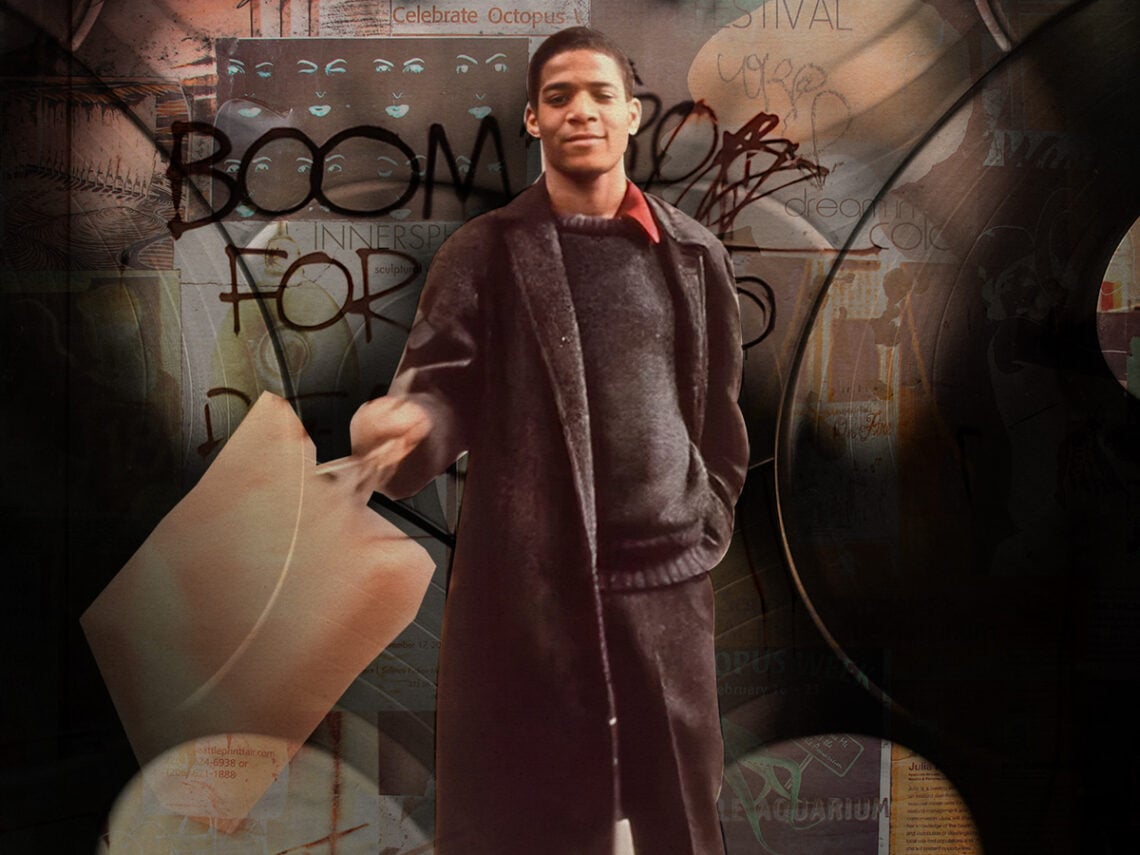
In 1982, a 22-year-old Jean-Michel Basquiat was starting to generate major interest from New York’s art establishment, including the king of the avant-garde himself, Andy Warhol. “I had some money; I made the best paintings ever,” Basquiat later said of his work that year, created in a flat on Crosby Street in SoHo.
That might have sounded like a bit of youthful hubris at the time. Some 35 years later, however, at a Sotheby’s art auction, one of Basquiat’s legendary skull paintings from that fruitful period sold to a collector for the astonishing price of $110.5million.
It’s probably not a news flash that Basquiat, who died in 1988 at 27, is now seen as the Warhol of his generation, a man who helped legitimise street art and graffiti in much the same way that Warhol changed how the world looked at commercial design and advertising. What might be slightly less known, even to the unrelatable human beings capable of paying $100m for a piece of art, is that Basquiat’s name carries a similar weight with record collectors, specifically those who appreciate the early foundational years of hip-hop.
One of the proverbial ‘white whale’ vinyls for that specific community is the 1983 12-inch single ‘Beat Bop’ by the MC duo of Rammellzee and K-Rob. Originally pressed in no more than 500 copies, the record features cover art designed by Basquiat himself, one of just two album covers the artist is credited for in his career (the other was a 1984 release by a punk band called The Offs). If you want to buy one, it won’t kill your wallet as much as a one-off Basquiat painting, but it might have to represent your lone vinyl purchase for the year; there’s an original copy on eBay for $8,000 and another on Discogs for a little under $4,000.
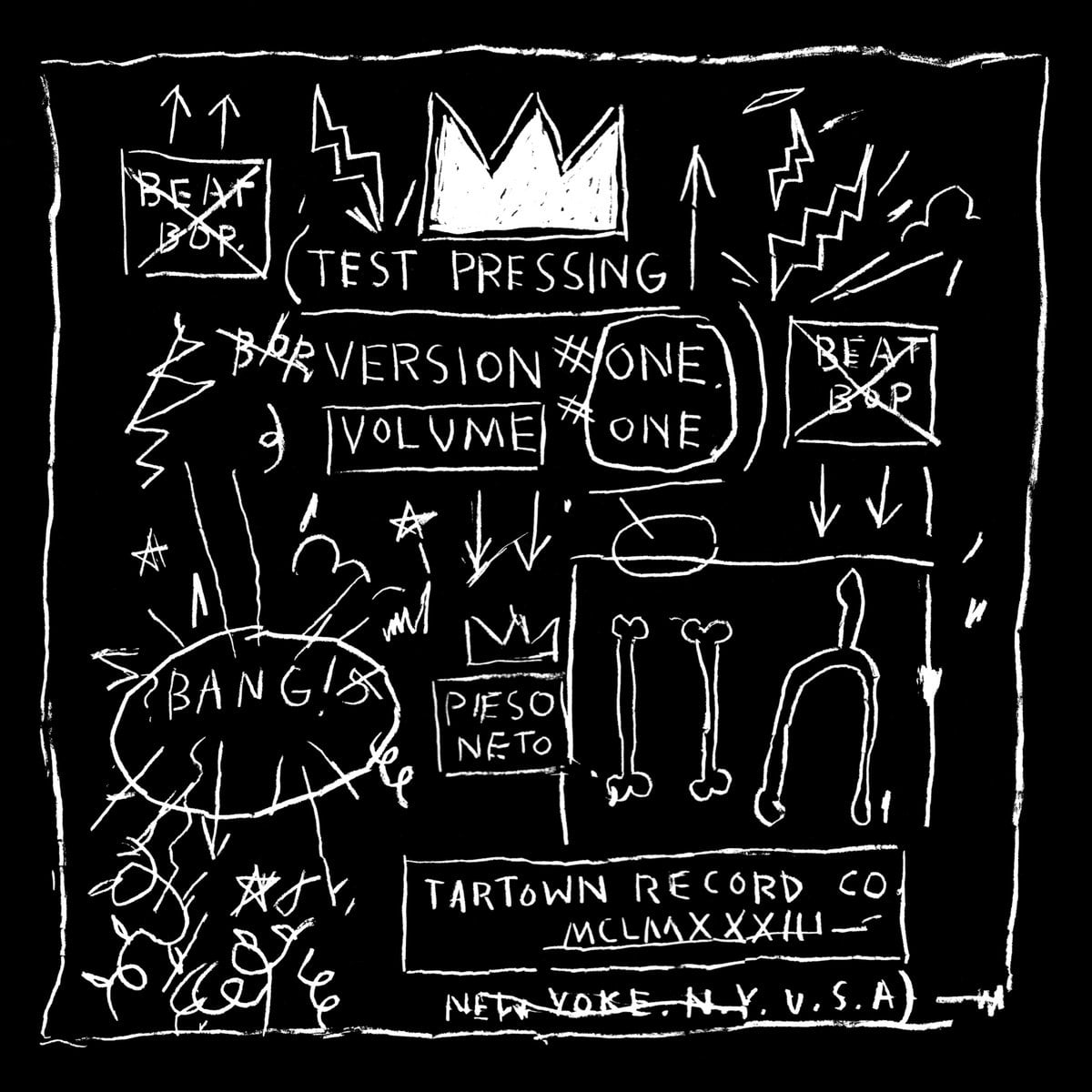
The cover art of ‘Beat Bop’ and the limited supply of that first pressing are certainly the primary reasons for its value, but hip hop historians know that Basquiat’s involvement in the record went well beyond contributing a design. “Jean-Michel put up the money for it,” Rammellzee explained to Spin years later, “I just used to go over [to Basquiat’s] house and chill. He was an up-and-coming artist, I was an up-and-coming artist… Well, I was an up-and-coming con artist. And we just were doing things at the same time.”
Rapping was just one of Rammellzee’s means of artistic expression at the time. Roughly the same age as the middle-class Basquiat, he’d grown up in much tougher circumstances in Far Rockaway, Queens, and started tagging New York City subway trains as a teenager in the late 1970s, developing a reputation among the city’s graffiti artists. Thus, he inevitably crossed paths with Basquiat, and the two became fast friends, along with Al Diaz, part of the same artist crew, who provided some of the percussion on ‘Beat Bop’ and described Rammellzee as “the Sun Ra of graffiti”, a reference to his wild and often surreal rants and highly unique worldview.
As the epicentre of hip-hop, New York was exploding with creativity at this point, and the lines between the various emerging art forms of the moment, rapping, DJing, breakdancing, and graffiti, were hazy if not totally irrelevant. As such, Rammellzee was eager to put out a record, and he wasn’t ashamed about Basquiat, in the middle of his emergence as a money-making artist, funding the project.
The concept for ‘Beat Bop’ wasn’t just a showcase for Rammellzee’s rhymes but would be a rap battle record, recreating the same kind of back-and-forth, two-mic performances going on between MCs in the streets, but rarely translated to disc. As a lifelong fan of boxing, Basquiat had a built-in affinity for this sort of mano a mano competition, and he decided to take a fairly active role in the record.
He wouldn’t be battling Rammellzee himself, though, as that distinction would fall to a 15-year-old graffiti artist and rapper named Malik Johnson, AKA K-Rob. Despite his youth and inexperience, K-Rob was making waves at the time and impressing all the right people. After freestyling in front of an A-list audience at the East Village club Negril, he was approached by Basquiat about collaborating.
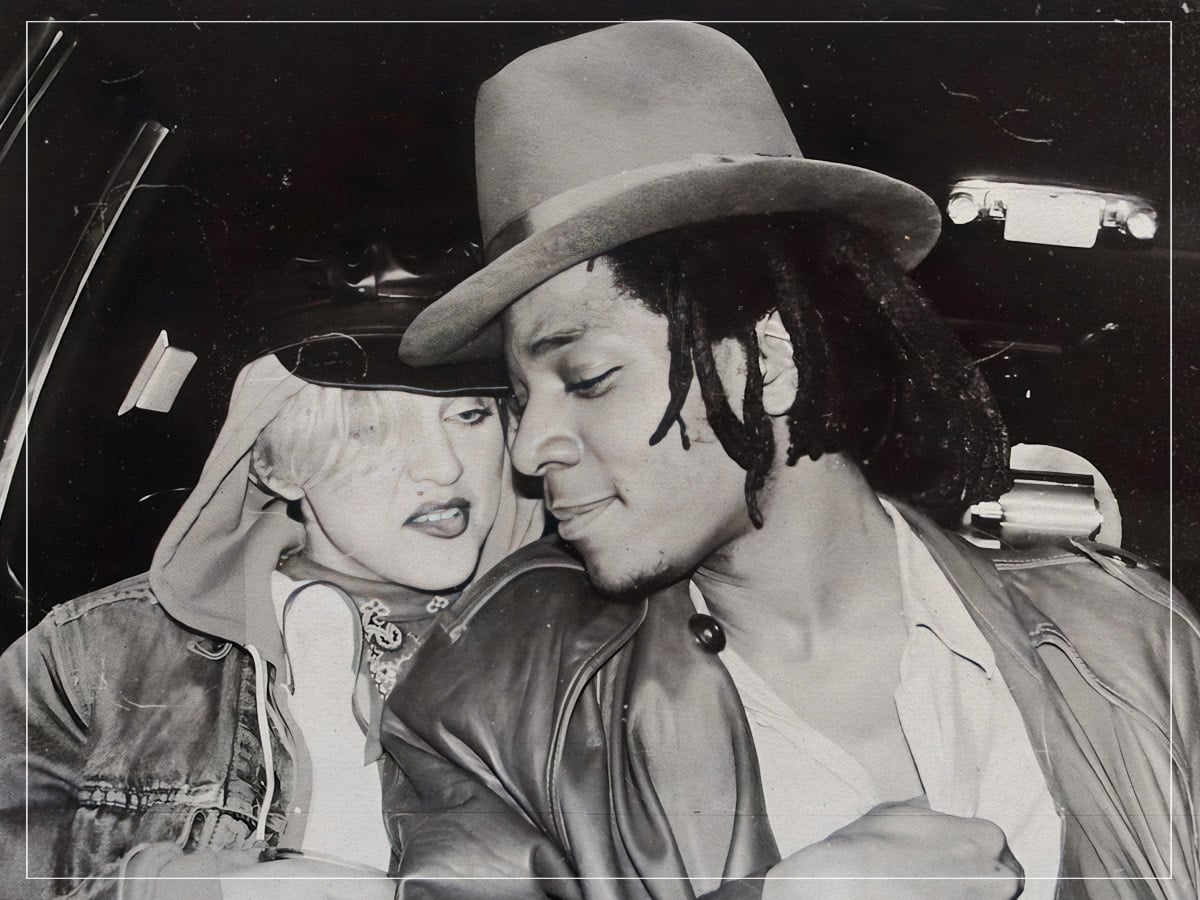
“Jean came up to me and was like, ‘Hey, hey, hey, K-Rob, you’re really, really good; I want you to stop by the studio such and such day’,” K-Rob told Spin. “I’m like, ‘Who’s this guy? Who’s this guy with the dreads?” Nobody was really wearing dreads out in public at that time. But everybody was flocking around this guy. He was like the Eddie Murphy of the art world. After I finished talking to him, people came up to me like, ‘What did he say to you? What did you say to him? Do you know who that is? That’s Jean-Michel, Michael Bas-kwat’.”
Basquiat, who was getting a bit cocky after working out deals with some of the leading art galleries in the city, had plans of not just funding his first rap single, but writing and producing it, as well. He had some music experience, playing in the experimental No Wave band Gray, and he already had a loose outline for a new single, which had come together while hanging out with some musician friends in Los Angeles, including his girlfriend and aspiring pop singer Madonna (yes, that one).
He arranged for Rammellzee and K-Rob to meet him at a professional studio he’d rented in Midtown Manhattan, along with several musicians. Rather than using a DJ, Basquiat wanted a proper backing band, complete with a guitar and a variety of percussion instruments, and when Rammellzee and K-Rob arrived, they were introduced to one another and handed a ‘script’ that Basquiat had written up for the track.
“Ramm came through with a trench coat and dark black shades on, looking like Inspector Gadget,” K-Rob recalled, “Jean introduced us, and he gave us some papers to read. I can’t remember what it [said], but it was so far-fetched. It was some corny shit. Me and Ramm looked at it like, ‘Get a load of this motherfucking guy! Really?’”
Basquiat might have been the measuring stick of cool in the art world, but he was out of his element trying to coach two MCs. “We crushed up his paper with the words he had written down, and we threw it back at him,” Rammellzee said. “Then we said, ‘We’re gonna go in these two booths’, and [I said], ‘I’m gonna play pimp on the corner’, and K-Rob said, ‘I’ll play schoolboy coming home from school’, and then it went on.”
What followed was basically a theatrical freestyle role play, over ten minutes in length, in which Rammellzee played the heel character, vaguely promoting dope-dealing in a bizarre put-on voice he identified as “the gangster duck”, and K-Rob played the babyface, observing the moral decay of the city with more of a critical eye, not unlike a track from the previous year, Grandmaster Flash and the Furious Five’s ‘The Message’.
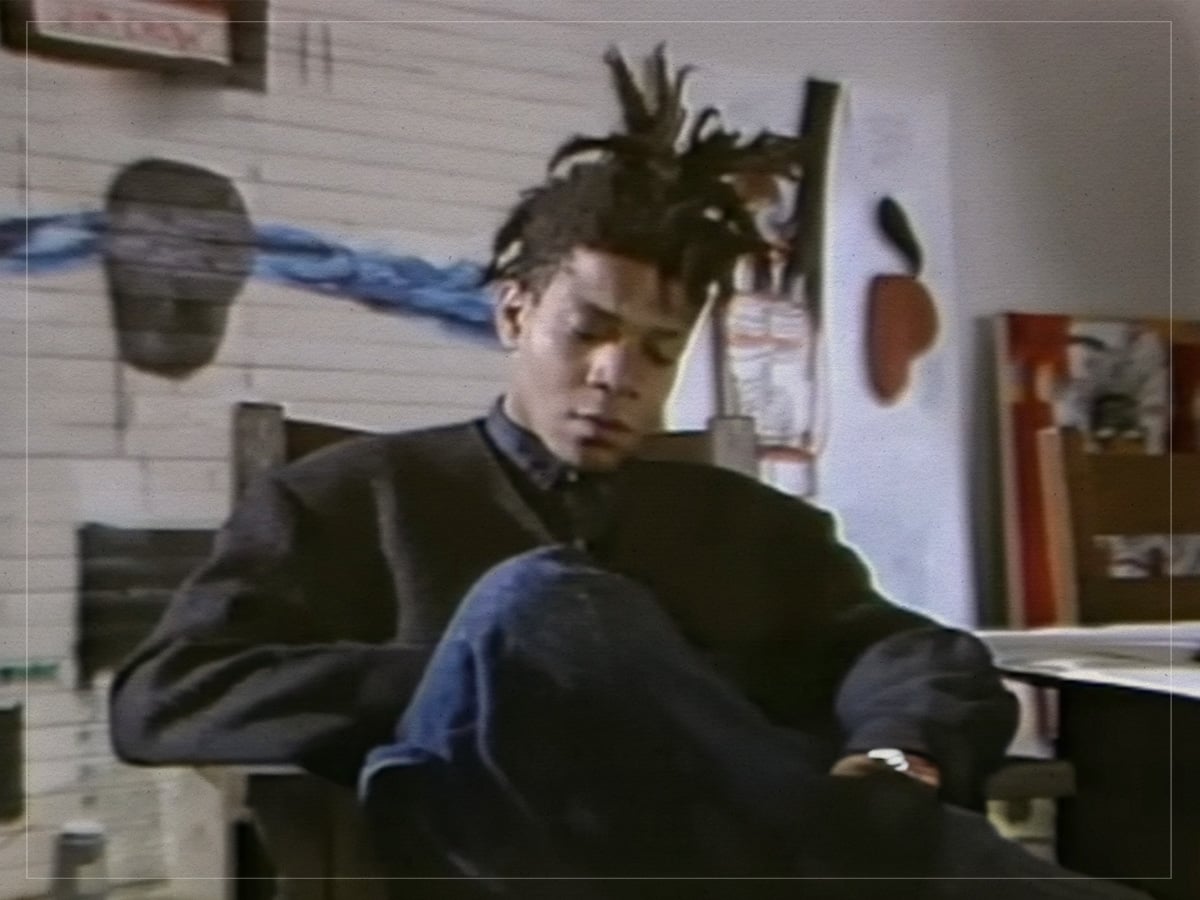
“Do the right things, or soon you’ll see,” K-Rob warns, “Life ain’t a moral joke, it’s a serious thing”.
Rammellzee, the aforementioned “Sun Ra of graffiti”, was less concerned about communicating any clear messages. As the gangster duck, his stream-of-consciousness put the emphasis more on the sounds of words than their definitions: “He can get real ill when you’re on the chill / I like the quarter drop a dime / That can make you seek a thrill / Master killer called the Evil Griller / Yes the best in the nation yeah number one thriller / I’m the best cut, rocking with the duck / Making with the conceal”.
Basquiat invented his own record label, Tartown Inc, to release the ‘Beat Bop’ single, but he never actually went through the trouble of establishing it as an actual, legally operating business. As a result, the royalties from the sales of ‘Beat Bop’ became a bit difficult to track, but that didn’t matter much in 1983, when a few repressings (most of them inexplicably without the Basquiat cover art) led to sales of around 5,000 units. When the single was licensed to Island Records in the UK in 1984, however, it gained a second life, and combined with its inclusion in the hip hop documentary film Style Wars, it ended up both profitable and highly influential.
“A lot of styles came from ‘Beat Bop’,” K-Rob said, “A lot of people said we influenced them, from The Beastie Boys to all these people, but we just did our thing. We did what we do. It wasn’t like we was trying to be nobody.”
Both K-Rob and Rammellzee thought they might work with Basquiat on a follow-up single, but it never came to be. “It was a side project for Jean,” Al Diaz surmised, “and I think, after a point, he lost a little interest in it. I remember going up to Crosby Street, and seeing boxes and boxes of the record just sitting around.”
Those boxes would be worth more than the total volume of some record shops today.
