


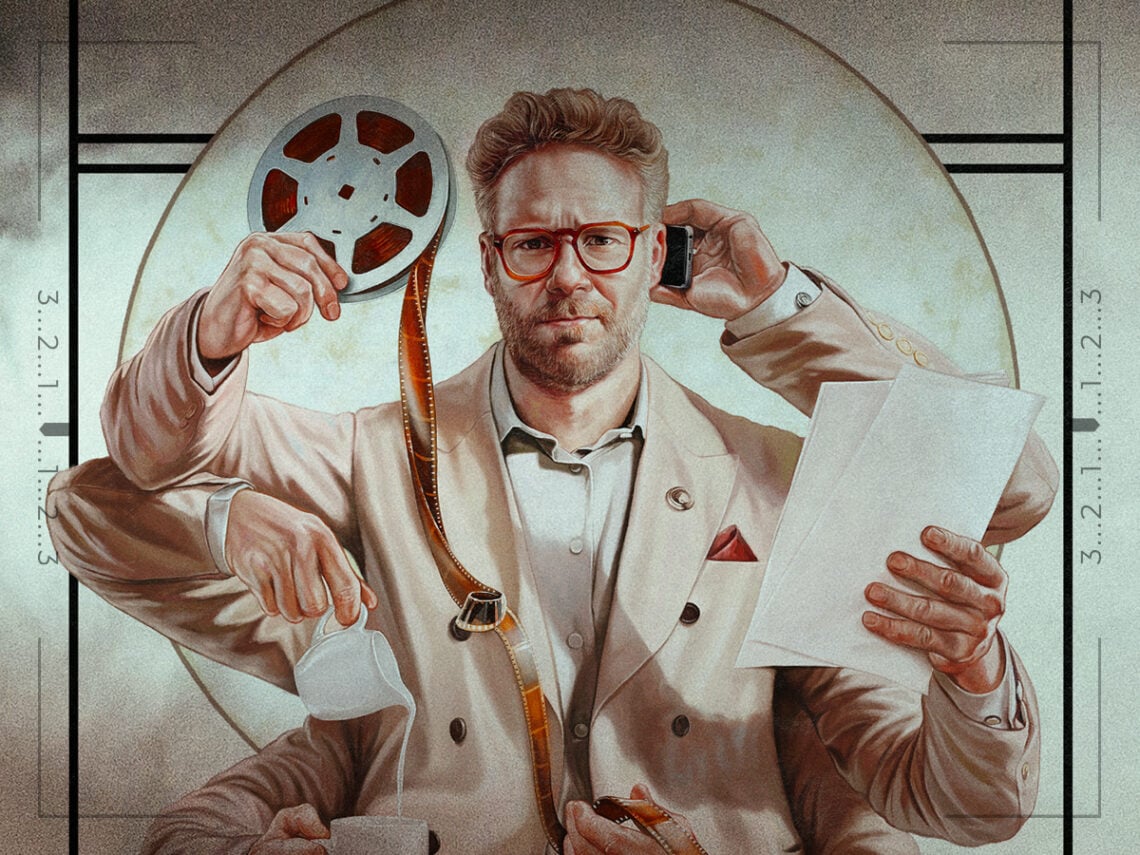
‘The Studio’ – the complex legacy of Hollywood satire

Satire is fun – we love to make fun of the institutions that fail us and the people at the top who abuse their power, with many Hollywood directors making this genre their potion of choice when critiquing the morally reprehensible and irredeemable. However, the potency of the genre has slowly faded over the years, losing almost all meaning as directors use the label to either alleviate their social conscience or manipulate their image into someone who ‘cares’, pretending to possess a semblance of political awareness to craft a creative identity around being one of the ‘cool’ people in the industry, someone who isn’t like the others because they also hate the suits and the same issues that oppress their fans.
This particular brand of cinema has led to so-called satirical projects such as The Idol, The Wolf of Wall Street, Holy Spider and of course, Saltburn, with each one containing a message so insubstantial and often problematic that it clashes against the very concept of satire. Emerald Fennel is apparently satirising the wealthy elite of Britain, despite coming from this background and eventually coming to the profound conclusion that the working class are to be blamed for leeching off the upper class. Sam Levinson is allegedly satirising the exploitative nature of the entertainment industry through sexualising and objectifying the lead female character in The Idol. Holy Spider is allegedly critiquing misogyny despite being recently dropped by his talent agency for groping an A-list female actor at an exclusive Golden Globes party.
As far as this so-called satire goes, I’ve pretty much had enough, with countless directors using it as an ego boost and a way to deflect from their own wrongdoings and privilege by claiming to be ‘aware’. As a result, they are seemingly exempt from criticism because they’re joining the same hate train as the rest of us.
While my personal tolerance for poorly done satire is at an all-time low, I found myself feeling tentatively excited by the release of Seth Rogans The Studio, a series about the current state of the film industry and a newly appointed studio executive who struggles with the balance between art and commerce, and is of course, a satire.
After watching the first couple of episodes, it’s hard not to fall in love with the fast-paced chaos and calamitous disasters caused by Matt Remick, the well-intentioned yet disruptive head of Continental Studios, who is determined to make his mark on cinema and keep the art form alive. However, after accepting the impossible job, he finds himself in deep water, encountering a variety of hurdles that both highlight his passion and own stupidity as he tries to smooth-talk A-list directors, win over acting titans and convince people just how aware and ‘not like the others’ he is.

Each episode is palpably anxiety-inducing as Rogan and Goldberg dial up the comedy of errors to dizzying new heights, with these powerful goons casually throwing millions of dollars down the drain and ruining productions through their meddling presence.
While there is a lot to be enjoyed about The Studio, from Rogan’s performance, the star-studded cameos (including Martin Scorsese, Olivia Wilde, Zoe Kravitz and Zac Efron), mockumentary-esque shooting style and rapid dialogue, there is also much to be said about the pitfalls of Hollywood satire and the many stories that pursue this rather contradictory task.
Despite containing many valid criticisms about the inner workings of the film business, there’s an inherent clash at the heart of any Hollywood production that is criticising the nature of Hollywood, almost in a similar fashion to the way Mattel attempted to wipe their hands clean through the creation of Barbie. While they might be mocking themselves and displaying a level of self-awareness about their shortcomings, it is ultimately in service of boosting their own image and reputation.
There’s no doubt that many of the performers and creators involved in The Studio have been victims of the insidious practices that are all too common in the film industry—from uncomfortable meetings with inept studio executives who greenlight terrible projects, to sexually inappropriate comments and aggressive directors. But to succeed at the highest level in this business, many are pushed into either perpetuating this behaviour or becoming complicit in it.
Of course, there are levels to this, but some of the people featured on the show strike me as using their participation to manipulate their image—to convince us they’re ‘one of the good ones’—despite having done things that suggest quite the opposite.
Zoe Kravitz made her directorial debut last year, portraying herself as this edgy director who is blowing the lid on the culture of sexual violence through her ‘provocative’ story that was almost titled Pussy Island. However, the messaging at the heart of the film ended up being shallow, problematic and incredibly self-congratulatory, with Kravitz seemingly patting herself on the back for being one of the good ones while aligning herself with some of the very worst ones in Hollywood who have allegedly committed crimes equal to the ones she satirises on screen.
This is just one example of why the Hollywood satire feels like a slightly redundant genre, with very few hitting the nail on the head due to their entanglement with this beast in real life, almost existing as a constant reminder that no matter how much they might claim to hate it, they are ultimately still a part of it, and continue to rub necks with despicable people who make it the horrible place it is, all while publicly denouncing characters who resemble these real life people.
Margot Robbie starred in Babylon, another Hollywood satire. And while it is a great film and she gives an electric performance, it doesn’t sit comfortably knowing that she willingly chose to work with the likes of David O’Russell (after the allegations that he sexually assaulted his own niece) and her production company is responsible for a Monopoly and Sims screen adaptation, pioneering the genre of brand movies that is slowly killing the film industry and making it harder for independent filmmakers to thrive,
It’s all well and good to denounce the machine, but ultimately, you can’t tear down the master’s house with the master’s tools, and many filmmakers seem to find themselves in this very trap when they attempt to tear down a system that lines their pockets and was the basis of their success. Perhaps the best way to denounce the system isn’t to work within its perimeters and ultimately, to create something that only benefits the system in question. Hollywood satire is a strange genre, and perhaps remains so as a result of the fact that it cannot truly exist.
