


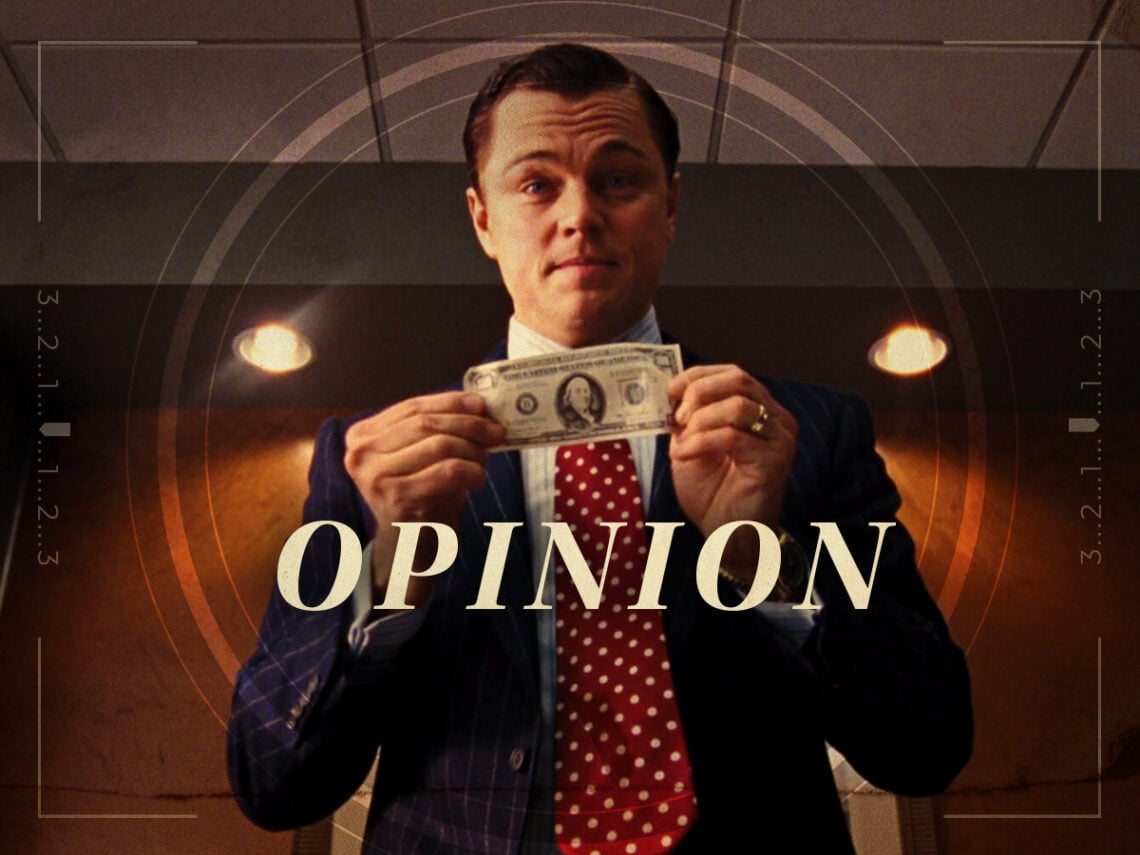
Hear Me Out: ‘The Wolf of Wall Street’ is Martin Scorsese’s most overrated film

Many film critics have described The Wolf of Wall Street as Martin Scorsese‘s late magnum opus, with the story of Jordan Belfort sparking endless discourse as people debate over the effectiveness of the director’s supposedly satirical tale of greed and excess. Considered a crucial classic within his canon of work, Scorsese tells the story of a Wall Street stockbroker who lives a life in the fast lane after hijacking the system and cheating his way to the top, becoming sickeningly rich and corrupt in his pursuit of the all-consuming American dream.
Make no mistake, The Wolf of Wall Street is a generally entertaining movie – it is flashy and fast-paced, with often laugh-out-loud moments at the hands of Jonah Hill and Leonardo DiCaprio as they resort to new levels of drug-induced stupidity. But famously, too much of anything can make you sick, and the excess antics of Jordan Belfort quickly turn sour and become the film’s biggest flaw.
Scorsese has typically been associated with depictions of morally reprehensible and unlikeable characters, whether it be Travis Bickle, Henry Hill or Jake Lamotta. Through these characters, the director comments on wider socio-political issues through the circumstances that drove them to such levels of moral depravity, hitting a cultural nerve through his searing indictment of violence and toxic masculinity. However, in the case of The Wolf of Wall Street, which bizarrely followed the unexpected release of his children’s movie Hugo, Scorsese (and all his fans) alleviated criticism leveraged against the film by labelling it as a satire, attempting to shut down conversations about its exploitative gaze by claiming we don’t understand his condemnation of this lifestyle.
But despite the many impassioned defences of this movie and many others like it, the satirical label has often been used as a means of protection for filmmakers to indulge in their most debased fantasies, without offering any critique of the particular culture they depict. From the likes of Sam Levinson and his take on female desire and empowerment in The Idol to Andrew Dominik’s repulsively exploitative Marilyn Monroe biopic, there have been many (usually male) directors who have used the idea of satire and subversion to revel in problematic narratives for their own enjoyment.
This sadly seems to be the case for Scorsese, who gets carried away in the fun of depicting such an outrageous lifestyle and loses the biting edge needed to critique it, being swept up in the unbelievable chaos of Belfort’s existence and the creative freedom that comes with being given millions of dollars to recreate it on screen.

Throughout the film, we see the rinse and repeat formula of Belfort taking ludes, going to parties and having a lot of sex, both with his wife and whoever else he pleases. From dangling fellow employees from the roof of a skyscraper to swindling money from hard-working people, it soon dawns on the audience that Belfort is not an honest man and that most of his actions are highly illegal.
However, while we know that his firm is committing many wrongdoings at the expense of less wealthy people, we don’t see the consequences of his actions on the people he screwed over for success, with the most we see of this being a bad hangover or argument with his wife (but this isn’t taken seriously as Scorsese generally doesn’t pay much attention to the female perspective).
While the film certainly succeeds in portraying the excess of Belfort’s lifestyle, with an endless catalogue of events that flits between a series of parties and nameless blonde women who exist as sex objects and playthings, Scorsese does little more than recreate the most outrageous stories from Belfort’s life, becoming a bloated mess that loses any satirical power and ends up as an overly long comedy.
Despite its generally frenetic energy and often sharp sense of comedic timing, Scorsese ultimately falls flat on his face in creating a meaningful commentary through the repetitive formula of depicting Belfort’s antics, with the film ultimately ending up as a showreel of his degenerate behaviour without portraying the consequences of these actions or its effect on other people in a way that would add nuance to the so-called Capitalist cautionary tale. If there is a criticism of Belfort, it is buried so deeply underneath the constant avalanche of his ludicrous escapades, rendering the satire so barely visible that it no longer exists.
Ultimately, the repetitive flicker between parties and one-night stands, which makes up the entirety of the film, is not saying anything new. So you think the American Dream is corrupt? Is over-consumption bad? How profound.
While it is somewhat impressive that The Wolf of Wall Street was made by a guy in his 70s, it is unfortunately, the most over-hyped and over-indulgent from Scorsese’s filmography, with fans of the movie jumping through flaming hoops to add depth to a story that only serves as an extreme male fantasy. It fails to cut deep enough for its alleged warning to be taken seriously, instead only speaking to an audience who watch it and secretly aspire to Belfort’s lifestyle.
