


The Story Behind The Song: The Jam’s masterpiece ‘That’s Entertainment’

Paul Weller has told the story numerous times before, but no one seemed to fully process it until last year, when his latest recounting of a 50-year-old anecdote went semi-viral. In case you missed it, the short version is this: he once got attacked by a lion.
As the teenage frontman of The Jam in the mid 1970s, Weller apparently had to scrounge around for transport for his band on their early UK tours… On one occasion, a man with a van named Ronnie, who was a friend of Weller’s dad, offered to drive the young punks around the southeast of England for a few days. The only catch was that Ronnie had a pet cat that would be travelling in the van with them, and that cat happened to be an adolescent African lion.
“So Ronnie would drive the van and the lion would sit in the passenger seat,” Weller told Uncut magazine in his 2025 version of the tale. “You couldn’t get too comfortable, though… One time, we were sitting in the back and I leant on the back of the passenger seat – next thing I know, the fucking lion’s gone for me. I nearly shat myself, man. Attacked by a lion!”
In past tellings of the lion encounter, Weller made it clear that he suffered only a mild flesh wound on the elbow, but those sorts of details aren’t really important. The lion story is all about giving the public a unique insight into just how wild the rock and roll life could be for a DIY band trying to make a name for itself in the strange, anarchic reality of 1970s Britain. As they used to say, “That’s entertainment!”
Which brings us, of course, to arguably the finest song in The Jam’s catalogue, and certainly one of the most unique and memorable from the entirety of the punk / new wave era… Written and recorded in 1980 for the band’s fifth studio album, Sound Affects, ‘That’s Entertainment’ was Paul Weller’s moment, at still just 22 years of age, to establish himself as the defining voice of British rock for the new decade of the ‘80s; no longer just a Mod god, but a perfectly refined combination of Ray Davies’ keen cultural eye and Joe Strummer’s frustrated heart.
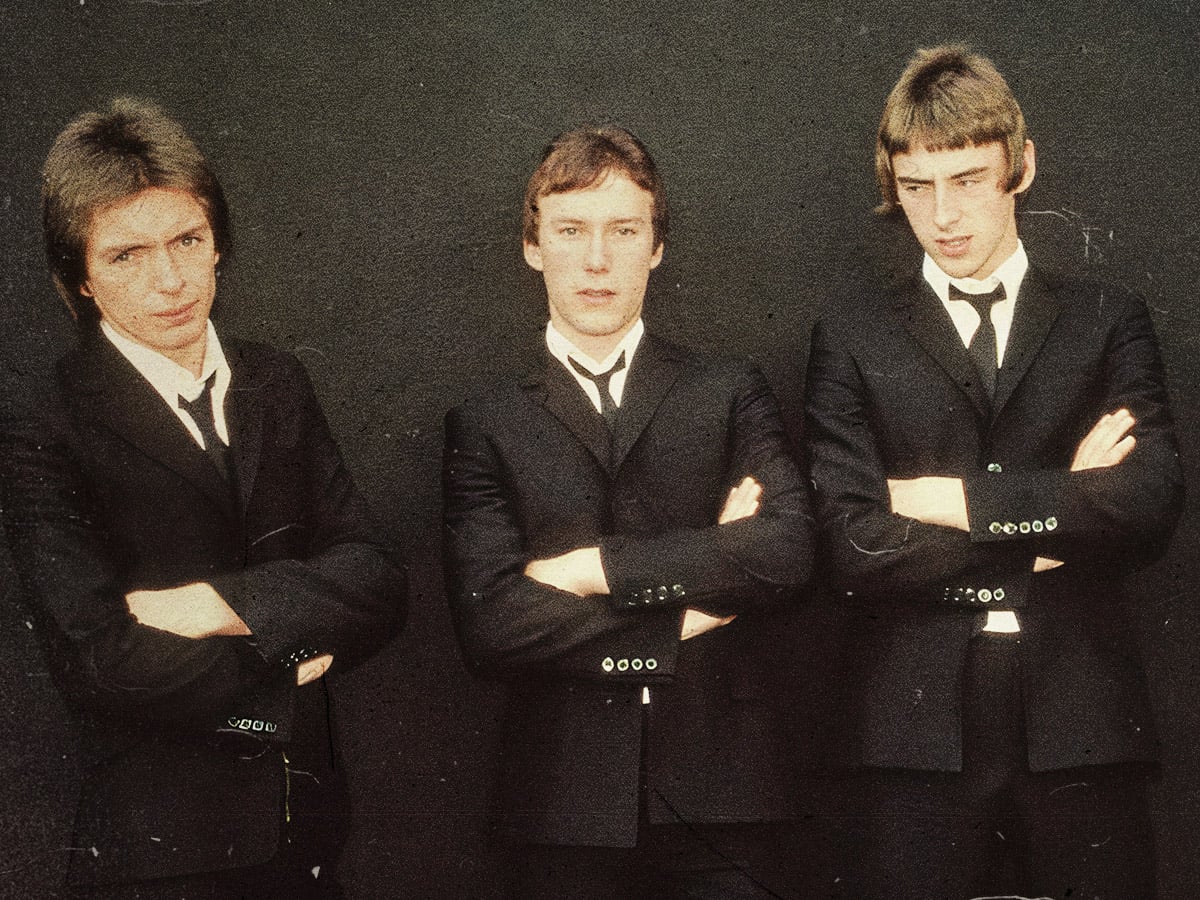
And what better way to announce this new, all-grown-up sophistication than to lay down a killer track with essentially no electric guitar and no drums? Instead, Weller sits on a stool with an acoustic guitar like Dylan did at the same age in ‘63, and merely starts to paint a picture of what he sees around him: decaying London in the first years of Thatcher.
Whereas young Dylan would have gotten all flowery and cryptic and metaphorical about the whole situation, though, Weller is far less detached, less whimsical, devoid of folksiness. There’s no need for any deep collegiate analysis of symbols and biblical references. ‘That’s Entertainment’ is biting and cynical, but also oddly resigned and matter-of-fact and blasé: showing what punk could sound like with no distortion or theatrics to lean on, just the subject matter through a very capable conduit. Weller stabs at the strings and half-growls through the chorus, while Bruce Foxton delivers the icy bass line with menace, even as the two men join up to harmonise on some irony-laden la-la-la’s.
It’s not all that often that the most popular, baby-faced rock band in the the UK, the one in the posters on every teenagers’ wall, are delivering messages this remarkably bleak: “Days of speed and slow time Mondays / Pissing down with rain on a boring Wednesday / Watching the news and not eating your tea / A freezing cold flat and damp on the walls / I say, that’s entertainment / That’s entertainment.”
‘That’s Entertainment’ could be perceived as a political song, but like some of the best Kinks tracks, it allows the listener to fill in the blanks, rather than assigning blame for the way things are or suggesting solutions. That was all for the better, too, considering how much Weller had gotten himself in trouble earlier in his career for spouting his mouth off like a typical, try-hard contrarian kid, proclaiming himself both a Royalist and a supporter of the Conservative party; an almost unthinkable double whammy of disappointment from a punk singer. By now, he’d at least learned to come down off the soapbox and stick to the evergreen argument that “things aren’t great.”
According to Weller’s own memory of the song’s genesis, there wasn’t actually any strategy involved whatsoever. It was, basically, an anti-romantic adult song about a city he’d romanticised as a kid, and it was written, supposedly, in about ten minutes after a night out at the pub.
“Music can’t change the world,” Weller told the Guardian in 2009, “but it can change the individual’s world, and it certainly changed mine. I was in London by the time I wrote ‘That’s Entertainment’. Writing it was easy in a sense because all those images [“a smash of glass and a rumble of boots”] were at hand, around me.”

A few years earlier, Weller had longed to escape his hometown of Woking and come to London, where he’d seen the Sex Pistols and The Clash play, and where “you could be who you wanted to be.” The trouble was, there were massive portions of the city where nobody had any hopes of finding themselves. There were no bigger cities to run off to, just the daily reminders of how the cards were stacked against you: “Lights going out and a kick in the balls.”
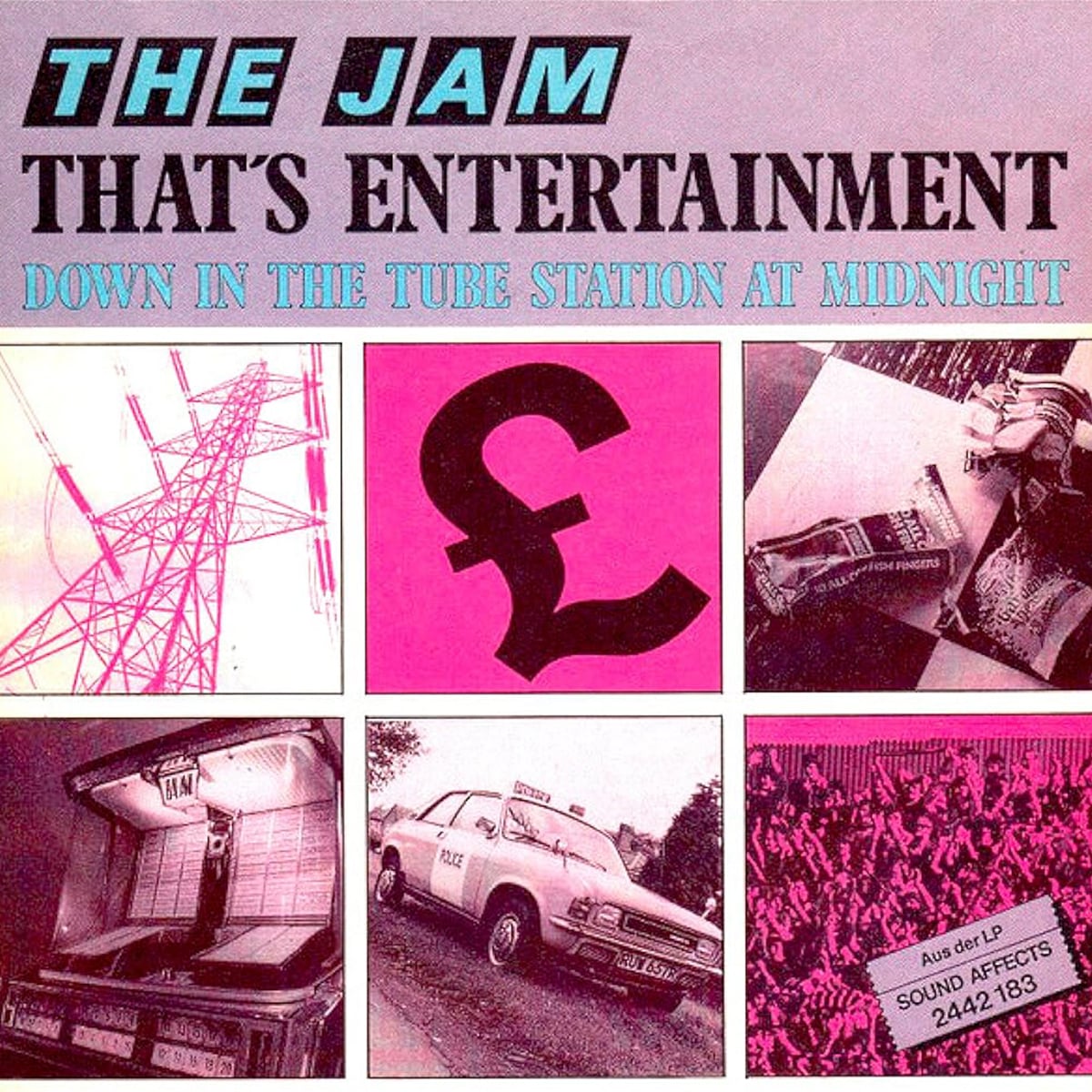
When Sound Affects came out in November of 1980, The Jam made a point of not releasing ‘That’s Entertainment’ as a single, despite wide praise for the track. After the album’s lead single ‘Start’ went to number one in the UK, though, fans soon discovered that ‘That’s Entertainment’ had been given the single treatment in Germany, and in short order, that record soon became one of the biggest-selling imports in UK pop history.
Weller was understandably lauded for his advancements as a songwriter, but at least a handful of Jam fans noticed something a bit familiar about the lyrics to ‘That’s Entertainment’, specifically those extra dedicated fans who read the books and zines that Weller published under his private press, Riot Stories.
In 1980, shortly before the song was recorded, Riot Stories released a collection of poetry by young, up-and-coming poets called Mixed Up Shook Up. Inside that collection was a piece by Paul Drew titled ‘Entertainment’, which had previously appeared in one of Weller’s self-published fanzines.
“A dead body on the hour, one, six nine or ten – that’s entertainment,” Drew’s poem begins. “A rape before the horlicks, a simulated orgasm before the bovril – NOTHING IS FUNNY ANYMORE – that’s entertainment.”
That central, ironic refrain, itself a reference to a famous 1953 show tune, clearly caught Weller’s attention, as did the overall mood of the poem and the brutal set pieces within it: “murder with a point or without a point while offspring throw toys at each other / poison in the air you laugh with, the comedians know they are watching.”
These ideas were bouncing around in Weller’s brain as he jotted down his own words after that night out, penning what is objectively a more tame version of Drew’s sentiment; a bit more palatable for radio play.
In the internet age, as more people became aware of the connection between ‘Entertainment’, the poem and ‘That’s Entertainment’, the song, Weller had a few plagiarism darts thrown his way. But he set the record straight in a 2015 chat with Mojo magazine. “I was doing a fanzine called December Child, and Paul Drew wrote a poem called ‘That’s Entertainment’ [sic]. It wasn’t close to my song, but it kind of inspired me to write this anyway. I wrote to him saying, ‘Look, is it all right if I nick a bit of your idea, man?’ And he said, ‘It’s fine, yeah.’”
That’s Weller’s version of the story, in any case. It’s not clear if Drew has ever commented on the song.
There are a few reasons to think that Weller, if not ashamed of nicking the lyrical idea for the song, still wasn’t thrilled with how it turned out in the final version produced by Vic Coppersmith-Heaven on Sound Affects. Along with not initially releasing ‘That’s Entertainment’ as a UK single, Weller also apparently convinced Polydor Records to replace the album cut with an earlier demo version of the song for
The Jam’s 1983 greatest hits compilation Snap!, which was released a year after the band broke up. The demo is, by almost any measure, inferior to the Sound Affects track, but Weller might have felt it caught the immediacy of the tune in the same spirit as the ten minutes he’d spent writing it. Sometimes you have to capture the moment as it happens, after all. You’ve got to let the lion take a swipe.
