


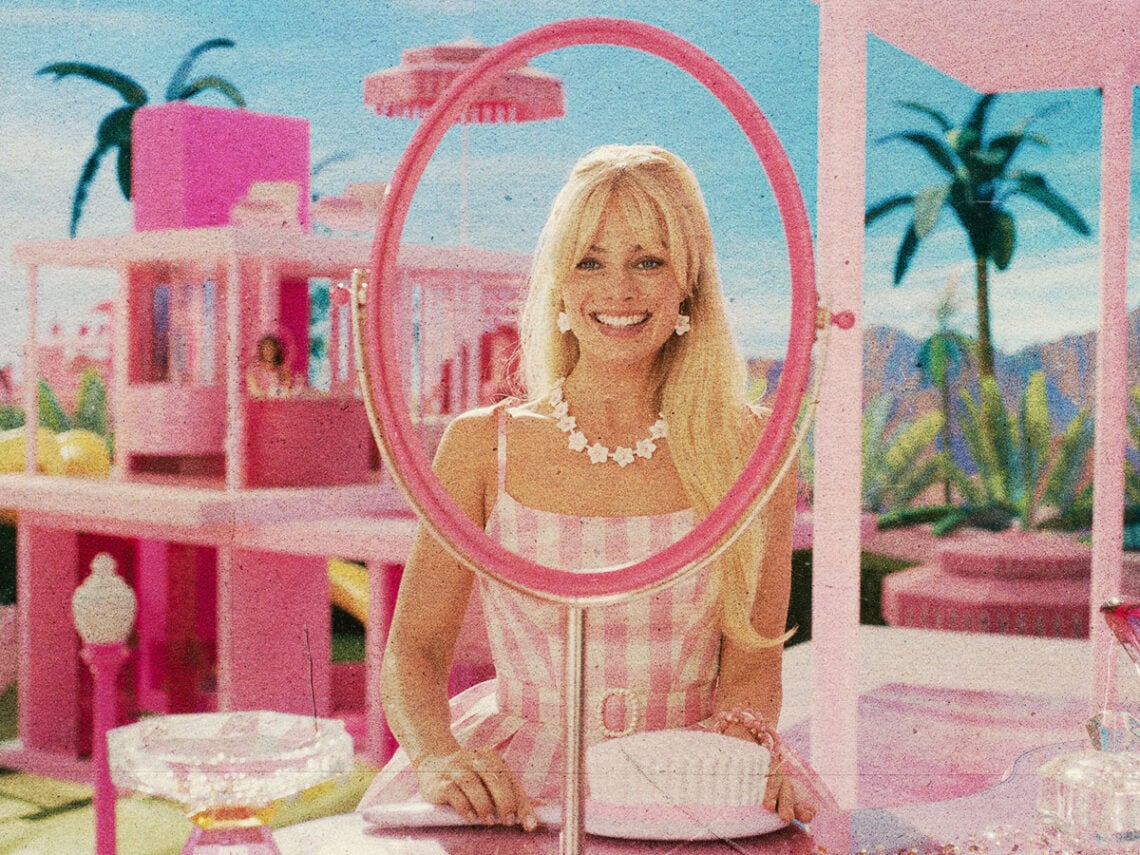
The remote Scottish pub that convinced Margot Robbie ‘Barbie’ would be a phenomenon

The Barbie movie was far more than a simple story about a doll, a childhood icon, or a piece of nostalgia. It became a cinematic phenomenon because of the message beneath the surface, and Margot Robbie understood that from the start.
In July 2023, Greta Gerwig’s film, led by Margot Robbie, was released to international fanfare. It happened to arrive on the same day as Christopher Nolan’s Oppenheimer, which sparked one of the year’s biggest cultural moments when ‘Barbenheimer’ was born. People embraced the bizarre double bill, moving from a lengthy film about the atomic bomb to happy hour drinks, and then back to the cinema for a movie about a doll. Normally, nothing would connect those two films, but in the summer of 2023, it became impossible to talk about one without mentioning the other.
In the end, Barbie won the box office battle, grossing over $1billion, while Oppenheimer trailed behind at around $788million. However, having the two films connected and seeing how each was treated felt like an interesting microcosm of the world of Barbie.
At its core, Barbie was a movie about gender; it was a movie about the patriarchal world as Barbie’s dreamhouse gets overrun by Kens and she starts experiencing the kind of doubt and insecurity that all women know well in a world of ever-changing and ever-intensifying beauty standards. In its final moments, when a montage of womanhood is flashing across the screen, it also becomes a film about community, rarely leaving a dry eye in the room amongst the women.
But as a perfect point-prover for the film’s subject, many people (mostly men) were dismissive of the final product. Nolan’s film was framed as “real cinema”, while Barbie was treated as light entertainment, and Gerwig was reduced to being a director who simply makes fun films for women. That attitude carried into awards season. Despite dominating the box office and defining a cultural moment, Barbie struggled to convert that success into major critical trophies. Still, Robbie knew the film would succeed, and she heard that confidence straight from everyday audiences.
“I had this brilliant experience,” Robbie recalled to the New York Post, “I was in a pub in the middle of nowhere in Scotland, and I listened for about 30 minutes to a group of guys on a bachelor party discussing the Barbie movie, not knowing that I was sitting two or three feet away from them.”
Basically, going undercover, Robbie was hearing the feedback from a sort of focus group, but specifically the older, male focus group, who might not have been Barbie’s exact target audience. In real time, she heard a debate play out, continuing, “It was just truly fascinating. There were people at the table who refused to see the Barbie movie”.
It came down to a battle of opinions between two guys as she added, “One guy was like, ‘Dude, it is a cultural moment, don’t you want to be a part of culture?’ And the other guy was like, ‘I’ll never see it’, and by the end, he did want to see it. It was a whole thing.”
In that moment, she knew they’d succeeded; she knew Barbie would be a success exactly because conversations like this were happening, and the film was proving to be divisive, especially along lines of gender. She knew it was highlighting exactly what they’d been aiming to get at, and particularly what the Ken character represents. Always knowing the message of the movie was far deeper than just childhood nostalgia or pretty dolls, that pub in Scotland was proof to Robbie that the plan was working.
