


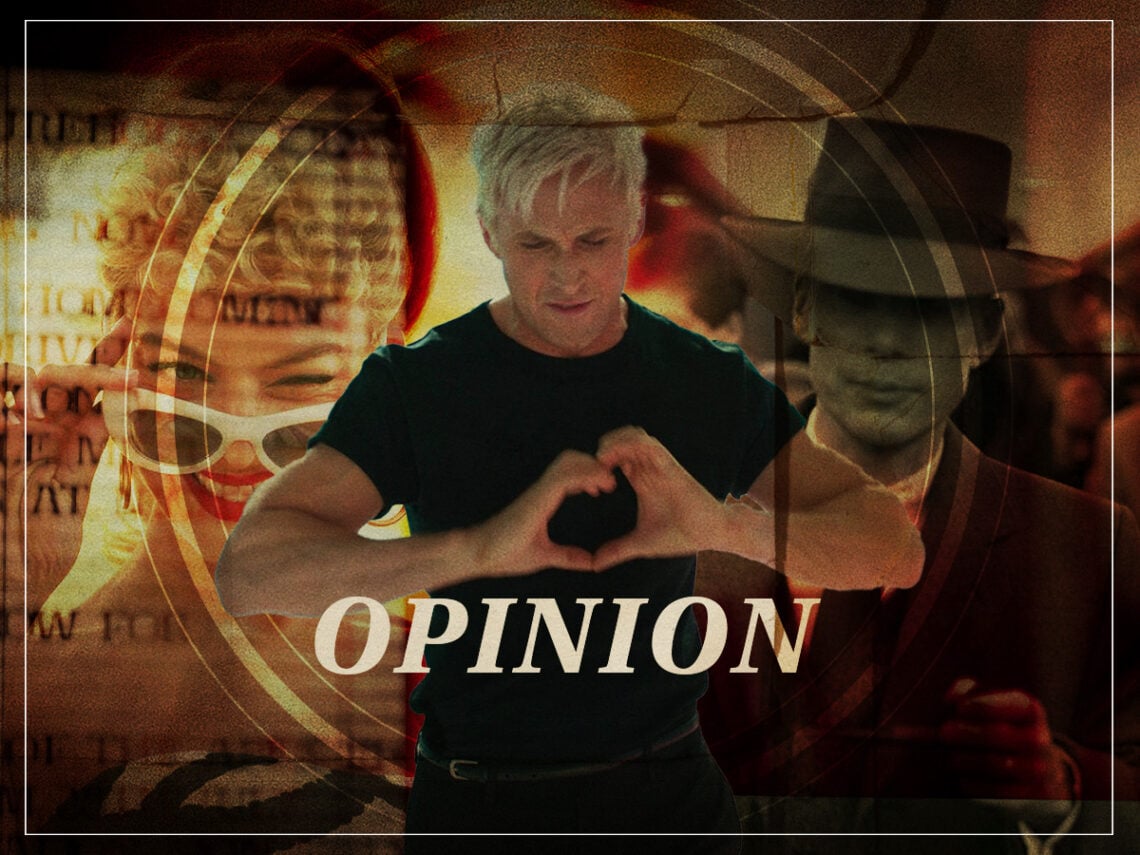
From ‘Barbenheimer’ to ‘Glicked’: Why Hollywood will never recreate the summer of 2023

Do you remember where you were when you first heard the term “Barbenheimer”? Perhaps you were listening to a friend talk about their plans for the weekend or reading a headline. Wherever you came across it first, chances are, it felt like an inescapable part of your 2023 summer, whether you liked it or not. The term was coined back in April of 2022 by editor and film journalist Matt Neglia when it became clear that Greta Gerwig’s long-awaited Barbie and Christopher Nolan’s biopic of nuclear scientist J Robert Oppenheimer were on a collision course at the box office.
Instead of becoming rivals on opening weekend, however, the films became a joint phenomenon. Fans made memes juxtaposing the two protagonists—the bombshell and the bomb creator—and showed up in droves to see the films as a double bill.
The chasm in tone, colour palette, and subject matter between the movies only seemed to make moviegoers more gleeful about turning them into two halves of a whole, and even though Barbie went on to trounce Oppenheimer in overall box office earnings, there is no question that the joint opening was a net gain for all involved. According to British cinema chain Vue International, 19% of customers who purchased Barbie tickets also bought Oppenheimer tickets, suggesting that the viral double bill was more than just internet posturing. Together, the films grossed an astonishing $2.4billion.
Given the shock success of this organic phenomenon for the film industry’s bottom line, it’s hardly surprising that distributors would try to recreate something similar from the top down in 2024. But with every ‘Glicked’ (Gladiator and Wicked), ‘Babyratu’ (Babygirl and Nosferatu), and ‘Lasagna Taylor Joy’ (a portmanteau of the titular cat’s favourite food from the Garfield movie and the name of the lead actor in Furiosa: A Mad Max Saga), the joy of 2023 has only been undermined rather than rekindled. The issue is that ‘Barbenheimer’ was a one-off resulting from a series of factors that can’t be recreated. The more Hollywood tries to clone it, the more desperate and detrimental the efforts become.
The key aspect of the ‘Barbenheimer’ phenomenon was that it happened organically. Both Barbie and Oppenheimer were backed by millions of dollars in marketing campaigns, but none of the people involved made any attempt at coordination or even comparison. While the team behind Barbie blanketed the internet with pink product tie-ins, Nolan’s team did the director’s usual piecemeal rollout of cast announcements and cryptic trailers. It was the fans who started the never-ending feedback loop of meme-ification. When Paul Mescal and Ariana Grande chat about ‘Glicked’ together, or Lily Rose-Depp claims to have coined ‘Babyratu’, it sounds like they’re reading from a teleprompter provided by their films’ respective marketing departments.
Then, there’s the fact that Barbie and Oppenheimer actually had a lot in common aside from their obvious differences. For one thing, they both had built-in audiences. After just two films as a solo director, Gerwig had earned a passionate fanbase for her offbeat, deeply human style of filmmaking, while countless Millennials and Gen Z-ers had powerful childhood connections (for better or worse) to Mattel’s dolls. Nolan has an even more passionate audience who will flock to the theatre, without fail, for every one of his releases.

Combined with these built-in audiences, both films were huge deviations from their directors’ usual work. How an indie filmmaker like Gerwig could turn a problematic child’s toy into a Kubrick-referencing feminist musical drenched in pink was something that audiences wanted to see for themselves, especially in the wake of the cinema-halting Covid-19 pandemic. How Christopher Nolan could eschew action and science fiction for a meditative character study about a complex 20th-century scientist while maintaining his uniquely cinematic style had to be evaluated firsthand on the biggest screen possible.
In contrast, though both Wicked and Gladiator were based on familiar intellectual properties, neither represented an exciting deviation for their respective directors. On top of that, Ridley Scott has been making so many movies in recent years with such varying degrees of creative success that it’s hardly an event when he releases another one, and Wicked director Jon M Chu is far from a household name.
Similarly, while Nosferatu director Robert Eggers has a passionate fan base and Dracula is a beloved character, Halina Reijn is still a relatively unknown quantity, and Babygirl is an original story. The two films also fall into an uncomfortable middle ground where their subject matter is too similar to yield the satisfying clash of ‘Barbenheimer’ and too different to satisfy fans who enjoy one or the other. Both feature erotic themes of forbidden desire and the sexual awakening of their female protagonists, but while Nosferatu is tragically romantic and more suggestive than explicit, Babygirl is delightfully kinky and taboo. If you’re looking for romance, Babygirl will be disappointing, and if you’re looking for steaminess, Nosferatu will fall flat.
The final factor in the ‘Barbenheimer’ phenomenon, and the main reason why it will never be repeated, was the actor’s strike. One week before the movies went into wide release, SAG-AFTRA, the labour union that represents nearly every Hollywood actor, declared strike action, forcing the stars of both films to stop all promotion. What could have been an exhausting summer of Margot Robbie in pink and Cillian Murphy awkwardly smiling through talk show interviews turned into one of the only positive internet echo chamber instances. All of a sudden, the discussion around the movies became fan-oriented. In the vacuum left by the halted marketing campaigns, audiences were allowed to create their own narratives and develop their own relationships with the stories.
If Hollywood has anything to learn from the success of ‘Barbenheimer’, it’s that auteurs deserve to have their wild ideas financed and glossy, focus-grouped marketing campaigns can’t top organic enthusiasm. If it has anything to learn from the emptiness of ‘Glicked’ and ‘Babyratu’, it’s that good movies don’t need to be packaged into a meme to find their respective audiences, and moviegoers don’t like being told what to do. The more likely scenario, of course, is that we will be doomed to a 2025 full of Jurassic Superman and How to Train Your Michael Jackson.
