


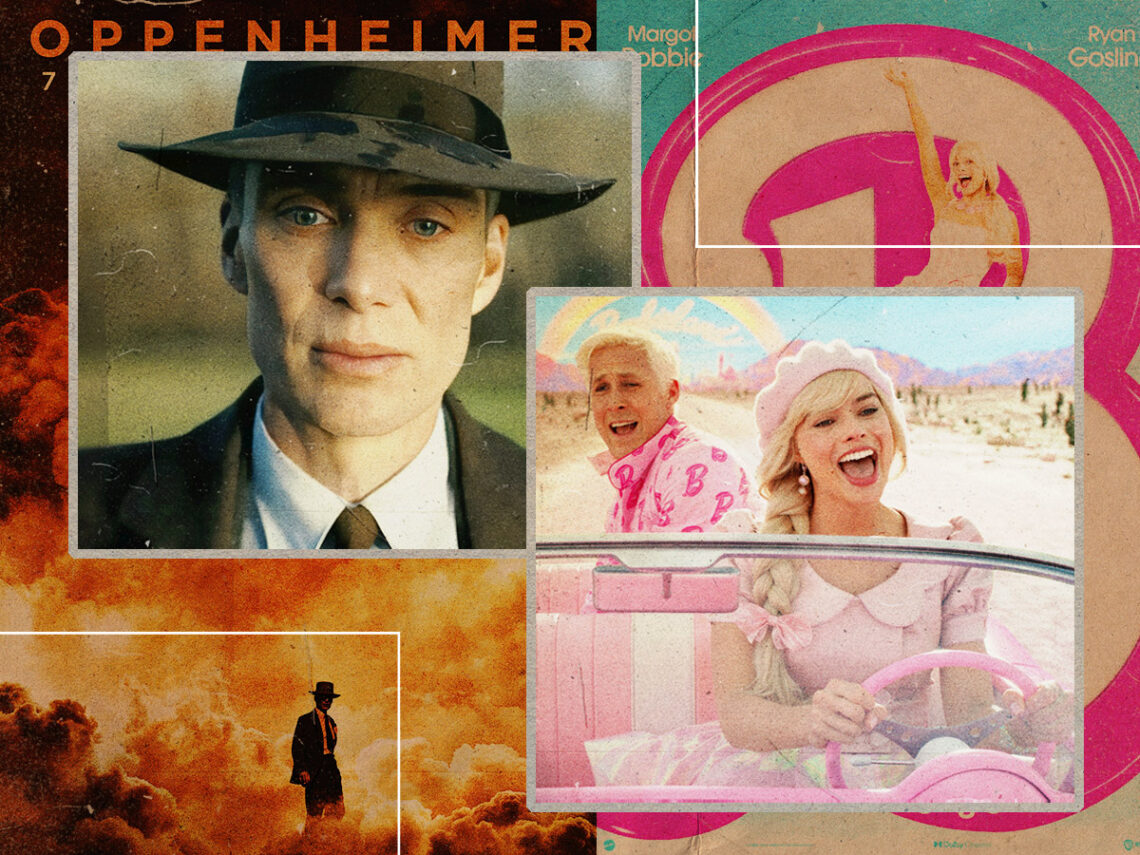
How ‘Barbenheimer’ came to define 2023

In our world, encountering the term postmodernity is quite common: cherry-picking different facets of multiple societies and curating individualist worlds has been studied since as early as the 17th Century. However, much of its concept appears somewhat antiquated in today’s context, especially after the emergence of the internet phenomenon called ‘Barbenheimer’ – a term coined on social media to label the battle between Barbie and Oppenheimer – which caused a seismic shift in the cultural landscape and essentially reshaped our perception of reality.
When movie lovers first caught wind of Greta Gerwig’s next venture, Barbie, fans couldn’t help themselves. At first, it seemed like a marketing gimmick — here was another seemingly childish movie attempting to rehash old flames. When was the last time anybody cared about Mattel? Well, it turns out that it’s always been there, engrained in our culture like a cat’s unrelenting claws. After the first trailer, the entire concept seemed to be moulding into something new. The film industry was about to challenge everything it ever knew.
Then, Christopher Nolan emerged with his new title: Oppenheimer. This wasn’t just two distinctively different films attempting to make the biggest splash in Hollywood — they were also going to do the one thing that agents, networks, and studios often emphatically advised against: a simultaneous worldwide release.
It’s expected to be picked up on various film sites and national newspapers, but the internet? What’s so interesting about two films being released on the same day? At first glance, the online fascination with two movies released simultaneously might seem puzzling. However, our cultural focus revolves around the concept of duality, from TikTok’s inundations of relatable memes to our fragmented consumption patterns.
The convergence of Barbie and Oppenheimer epitomised this essence flawlessly. Attending the cinema dressed in pink underneath a black trench coat became a statement perfectly aligned with this peculiar movement. In 2023, we experienced a monumental lifestyle, entertainment, and culture shift. This was a year where artificial intelligence proved it knows no bounds, and British television continued to show no remorse for blurring the lines between politics and entertainment.
It was also a year marked by contradiction. The blend of Barbie and Oppenheimer, as showcased in the portmanteau, reveals the stark contrast between them — specifically, Gerwig’s whimsical comedy and Nolan’s biographical thriller. While the whole thing subtly echoes the tradition of ‘doubling up’ viewing experiences, a practice dating back to the 1930s, its emergence in 2023 tells us everything we needed to know about the previous 12 months.
Regardless of being in the most cheerful and vibrant surroundings, introspection can strike unexpectedly, prompting the question: “Do you guys ever think about dying?” Conversely, guilt takes multifaceted forms — leaving lasting impressions on young girls and women globally or significantly influencing the aftermath of the first nuclear bomb. Maybe that’s another fundamental trait inherent in such a combination. At the Barbie premiere, Issa Rae mentioned: “I love that there’s solidarity though where people tried to pit us against one another, but now it’s turned into like a double-feature situation.”
A straightforward analysis might attribute the allure of ‘Barbenheimer’ solely to our society’s adeptness at blending ideas, genres, and themes. Yet, there’s a more profound narrative at play here. It also demonstrates the remarkable ability to resurrect historical ideas – ones seemingly consigned to the forgotten annals of time – and infuse them into the contemporary landscape, sparking transformative shifts. It offers a profound lesson in revisiting and reshaping old traditions, showcasing the influential capacity of film to mould and influence its audience.
‘Barbenheimer’ could have arrived years ago, but in 2023, its resonance with our collective perception of untold stories has never been more profound.
