


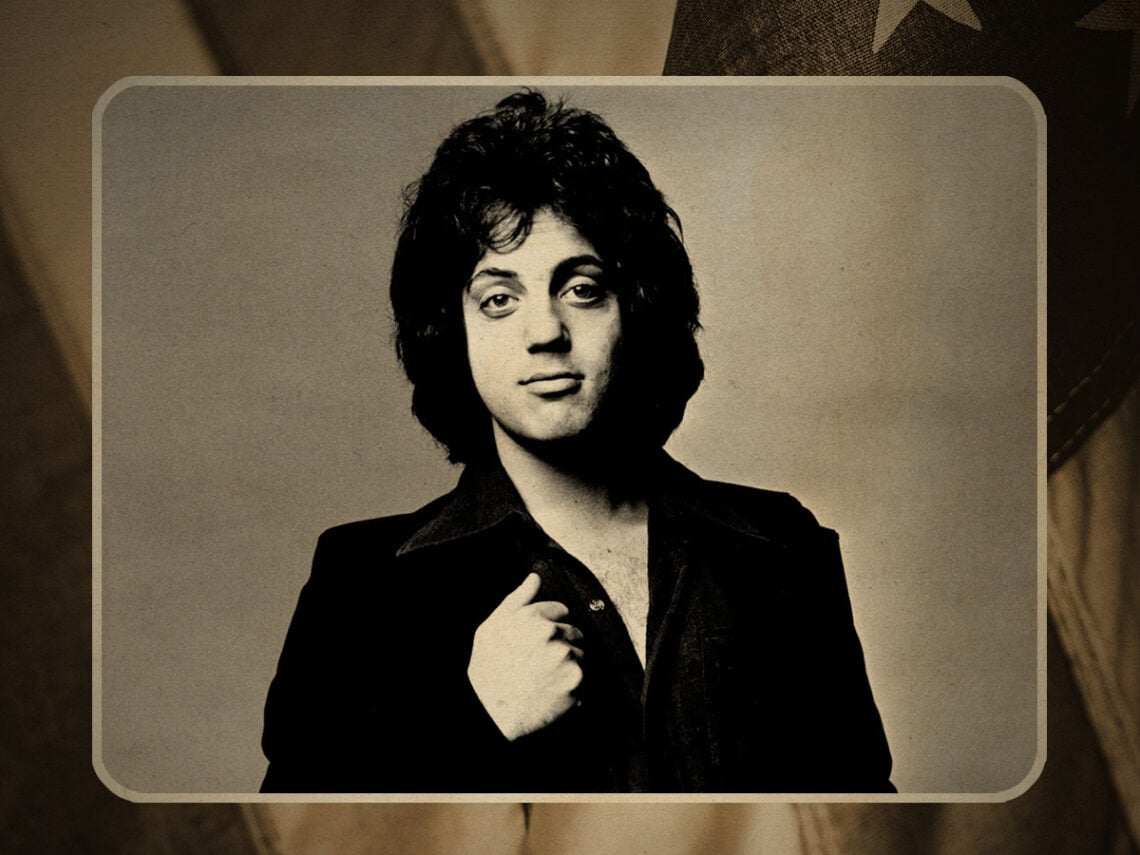
The prog-rock icons that gave Billy Joel a big break: “I’d never heard of these guys”

More often than not, support bands for live shows are chosen because their sound works alongside the headline band. Of course, popularity and pull always need to be factored into the decision process.
Booking agents will consider whether the addition of a certain band’s name to the poster will allow them to sell more tickets, but they’re also looking for an opener whose performance will please those who came for the main event, warming them up for the headliner.
This usually leads to crowd-pleasing lineups – Aussie rockers AC/DC supporting fellow guitar legends The Rolling Stones, for example, or English Teacher representing Leeds alongside Yard Act at a recent show. But sometimes, booking agents opt for something slightly riskier, pairing an opener and headliner who don’t quite make sense on paper. In the 1970s, for example, the pop hit-making ‘Piano Man’, Billy Joel supported prog-rock icon Yes.
It was a strange pairing. Joel was just a couple of years into his career, putting out his signature hit ‘Piano Man’ in the autumn of 1973 and carving out a place for himself behind the keys. In the years that followed, he would release future pop favourites like ‘Vienna’ and ‘Uptown Girl’, capturing mass audiences with his radio-friendly efforts.
Many of his melodies and lyrics have been immortalised in karaoke booths and on wedding dancefloors, but he wasn’t doing anything particularly progressive. Yes, on the other hand, spawned from a scene that had the word progressive in its name. In the early 1970s, they found success through their work in the prog-rock realm, becoming one of the most influential bands in the genre.

At the time, progressive rock occupied a curious position within popular music. Bands like Yes, Genesis and Emerson, Lake & Palmer were proving that technically demanding music could still fill arenas, even as critics increasingly accused the genre of becoming self-indulgent. Joel, meanwhile, represented something more grounded and accessible, focusing on strong melodies and relatable storytelling rather than musical virtuosity for its own sake.
Joel didn’t even know who Yes were when he was invited to support them in the early 1970s. “I opened up for them in ‘73 or ‘74,” he recalled during a conversation with Vulture, “I’d never heard of these guys.” Though he wasn’t well-versed in the prog-rock scene, preferring his place behind the piano, Joel remembered sticking around to watch their set.
“I was blown away,” he recalled, sharing his particular admiration for the band’s 1971 record, Fragile. The album spawned some of Yes’s biggest tracks, including the iconic opener, ‘Roundabout’ and ‘Long Distance Runaround’. Though he described this record as “great,” Joel suggested that they lost him with Tales from Topographic Oceans.
Fragile arguably represented the perfect balance for Yes between ambition and accessibility. The record still contained all the intricate musicianship and shifting dynamics the band were known for, but tracks like ‘Roundabout’ possessed an undeniable immediacy that allowed them to break through to wider audiences. It is perhaps unsurprising that this was the point where Joel could still connect with their music before the band drifted further into increasingly abstract territory.
“Then they lost me,” he admitted. The record was ambitious both in sound and concept, delving further into prog-rock while pulling in the influence of Hindu texts lyrically. It was worlds away from the lyrical and melodic creations that Joel had put out, so it makes sense that he wasn’t sold by Tales of Topographic Oceans.
Though Joel clearly admired the prog-rock stylings of his tour buddies, he would never delve into that world in his own music. After his tour with Yes, he only dove further into pop music for the masses, unleashing hits like ‘My Life’ and ‘Just the Way You Are’ on the world in the years that followed. His lyrics were nowhere near as conceptual as Yes’s, and his instrumentation was markedly simpler, but there was clearly an admiration between the two nonetheless.
It’s difficult to imagine Joel’s name below Yes’s on a tour poster, given their legacies in the modern day, but it sure would have been a blistering show to attend. ‘Piano Man’ hits followed by prog-rock epics, a lineup that would spark both confusion and awe.
