


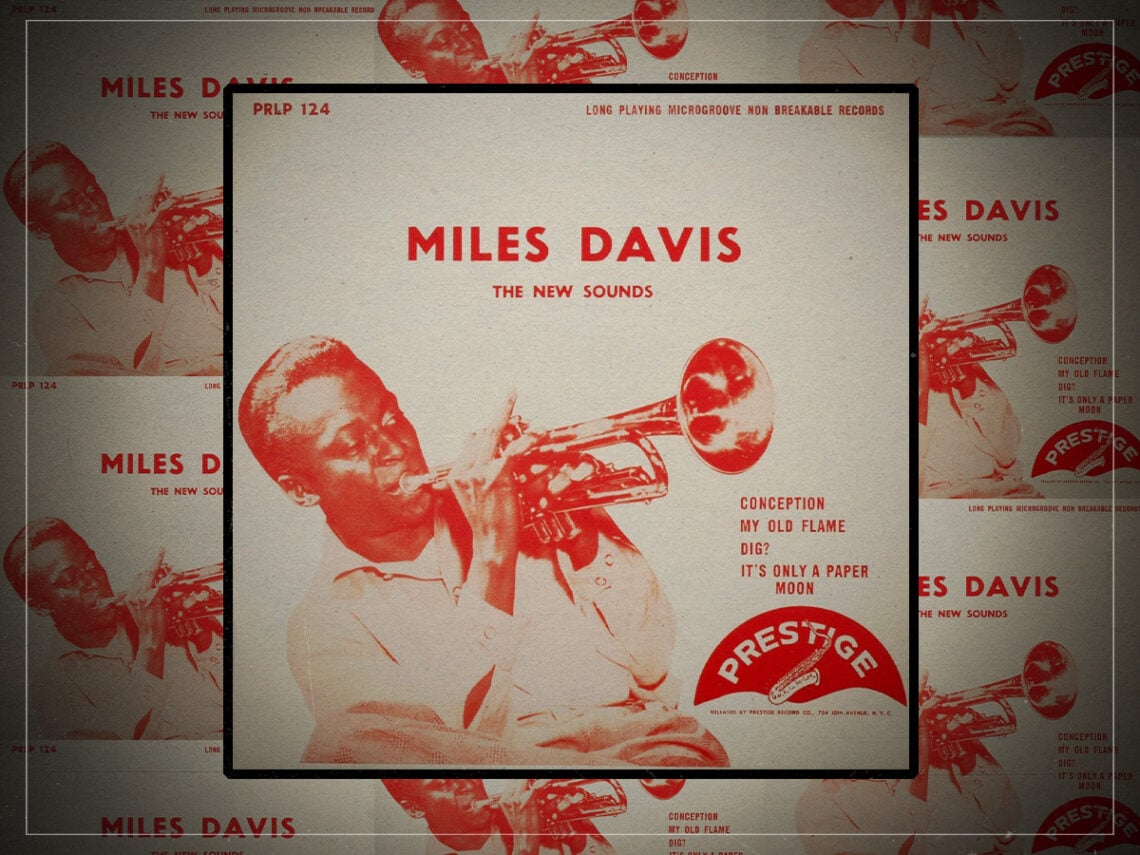
‘The New Sounds’: The 10-inch record that sparked Miles Davis’ entire career

Superlatives are employed in abundance within the field of music journalism, yet there still doesn’t seem to be enough of them to truly capture the extent of Miles Davis’ musical genius. His position among the greatest artists of all time is not up for debate, but the pioneering record that sparked his extensive journey is often overlooked.
It was during the 1940s that Davis chose jazz as his pathway through life, worshipping the likes of Charlie Parker and skipping classes at Juilliard to spend as much time in the smoky jazz clubs of New York City as humanly possible.
Within a year of his move to the Big Apple, Davis was performing full-time, rubbing shoulders with the jazz greats of the era – Parker being one, along with Max Roach and Dizzy Gillespie – and honing his own personal craft all the while.
As was tradition within the jazz realm of the time, Davis had to lend his craft to a countless array of different outfits, recording sessions, and record labels before even thinking about going out on his lonesome. After all, the improvisational style that the trumpeter defined tends to work best in a collaborative setting. Still, it was clear from very early on that Miles Davis was destined for musical greatness, with his own name printed on the outer sleeve.
Prestige Records would prove to be the vehicle for Davis’ emergence as a bandleader and solo artist, with the trumpeter signing to the label in 1951. While he had already appeared on various recordings by other artists, it was the Prestige period that marked his emergence as a performer in his own right, setting him on the path that would soon culminate in records as revolutionary as Bitches Brew, Sketches of Spain, or even Kind of Blue, even if none of those albums appeared on the Prestige label.
It all began with The New Sounds, the aptly named 10-inch LP which formed Davis’ first full-length album as a bandleader. With a tracklisting boasting only four songs and a runtime of just over 20 minutes, the LP was an unassuming watershed moment for the jazz world, deserving of far more credit and commercial prowess than it has ever demanded.
In hindsight, you only need to look at the personnel of the recording, which included the likes of Sonny Rollins, Art Blakey, and an uncredited appearance by Charles Mingus, to recognise its transformative nature within jazz. Davis’ performance on the record perfectly captures that period in the history of the genre, moving away from the old days of big band, grandiose orchestrations, and spurring on the innovation of the bebop age.


The New Sounds might not sound quite as revolutionary as Miles Davis’ later works when placed side by side, but during a period in which he was troubled by financial difficulties and an internal battle between commercialism and artistic principles – a battle faced by virtually every jazz artist throughout history – it is worth noting just how important and innovative the LP was for its time, both in sparking the career of one of music’s greatest performers and in changing jazz music forevermore.
It might not get the credits it so richly deserves, due to being overshadowed by the otherworldly genius of the trumpeter’s subsequent experiments, but that doesn’t take away from the fact that The New Sounds was the beginning of it all; the starting pistol for a music career and output unparalleled in innovation and influence – a decent legacy for a four-track LP on a then-unknown jazz label.
