


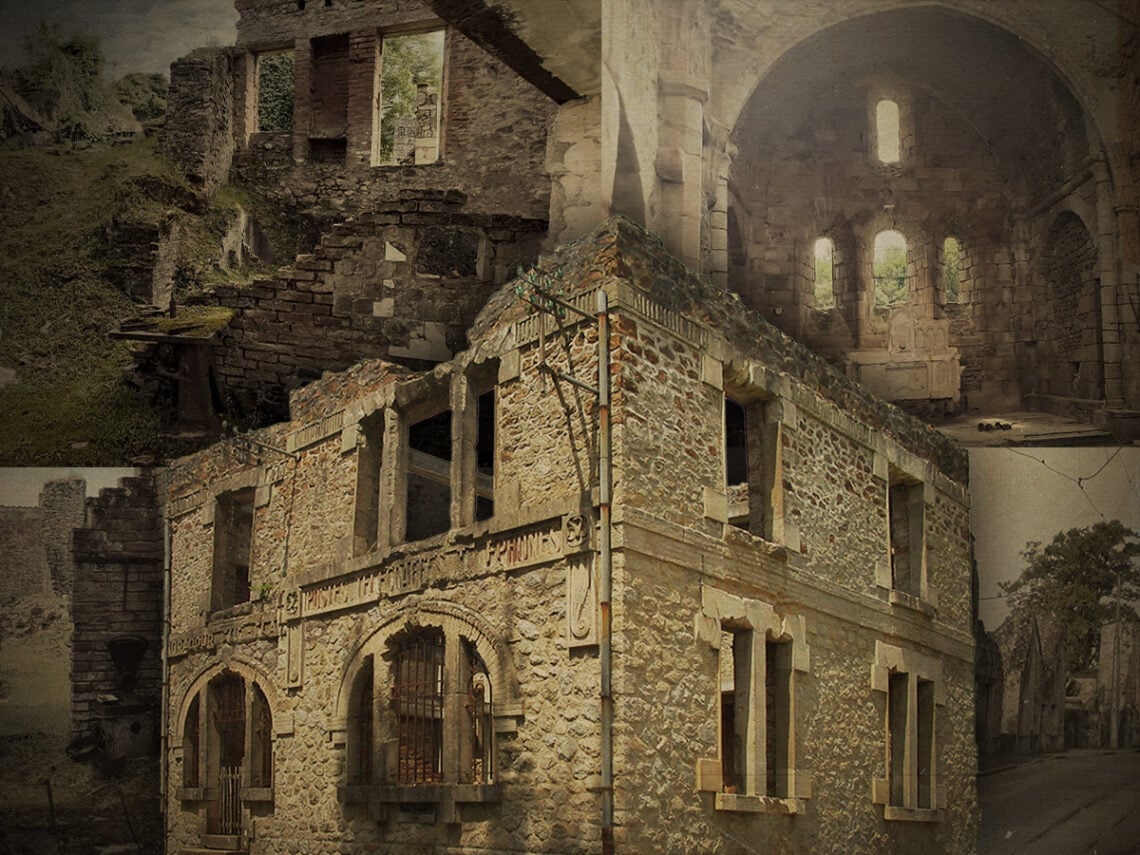
The living memorial of Oradour-sur-Glane: A village left untouched since WWII

France is one of the world’s great tourist countries, with Paris the third most-visited city on the planet, but it’s not all croissants and wine, as the country is also home to some fascinating dark tourist spots.
The Paris Catacombs, Natzwiler-Struthof concentration camp, and Verdun battlefield are amongst such destinations, but nowhere in the country is as haunting as Oradour-sur-Glane, one of many French ‘martyr villages’ across Europe, standing as a memorial to the grotesque events that took place during the Second World War.
This is the story of how the Nazi’s razed Oradour-sur-Glane to the ground and how France decided to remember the massacre, creating one of the most profound and sombre WW2 memorials in the world.
The morning of June 10th 1944, was uneventful for the quiet rural Oradour-sur-Glane, but in the afternoon, the Waffen-SS descended, and by sunset, the SS division named Das Reich had murdered 643 civilians and set the village on fire, letting the corpses burn alongside the buildings.
Arriving under the guise of conducting identity checks, Das Reich separated the men of the village from the women and children, leading the former to various buildings, such as barns and shooting them in the legs to maximise their pain, before setting the buildings on fire, so they’d die inside the inferno.
On the other hand, the women and children were locked inside a church before an incendiary device filled it with smoke, and when, in a panic, the people tried to flee, they were mowed down by machine gun fire, and the church subsequently burned. There was just one survivor, a woman named Marguerite Rouffanche, and it’s thanks to her testimony that the events of that day are known.
As the sun came up the following day, the fires were going out, and bodies lay strewn amongst the ruins, alongside cars, bicycles and the possessions that hadn’t been looted; the village lay decimated.


There are disputes as to why Das Reich carried out the atrocity, but a possible link could be that it was four days after the Allies had landed in Normandy, and since the French Resistance were becoming more active, the German forces moved outward to confront the invasion, and while there is no substantial proof that this small village had any association with the Resistance, the brutality was likely meant as an act of terror to scare and intimidate the French population into helping the Allied forces.
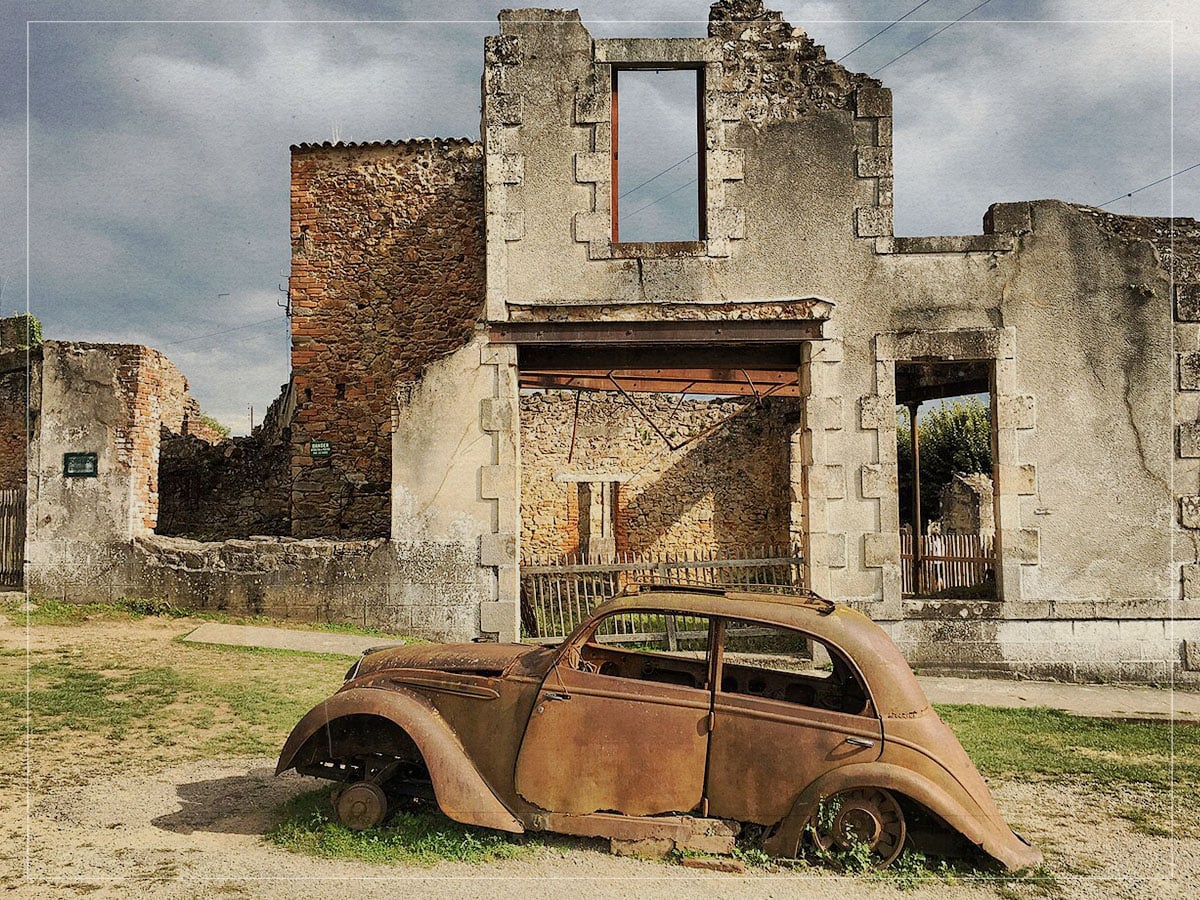
After the war, questions regarding the future of Oradour-sur-Glane were set to rest by Charles de Gaulle, the French leader, who issued that the village would remain exactly as it was, sans restoration and rebuilding, with the rusting cars, roofless stone houses and silent streets a memorial to those who died, and a poignant reminder of the dangers of fascism.
It was a bold decision, especially in a nation looking to heal, but now, over 80 years on, it was a smart one, as it’s estimated that around 300,000 tourists visit Oradour-sur-Glane every year, particularly during the summer months.
Thanks to modern technology, we are now more capable than ever of understanding our past, but on a hot, sunny French afternoon, walking through those ruined streets, you viscerally feel the magnitude of what happened there, with every desolate, empty building standing as a reminder of each person who was murdered, as time stopped when the SS entered the village on that fateful day.
However, the notion of a ‘martyr town’ isn’t exclusive to central France. Following the war, a number of decimated settlements across the continent were left to act as further reminders of the suffering that the Nazi’s fascism caused.
Just outside of Prague lies Lidice, which saw its population either executed, sent to concentration camps, or, in the case of its children, sent to Germany to be renationalised. Subsequently, the entire village was bulldozed, and there was nothing left except for the memorials in what is now a park. In Belarus, there’s Khatyn, a village that saw its population burned to death inside a barn by German troops and local collaborators, with it being just one of over 5,000 settlements that the Nazis burned and destroyed in the country.
It’s always a difficult task to decide how to move on from tragedy and memorialise the past, but at Oradour-sur-Glane, they’ve balanced it perfectly, creating a lasting eulogy to those who died, while also allowing visitors to experience the massacre that occurred there and take valuable lessons from it. In a war that has unfortunately given us hundreds, if not thousands, of dark tourism attractions, there’s every chance that Oradour-sur-Glane is one of the most impactful.
