


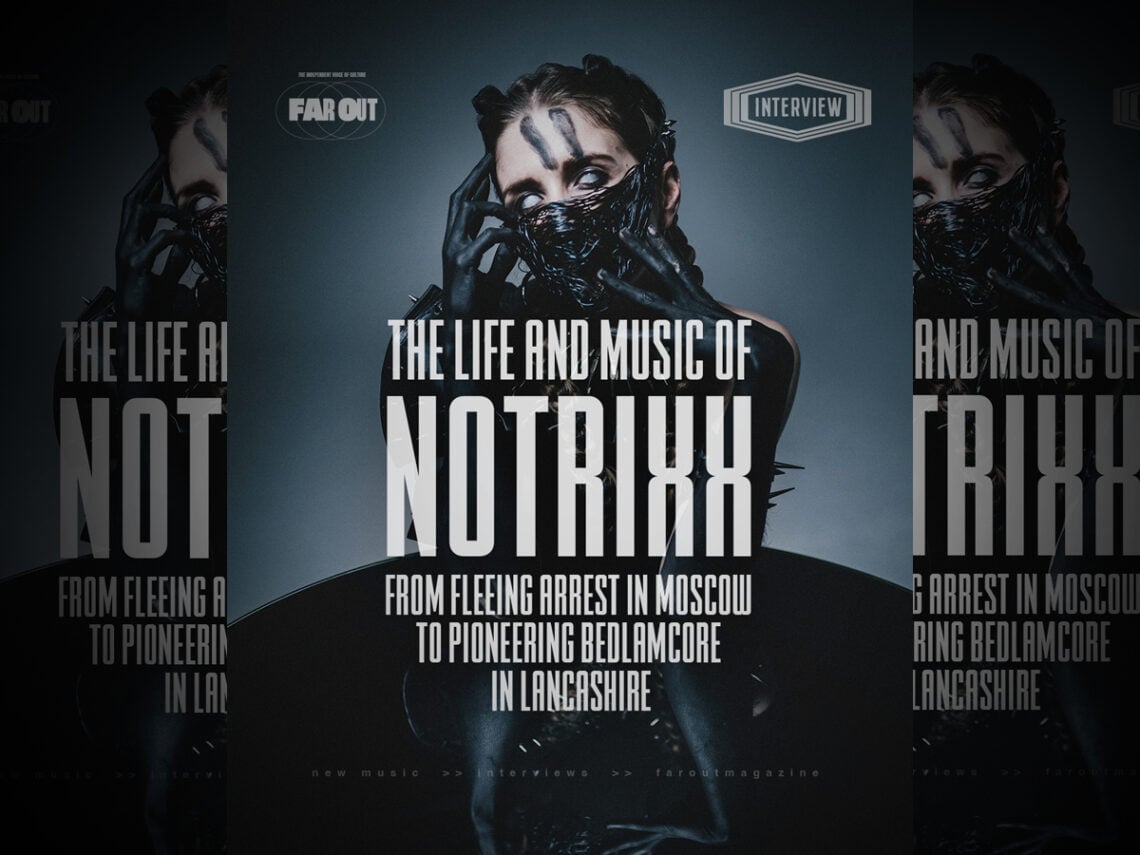
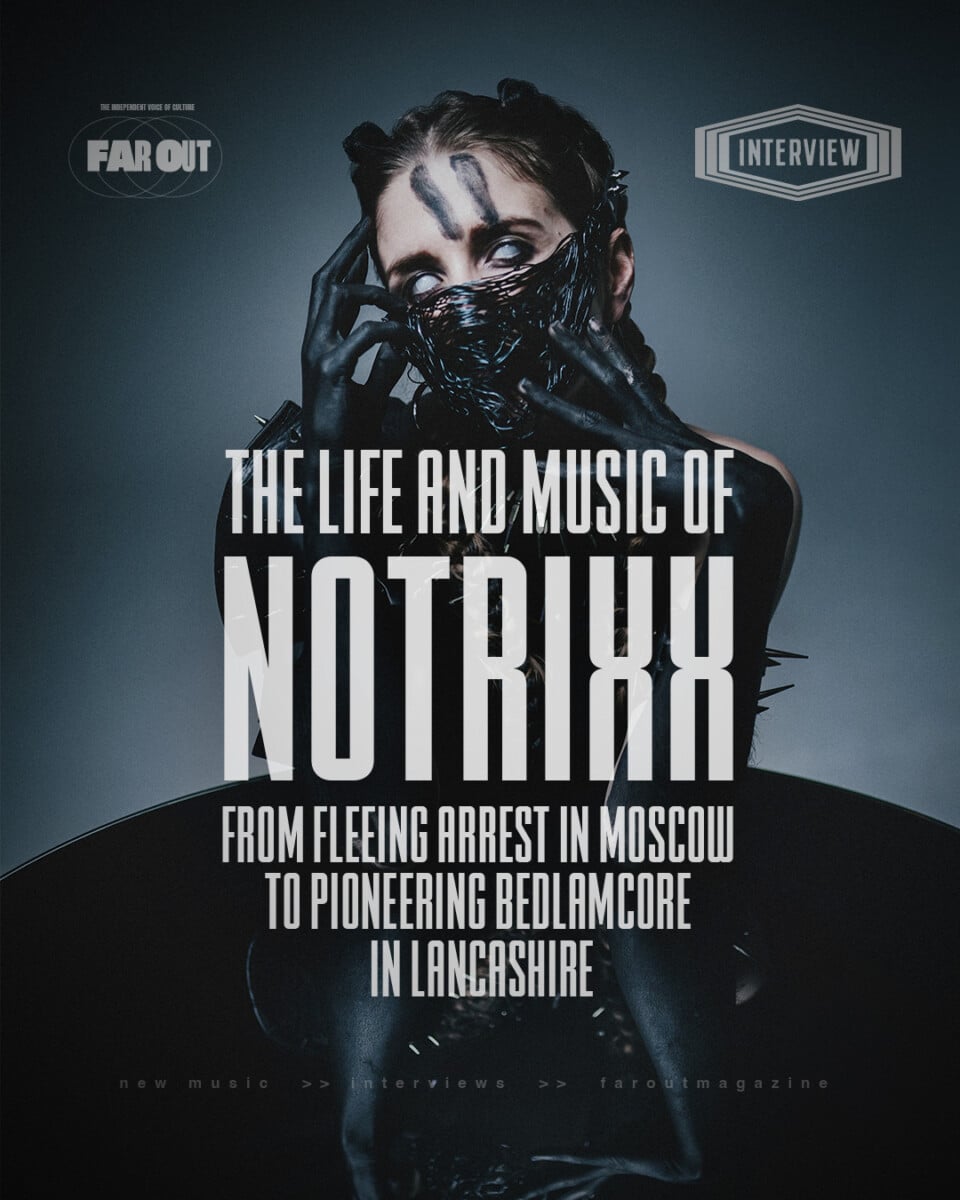
The life and music of n0trixx: From fleeing arrest in Moscow to pioneering bedlamcore in Lancashire

When Patti Smith sang ‘People Have the Power’, plenty scoffed at the ‘naive’ sentiment. Vladimir Putin wasn’t one of them.
Putin knows all too well about the power held within an impassioned proletariat. While his current invasion of Ukraine might be an egregious show of brute force and control, it has been carefully calibrated to avoid provoking the power of the Russian people in the form of backlash and resistance.
Previous Russian campaigns in the Afghan and Chechen Wars were effectively brought to a close by the Committee of Soldiers’ Mothers of Russia. In short, too many sons were coming home dead, resulting in something called ‘the body bag effect’. Grieving citizens ceased their complicity. The pipeline of fighters signing up for the frontlines halted, and peace was swiftly restored.
So, while Putin presently might be tactful in his bid to avoid the issue of too many dead sons – relying on mercenaries or rural recruits in desperate need of money – he’s been rather more forceful in his efforts to diffuse the people-rousing power of art. After all, he did once say, The Beatles brought a “taste of freedom” to the world, and they were just four young kids.
Recently, I spoke to a Russian mother and artist who goes by the name of n0trixx. Her story captures the full arc of power in her homeland. From Daniil Khaarms to Pussy Riot, power lives in its people, finds its voice through art, is feared by those in control, is met with force, yet still refuses to fall silent. N0trixx continues that lineage.
“All of my life, I lived in one location, which was Moscow. Then the war broke. I protested against it. I got in trouble with the government. I wrote anti-war songs, and I left,” n0trixx says, condensing her fraught life story down to two lines. She had to leave, she explains. She was facing imminent prosecution for her art if she didn’t.
So, with children in tow, she harrowingly fled her homeland. “I ended up in Turkey for two years,” she says. In a manner that reflects her typically matter-of-fact phrasing and the rather more unsettling truth that she had no choice other than to do so, she adds, “I quickly proceeded building an audience there.”
This was far from easy. In fact, she says, “It was as tough as it could ever get.”
Continuing, “I was alone with two kids… I ended up completely cut off from everything… I don’t speak the language. I don’t really know anything.” Adrift in a small rural village, the conditions she squared up to were as stark as the circumstances that precipitated them.
Paradoxically, it was here that n0trixx, as an entity, began to blossom. “You lock a person with lots of things in their head in one room, give them some musical gear, and they will end up writing lots of music, because that’s the only way to go.” It’s a sentiment that echoes the long tradition of artists retreating into isolation to produce their most vital work, albeit with stakes far higher than creative burnout this time out.
“I was so cut off from everywhere. I was living in a very, very remote location… I wrote a lot of music during that time.”
n0trixx
By this stage, she was already familiar with the healing powers of art. “It was actually in my teenage years when I realised that I wanted to be a musician,” she says, tracing its salvational nature back to the days when alternative bands helped her get through the grief of losing her father. “That’s when I decided I wanted to do it and help other people.”
So, despite the turbulent times in Turkey, with renewed vigour for personal expression, n0trixx found herself anything but silenced. She was writing up a whirlwind of songs. Soon her music began to gain traction. She started releasing tracks with Universal Music, and realised her credentials made her eligible for a global talent visa.
With a few friends already based in the UK and a burgeoning bounty of fans in Blighty, she made the move to Lancashire. For the first time, amid the relative tranquillity of the drizzly county, she got to reflect on what she had been through. Living with Dissociative Identity Disorder and Borderline Personality Disorder, amid this reflection, she recognised her struggles weren’t separate from her art, and she could utilise them to “really represent” what she wanted to say.
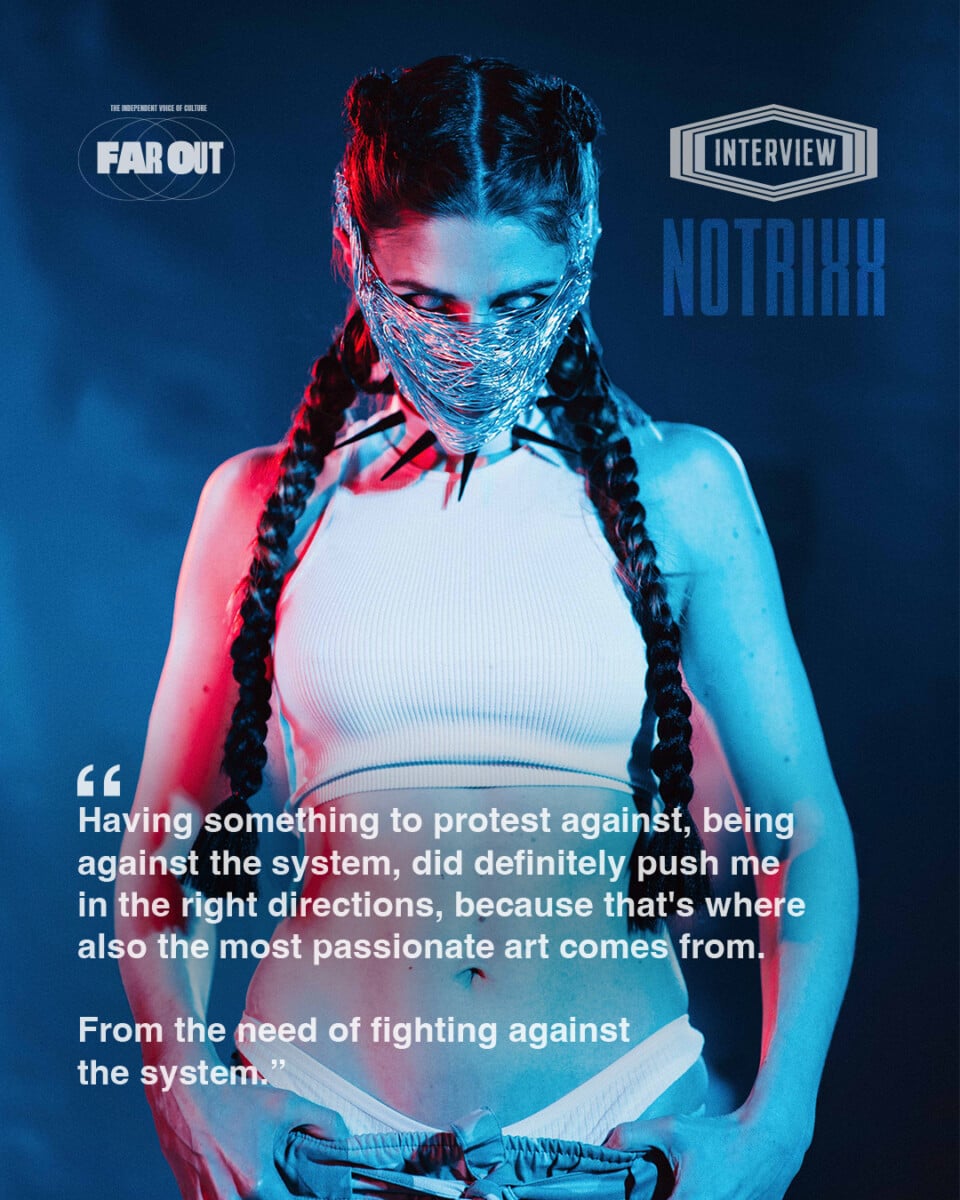
As she ventured deeper into the n0trixx project, she recognised that “there is a big need for music that focuses on mental health”. But this recognition was also inextricably linked to the politics that had forced such traumas upon her. “Having something to protest against, being against the system, did definitely push me in the right directions, because that’s where also the most passionate art comes from,” she says. “From the need of fighting against the system.”
The combination of those two factors and myriad more in her life led her to pioneer the chaotic, cathartic genre of bedlamcore. This was not necessarily an artistic ‘choice’ in the traditional sense of the word. It’s just when you’ve got a lot to say, you refuse to be silent, and you know too well how precious and perilous free expression can be, you may as well yell it all at once.
From that perspective, it makes sense, but there will be plenty of others who will wonder whether silence in Moscow might have been easier. For n0trixx, that wasn’t an option. “There are people out there that I call passionaries, those people who can’t possibly stay silent,” she reflects.
“I consider myself to be one of those people who can’t stay silent when they see injustices.”
n0trixx
But the consequences of that stance still loom large. Even over a private Zoom, her identity remains partially obscured by a mask, not out of aesthetic choice, but necessity. She explains that while many of her loved ones have left Russia, she still has some family there, and she cannot be certain that “they will be safe if the government finds out the connection”.
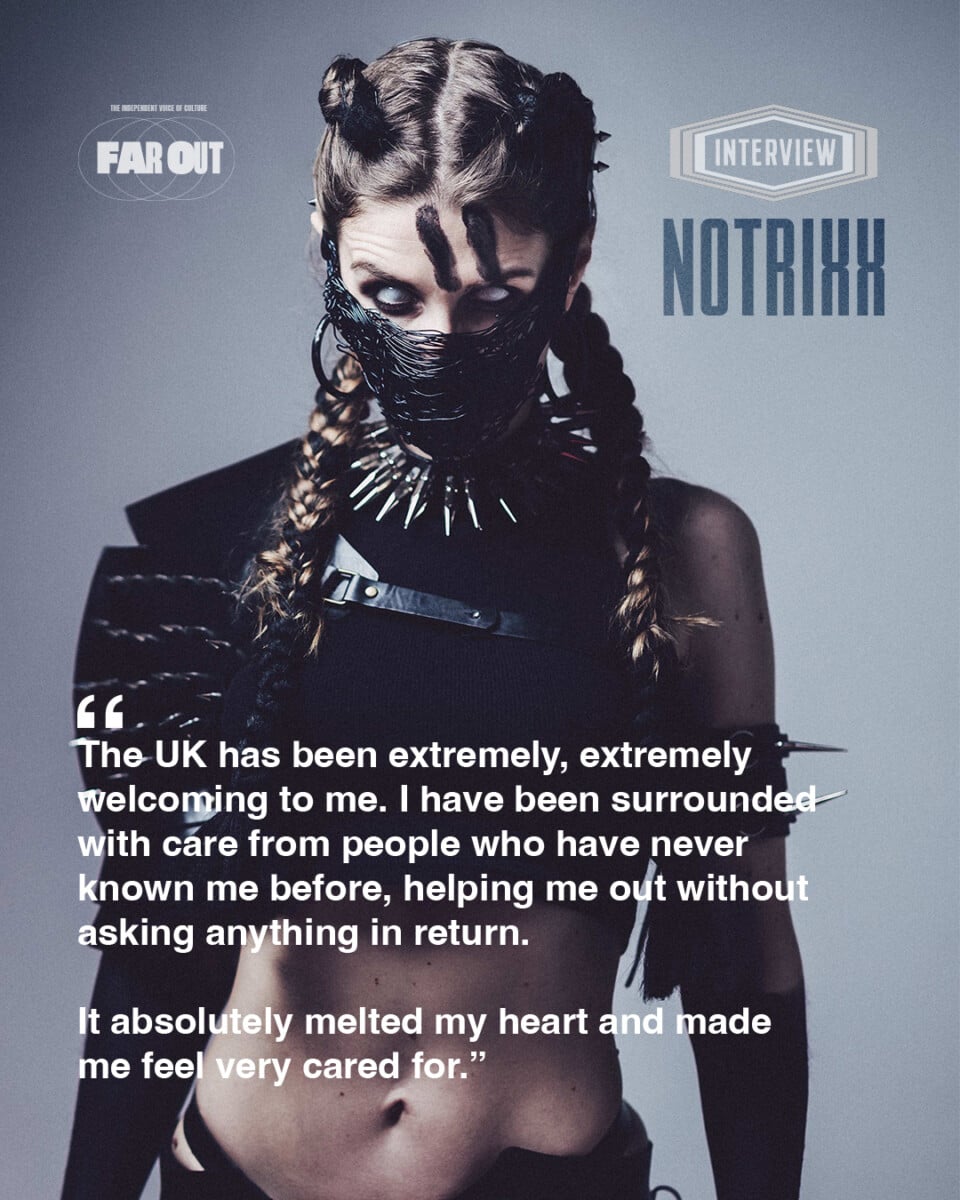
Leafy old Lanchasire feels incongruous with such remarks, but its hush has steadily infused her music with a note of hope and ambient buzz. “The UK has been extremely, extremely welcoming to me,” she says. “I have been surrounded with care from people who have never known me before, helping me out without asking anything in return.” It’s a stark contrast to the environment she left behind, and one that has clearly left its mark. “It absolutely melted my heart and made me feel very cared for.”
She adds, “One thing that I noticed in your nation’s mentality is that people are really brought up to be helpful to each other. I have noticed that in every single way.” That’s a note of pride that we should be careful to protect. Because n0trixx knows how fast things can change, “Politics affects mental health immensely,” she says. “After the war broke it impacted my mental health greatly.”
I wondered to what extent it has impacted others in Russia, and how that might increasingly make the proletariat in her homeland more sympathetic to the message of her art, bending a few ears. “There are a lot of people who disagree with what’s going on,” she begins, “And, unfortunately, they don’t have a voice.”
“At this point in time, the people who are against the war are silenced, drawn out of the country, or even murdered,” she starkly continues. “This is not a secret to anyone. It’s actually the truth. The loudest opposition is all really brutally persecuted. People realise that they can get in real big trouble for speaking up. So either they’re like me, and they can’t be silent, so they just keep going until the point where they just need to do something, leave or end up in jail… or they keep quiet.”
Yet, with a portent for the rest of the world in these times, she also explains how a bedrock of support can arise for hateful regimes through dangerous social messaging. “In every country, there is a certain part of the population which is not exactly intellectually gifted, and the responsibility of the government is to educate those people, is to explain tolerance to them, explain how to take care of each other.”
“The Russian government, for over 20 years, have been fostering hatred in those people,” she concludes, explaining that the war seems to be less about Ukraine, and more about strengthening hatred “for the West”. That’s one hell of a force for a young mother to reckon with. But she stands as the defiant inverse.
With that darkness and trauma informing her music, it is galvanised with gripping vitality. Her debut album, A Catalogue of Madness and Melancholia, is “full of pain and dread and discomfort,” but crucially, she adds, “I do end it on a very nice note.” The intention is clearly “to make people feel seen and heard… to make people feel like they’re not alone” and to give them ”hope”.
At the core of her invigoratingly expansive album is a message as simple and powerful as Patti Smith’s old-adage: “You’re not the only one.”
