


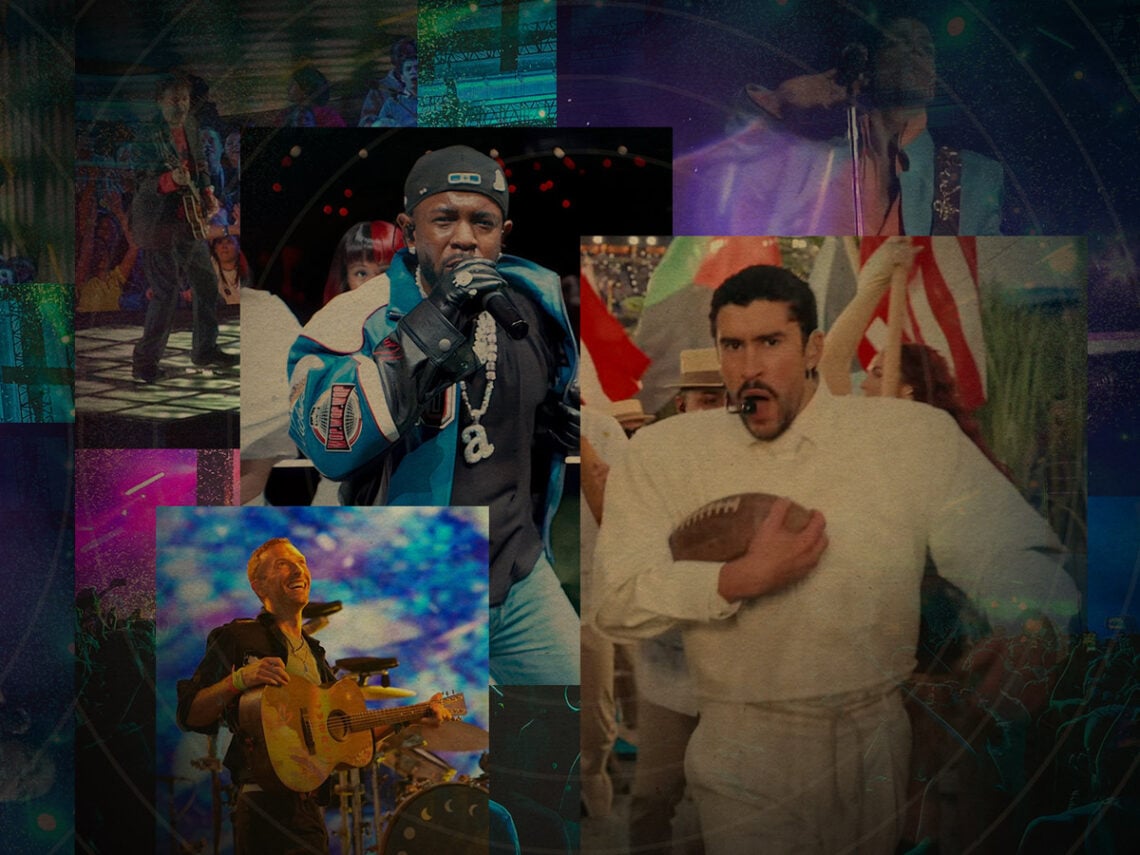
The humble origins of the American sports “halftime show”

Considering how spiteful and cynical millions of football fans already were about the institution of dreaded “hydration breaks” during the 2026 FIFA World Cup, it’s a safe bet that the Super Bowl-style halftime show during the Spain vs Argentina final on Sunday will elicit similarly visceral reactions.
In fact, in advance of the game, noted football pundit and rock and roll legend Robert Smith already spoke on behalf of most of planet Earth by aggressively rolling his eyes at the inevitable monstrosity.
After FIFA president Gianni Infantino personally described the halftime show, which has been curated by Coldplay’s Chris Martin, as a “groundbreaking spectacle” that will “celebrate football, music and our shared values, ensuring a legacy that transcends the final whistle”, the Cure frontman took to his band’s official Instagram account to rechristen the FIFA boss as “Infantosser” and respond to his likely AI-written promo quote with a simple “AAAAAAAAAGH,” followed by some choice hashtags: “#Breadandcircuses, #MUDWANK, #pleasejustfuckoff.”
Some people interpreted Smith’s hilarious takedown as a direct commentary on poor old Chris Martin, or the other headline acts on the halftime show bill: Madonna, Shakira, BTS, and Justin Bieber. But Smith quickly clarified his intent: “FOR THOSE OF US NOT QUITE GETTING IT,” he posted in all-caps, “THE POINT IS NOT REALLY ABOUT WHO IS CURATING OR PERFORMING, IT IS ABOUT THE #MUGWANK IDEA OF A FOOTBALL WORLD CUP FINAL HALF TIME SHOW.”
As an American living in the UK, I must admit to occasionally finding it amusing just how ferociously angry some Brits get about Yanks disrespecting the “beautiful game”. I sometimes enjoy poking that particular bear myself, suggesting that the use of a clock that actually counts down (like American football, hockey, and basketball) would prevent the final moments of an important match from being dictated by the whims of a (likely compromised) referee. Where I do align myself with the Redcoats, however, is on this subject of the Super Bowl-ification of the World Cup.
Even setting aside the MAGA Trumpness of it all, the predictable decision to extend the usual 15-minute halftime into a 30-minute bloated carnival of mostly outdated pop music is an objective case of bad taste, and indicative of a somewhat perverse desire to superimpose or shoehorn in a distinctly American sports tradition over an international event, even if they did put a British musician in charge of it.
That being said, the American fascination with a good halftime show, like a lot of things about US culture, wasn’t always so overbearing and obnoxious. In fact, the origins of the tradition go back well over 100 years, and were quite cute and wholesome up until fairly recent times.
Some historians cite the beginning of the phenomenon to around 1892, when the Reserve Officers Training Corps (ROTC) at the University of Nebraska were asked to run through some of their military marching drills at the halftime of a college football game; supposedly as a means of attracting more fans to come to the game.
By the dawn of the 20th century, as the American brand of football was rapidly growing in popularity, particularly as a collegiate level sport, universities began developing marching bands as separate entities from the campus military programs, and halftime performances started getting a little more geared around entertainment and novelty, such as the band at Purdue University marching themselves into the shape of a “P” at mid-field.
At the professional ranks, the development of halftime shows, beyond the use of marching bands, is sometimes credited to the short-lived NFL franchise known as the Oorang Indians, an Ohio club whose owner, Walter Lingo, decided to use the game intermission as a chance to advertise the dog kennel he owned, bringing out some pooches for a makeshift dog show on the field. Because the famous Native American athlete Jim Thorpe was the player-manager of the team, the Oorang halftime shows also included performances of supposed Indian dances and cultural demonstrations.
It probably would have benefited Oorang to spend their halftime resting in the locker room; however, as the team didn’t perform particularly well as an actual football club, losing 16 of the 20 games they played over their two-year existence.
Some of the earliest uses of the specific phrase “halftime show” can actually be found in Canadian newspapers of the 1920s, as various football and rugby teams up north were starting to put a lot of their school spirit into these efforts. In a 1928 game between McGill University and Queen’s College of Kingston, the latter team organised some intermission entertainment involving a horse and wagon.
“When a McGill supporter mounted the animal,” the Montreal Star reported, “One Montreal rooter was heard to shout: ‘We got their goat and now we’ve got their horse!’”
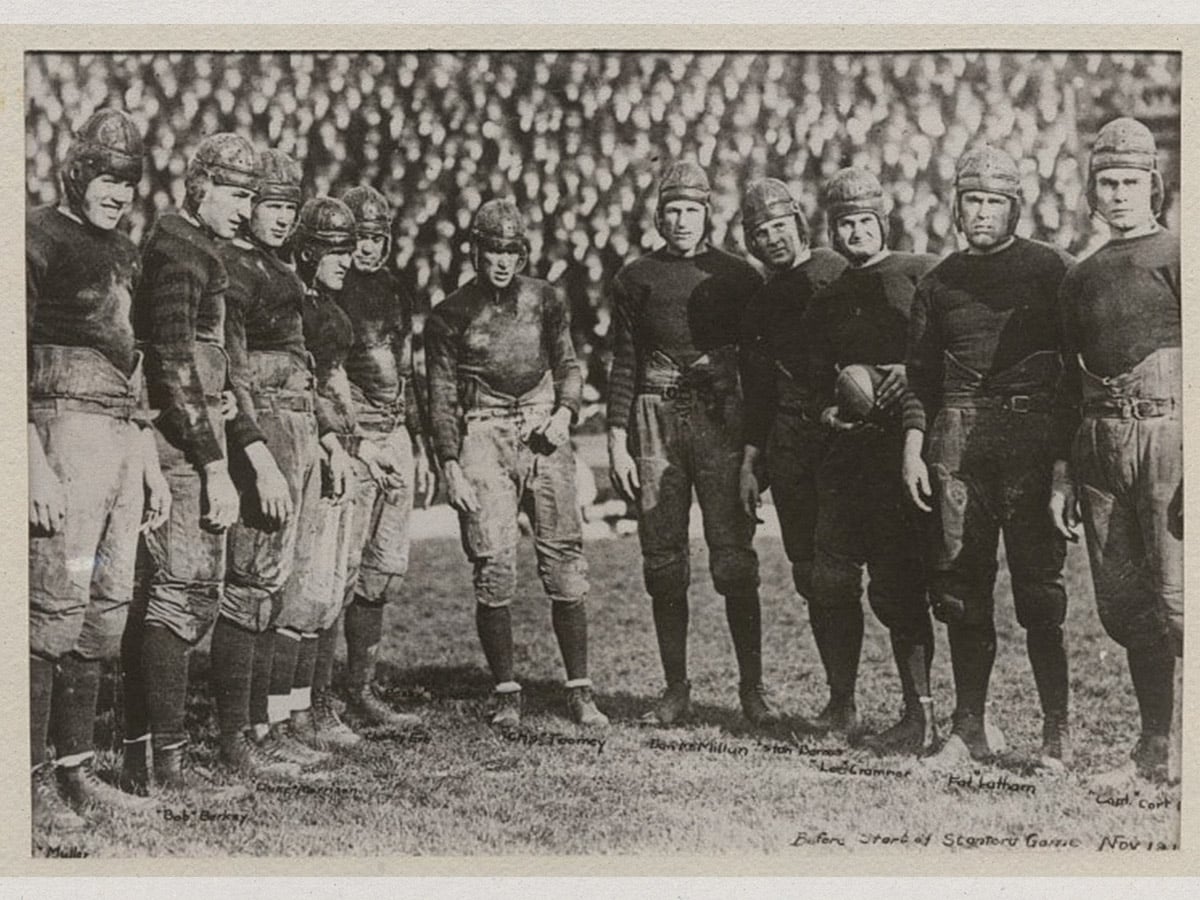
A year later, those crazy students at McGill were at it again, as the Montreal Gazette reported that “the student body at McGill is straining every effort to indicate its loyalty to the squad despite the recent reverses, and the rooting section, the band, and the traditional halftime burlesque will all do much to lend color to the occasion. Cheerleader Max Ford has spent a busy week recruiting thirty men to take part in the halftime show, which is reported to be one of the most pretentious the students have ever put on.”
By the 1930s, it had become the standard operating procedure across much of the US and Canada for the halftime show format to include not just marching bands and drill teams, but cheerleading teams—usually consisting of only men back then—who would rally the crowd, chant throw megaphones, and perform a few acrobatics. It wasn’t until World War II that the more common idea of the female cheerleader really entered the culture.
And so, for several decades, American football halftime shows essentially carried on in this way with minimal changes: marching bands, fight songs, cheerleaders, an occasional horse. Even by the late 1960s, when the Super Bowl was created, the event organisers looked at the halftime entertainment as a virtual afterthought. The first three Super Bowls, held from 1967 to 1969, also featured local college and high school marching bands as the halftime show.
In the 1970s, as both the NFL and its championship game were starting to emerge as increasingly important parts of America’s sporting culture, someone eventually hatched the idea of bringing in some guest musicians to at least amuse the crowd in attendance, if not the TV viewers at home, who were also “entertained” with commercials. The list of Super Bowl halftime performers in that decade, however, could just as easily have been the guest list from an episode of a vanilla variety programme like the Lawrence Welk Show, with nothing but light jazz and easy-listening acts: Carol Channing, Andy Williams, Al Hirt, Doc Severinsen, Up With People, and the New Mouseketeers.
Nothing really changed in the 1980s, either, when the halftime show sometimes had a theme, but still relied mainly on marching bands and the occasional cameo from an over-the-hill singer. The turning point, at long last, came in 1992, when the Super Bowl halftime show’s dull tribute to the Winter Olympics inspired millions of viewers to change the channel and watch a special episode of the Fox Network’s hit sketch comedy show In Living Colour instead. Those same viewers returned to the football broadcast for the second half, so in theory, the producers shouldn’t have been too bothered about it.
Because the cost of buying commercial airtime during the Super Bowl broadcast had skyrocketed, however, companies who’d bought ads during halftime were furious that the actual halftime show was losing the network’s viewing audience. To address the issue, the NFL threw a ton of money at the world’s biggest pop star, Michael Jackson, and made him the headline halftime performer for 1993, at Super Bowl XXVII in Pasadena. With a new precedent set, there was no going back.
By the 2000s, the announcement of the Super Bowl halftime performer became just as important, to a lot of people, as which teams were playing in the game. The standard NFL 15-minute intermission was increased to 20 minutes, then 30, then close to 40.
When Aerosmith and N’ Sync headlined in 2001, they were joined by surprise guests Britney Spears, Nelly, and Mary J Blige, setting another precedent. In 2004, Justin Timberlake inexplicably exposed Janet Jackson’s boob to the world, setting a precedent only for the phrase “wardrobe malfunction”.
Pretty soon, the event was reserved for the A-list section of the A-list: Paul McCartney, the Rolling Stones, Prince, Bruce Springsteen, Beyonce, and even some of the same people who would later get booked for this year’s World Cup Final in New Jersey: Madonna, Shakira, and Coldplay.
In a lot of these shows, there was at least a small effort to still incorporate elements of American football’s historic marching band tradition, but with each year’s producers and choreographers feeling the need to raise the bar on the visual element of the show, it has ventured into farcical and ridiculous territory at times, perhaps highlighted by the greatest meme the halftime show ever produced, Katy Perry’s delightfully confused dancer, “left shark”.
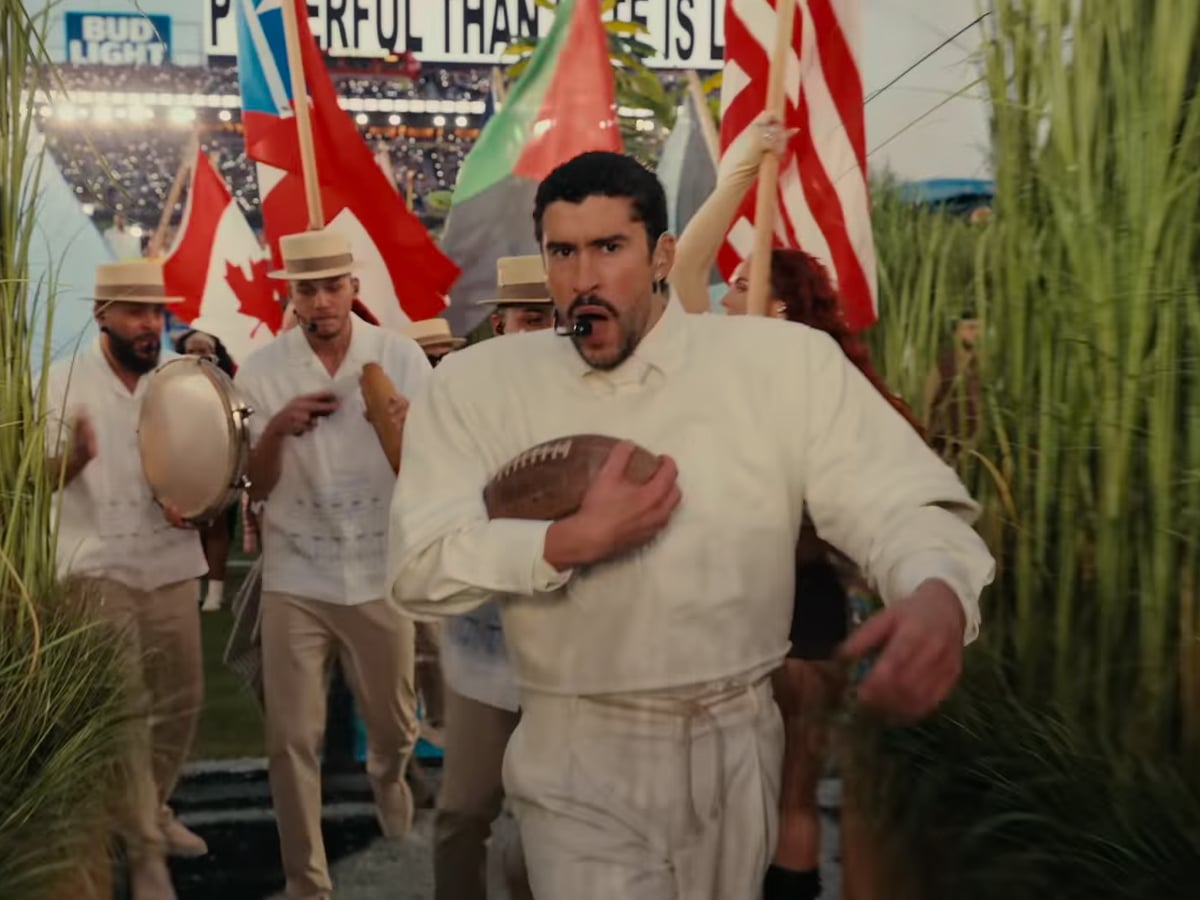
Over the last 20 years, the halftime show scourge has found its way into other American sporting events, including the NHL and NBA All-Star Games and the College Football Championship. It has also somehow become increasingly political, with Bad Bunny’s family-friendly 2026 Super Bowl performance inexplicably becoming the central focus of right-wing anger last February.
By contrast, no such controversy could be found at the intermission of last year’s Major League Soccer Cup Final, when Lionel Messi’s Inter Miami defeated Vancouver 3-1 in Florida, with no noteworthy halftime show included. Instead, Messi will get his proper introduction to the modern American style of halftime madness this weekend, as his 39-year-old limbs are forced to seize up for an extra 20 minutes just so BTS can finish their dance routine.
A dog show and a marching band would probably have been far preferable.
