


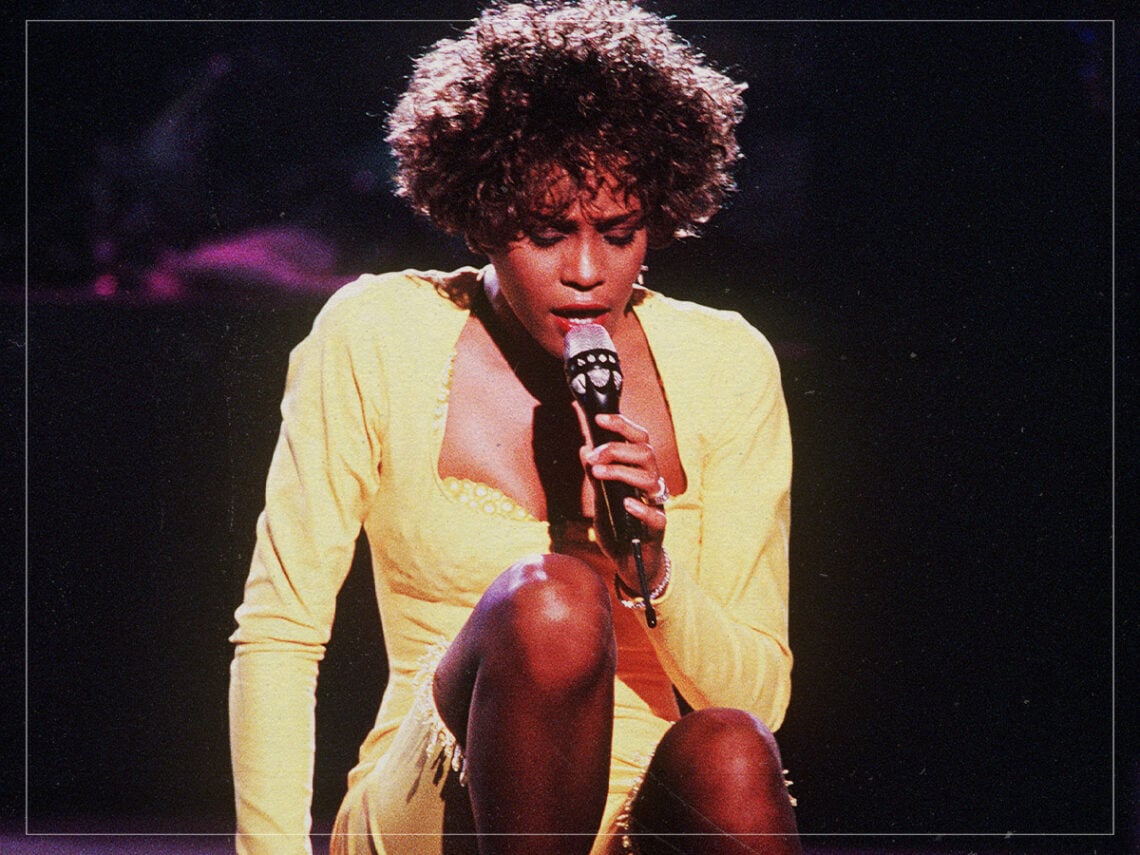
How Whitney Houston somehow turned the ‘Star Spangled Banner’ into a hit single at the Super Bowl

The American National Anthem, the ‘Star Spangled Banner’, was written a little over 200 years ago, but from the perspective of a modern pop singer, it might as well have come from the Stone Age.
Even as crusty old militaristic tunes go, this one is a doozy; requiring an expansive range, big vocal “leaps”, and a good memory, lest you leave out a word and deeply offend much of the audience. When Francis Scott Key wrote it, the ‘Star Spangled Banner’ would have been an anacreontic song, a sing-along intended for pubs and gentlemen’s clubs to rally the patriots during the war of 1812. He certainly didn’t imagine a single individual trying to deliver the thing on their own in front of a 70,000-seat football stadium, let alone a television audience of millions.
Since the song became the official national anthem in 1931, many a famous singer and musician has fallen on their sword trying to belt it out at major events, but occasionally, somebody has the creative instincts or mind-boggling talent to squeeze more juice out of this bastard of a lemon. Jimi Hendrix did it at Woodstock in ‘69; Marvin Gaye pulled it off at the NBA All-Star Game in ‘83; and in 1991, on the biggest stage in American pop culture, at Super Bowl XXV in Tampa, Florida, Whitney Houston blew the roof off the conundrum.
Confidently strutting to the centre of the field in a bright white track suit and headband, Houston stared down the ‘Banner’ with uncanny poise, determined to tame the beast and achieve the impossible: make the anthem sound new and compelling to modern ears.
The next day, while plenty of people talked at the water cooler about how the Buffalo Bills had blown the game to the New York Giants, plenty more were talking about Whitney. Her record label was flooded with requests for her version of the ‘Star Spangled Banner’ to be released as a single, and when Arista Records finally did so, it immediately entered the top 40 like a proper pop song.
“I think people responded the way they did because emotions were so high over the war,” Houston said at the time, referring to the deployment of US troops to Iraq during the first Gulf War.
“At any other time or place, I couldn’t have sung it the way I sang it Super Bowl Sunday, and at any other time or place, it wouldn’t have hit home for everybody the way it did.”
Whitney Houston
The surprising thing very few Americans understood, however, was that Houston wasn’t actually singing live that day. She wasn’t necessarily lip-syncing either, but the performance she was giving on the field in Tampa wasn’t the one heard on everyone’s TV sets, nor the one committed to the historical record.
Her field microphone was intentionally unplugged, and the performance heard in the stadium and around the world was pre-recorded earlier that weekend. This wasn’t done out of any cowardice on Whitney’s part, but because the producers of the event knew that loads of things could go wrong if they went live, what with a massive outdoor sound system, jets flying overhead, premature pyrotechnic launches, etc.
And so, the most famous recording of the American National Anthem, which went gold in the US in 1991 and platinum in 2001 when it was re-released in the aftermath of 9/11 (making it the final top ten single of Houston’s career), is not so much a capturing of a great live performance as a “slight re-imagining” of one. There was a careful choreography going on, as there was during much of Whitney Houston’s later career, when her seemingly flawless image regularly obscured a much more fraught reality.
