


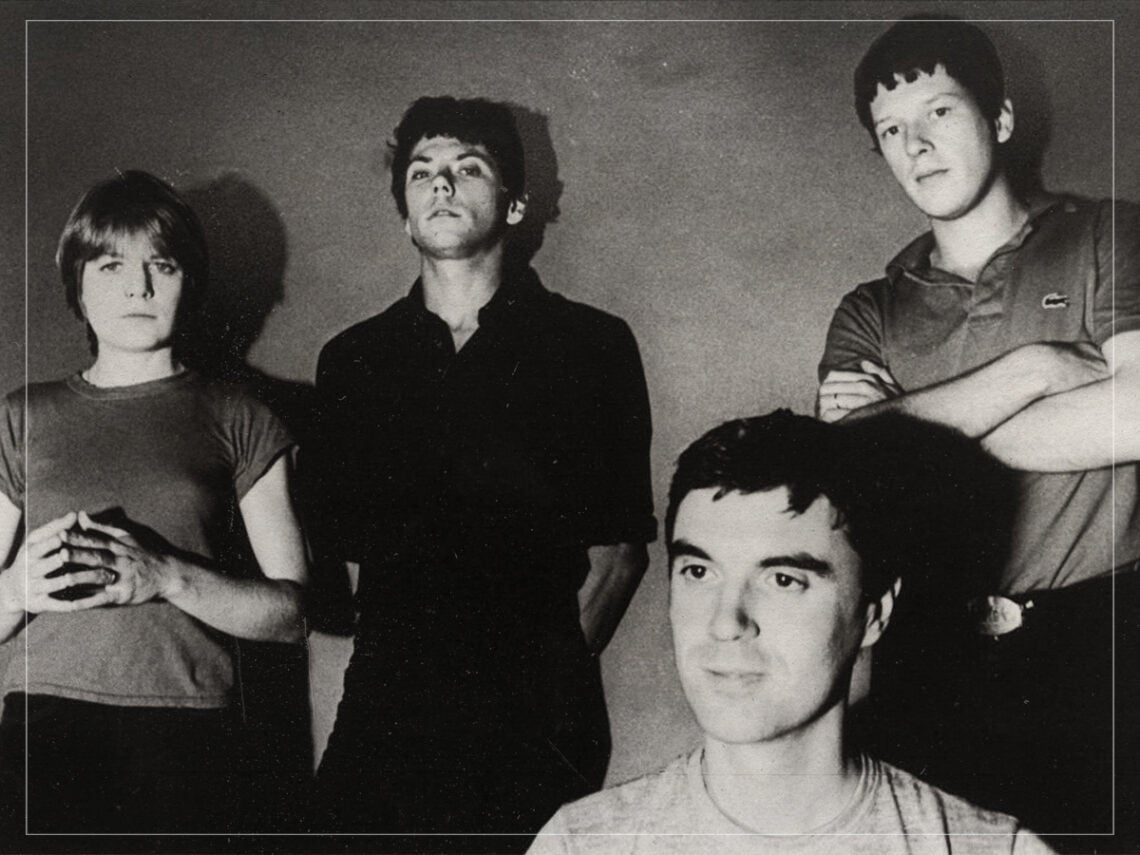
The “huge risk” that helped to launch Talking Heads: “It really works”

If you’ve ever questioned the genius of Talking Heads, just put a song of theirs on now, in 2025, and marvel at the fact that despite it being nearly half a century since their activity as a band, they still feel strikingly contemporary.
They are a sound and a band, who have defied the process of sonic aging, making music that continues to evolve with each era. The way in which they blended global rhythm profiles, fused genres and pioneered studio techniques has meant they have never been hemmed to the reductive descriptions of a genre or an era.
An idea that’s made even more astonishing when considering the moment they broke through as a band. In the late 1970s, specifically in New York, it was all about a new burgeoning era of punk rock. The Ramones, Iggy Pop and the iconic CBGB all platformed this idea of hard-edged rock and roll being the future of music, fuelled by a feisty community of disillusioned youngsters.
The sort of texture we would come to associate with Talking Heads wasn’t clearly yearned for in music circles at that point, so it would have been dangerously easy for a young David Byrne and his bandmates to give up on their ideas and succumb to growing trends. But as the fearless creatives they are, they stood by their ambition and emerged into music with the triumphant debut album Talking Heads ‘77.
All of a sudden, New York was drenched in frenetic rhythm sections and angular guitars, led by the haunting yell of David Byrne. It was colourful and dark all at the same time, and pushed modern music through a door upon which it has never since returned. It was a brazen move for the band who were releasing a record into relative unknown sonic territory, but the immediate reception to it proved they were onto something.
“Oh, boy. Well, there’s probably quite a few” Byrne answered, when asked what acted as a “made-it” moment for the band. He continued on, explaining how the immediate reaction to their debut album and more specifically its biggest hit, provided that.
“One would be the first time you write a song and perform it with a musician or collaborate on a song and play it and it really works. I think the first song was ‘Psycho Killer’, so that was a big breakthrough, like ‘Yes, we can do this.’”
Then Byrne continued, explaining how the confidence in their idea grew and saw them multiply their band members to add to this new, innovative wall of sound. He explained, “Another one was when we went from being a four-piece to however many it was – eight or nine. The first gig we played like that was in Toronto. That was something completely new for us. Everybody was energized, of course, and the audience was totally behind us. They could see that we were taking this huge risk, and they supported us in it.”
Risk was at the heart of the band’s success. They stared down at it, in the mid 1970s and continued on anyway, steadfastly believing that in their ideas they had something the world had not yet seen before.
