


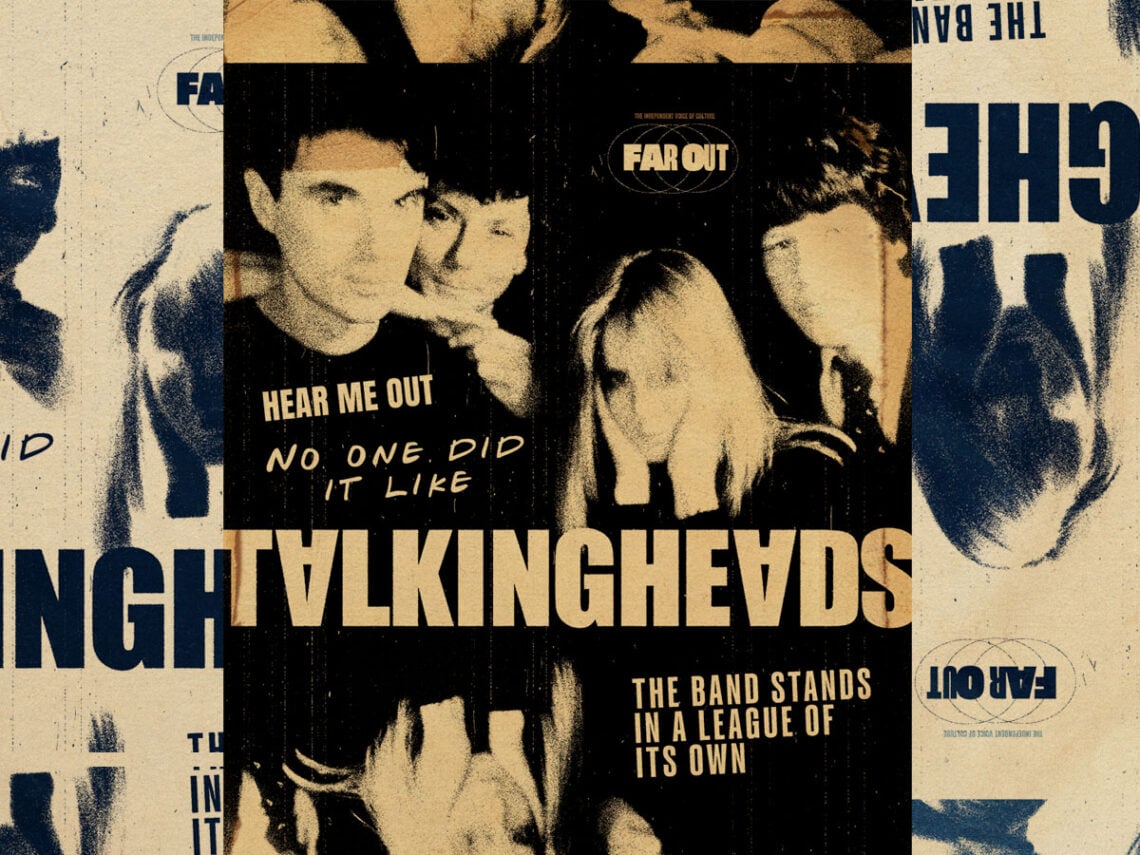
Hear Me Out: No one did it like Talking Heads

“They were rarefied times”, Tina Weymouth once said, reflecting on the entire Talking Heads era as something uniquely extraordinary. Bookmarked by some as a progressive outfit and by others as post-punk funk, Weymouth achieved the unthinkable with fellow band members David Byrne, Chris Frantz, and Jerry Harrison—they created a sound that held as much creative clarity as unintelligible abstraction, riding the waves of other tunes with remarkable finesse.
The feverish stretch of time when Talking Heads were active wasn’t just brimming with the signs and signals of a band done well; it also saw a different flavour of artistic livelihood benchmarked by the kind of off-kilter expression that many emerging from the CBGB merely dreamed of. But Talking Heads were never really punk like their peers, instead opting for something more quintessentially danceable, akin to those toddlers you often see bouncing their knees to the beat, entirely unaware but driven by rhythm.
At the same time, Talking Heads were never solely about rhythmically inclined garbled nonsense, as some have wrongfully claimed. They all stood tall as bastions of inherent creativity, with thoughtful musings underscoring conceptuality that was accessible and infectious. Their 1977 debut, aptly titled Talking Heads: 77, hinted at all the whimsical Talking Heads-isms with trembling anticipation and countless glimpses into a band that wasn’t just getting started; they were poised to revolutionise.
To the unsuspecting eye, the unique personalities of each member might have been startling at first, with Weymouth almost directly opposing Byrne’s timid demeanour. However, while this might have seemed an unlikely convergence from the corners of the Rhode Island School of Design, the official Talking Heads story began in the bustling New York scene, initiating as an entity that would baffle others in the search for the appropriate label.
From the beginning, it was about experimentation. According to Weymouth, emerging from the art school equipped them with minds brimming with conceptual know-how, placing a higher importance on that than technical precision or basic craftsmanship. Although Byrne seemed like a natural frontman—at least, one that would stand out as the typical antithesis of a stereotypical frontman—the sound that would eventually be deemed “science fiction funk” started from fundamental personality conflicts.

“Everything we did was texturally entirely different,” Weymouth recalled to Louder, continuing, “because we had this interesting mix of people: Chris came from the steel town of Pittsburgh and understood that raw black American sound. Then there were myself, David and Jerry, who had been exposed to a lot of European classical music. So when you combine the African-American rhythms with that European melody, you get Talking Heads.”
The absurdity felt in almost all Talking Heads material—the kind defined by its own paranoia in the modern age—was always inherently bolstered by the way Byrne’s mindless ramblings suited these interconnected influences, exuding a type of effortless spontaneity beneath the intricacy of each arrangement. According to Byrne, establishing the familiar Talking Heads lyrical style was never anything he wanted to overthink, coming from an instinctual place rather than a considered mapping of ingenious word placement.
This was because, in his mind, “at times words can be a dangerous addition to music—they can pin it down”. As a result, falling victim to the constrictive nature of words, sentence structure, and lyrical depth would have negatively impacted the appeal of Talking Heads, hindering his creative process and eradicating his desire for lyrical freedom: “If done poorly, [words] can destroy the pleasant ambiguity that constitutes much of the reason we love music.”
However, Byrne’s words weren’t entirely weightless; they were grounded by a pure outpouring of stream-of-consciousness, adopting a surreal quality that remained relatable by tapping into anxieties about everything from the digital age and information overload to emotional disassociation. These seemingly haunting ramblings—from finding yourself in a beautiful house asking, “Well, how did I get here?” to the realisation that “This ain’t no party, this ain’t no disco”—offered direct observations without pushing confrontation, lingering just beneath the surface without feeling preachy or overbearing.
Even as Byrne’s lyrics became more conceptually dispersed throughout Remain in Light, the concoction of diverse sounds, genres, and cultures felt less like a descent into psychological disarray and more like a dare to dance through turmoil. At times, the atmosphere they exuded during live performances resembled a strangely unattached vestibule of timeless intent, with Byrne dancing or running around the stage almost like a hostage forced to entertain. But these delicate, unsettling moments revelled in the strange in-between place where disillusionment meets enjoyment.
That said, even someone with no prior knowledge of Talking Heads’ intent or backstory can listen to the music and instantly recognise its excellence. That might be a more telling indicator of artistic brilliance and elegance than any historical context could ever convey. The band stands in a league of its own, not only because they embraced genre-blending like no one else. But because they captured the timeless rapture that lies beneath the culture, the trepidation in society’s cracks that peers through, even when we’d rather remain blissfully ignorant, comforted by the rhythms of faux reassurance.
