


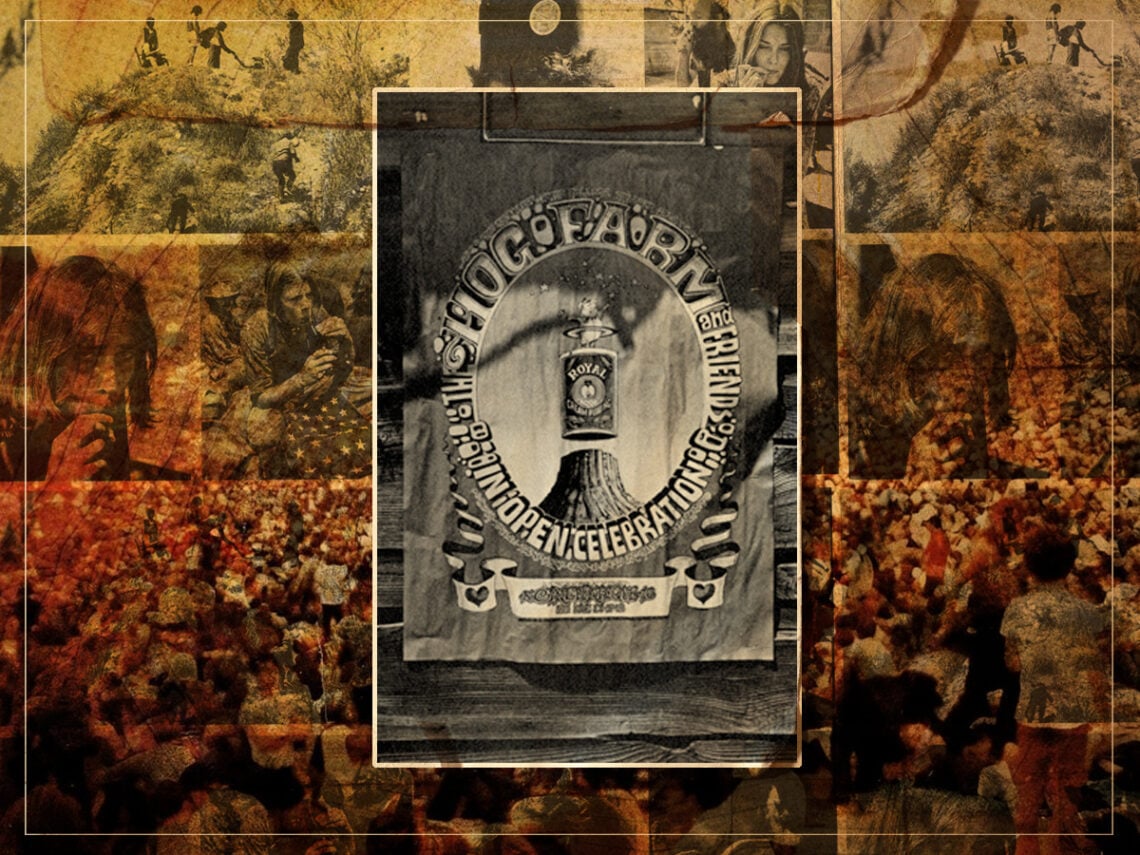
The Hog Farm Family: The commune that took care of Woodstock’s acid heads

Music has changed a great deal over time, and this change was and always has been entirely necessary. When you look at the music industry today, which is a barrage of meaning, severity, sound, and variety, we only got to it because of people’s willingness to embrace change. Festivals like Woodstock were absolutely pivotal in helping us better understand this change and experience new music.
One of the first musical movements in which artists were permitted to look internally was the Romantic movement. This period ensured that musicians stopped playing to flaunt their creative muscles and instead wrote to convey their emotions most effectively.
Johann Sebastian Bach wrote in his Essay on the True Art of Playing Keyboard Instruments (1753, 1762) about this new approach to music. “A musician cannot move others unless he too is moved… In languishing, sad passages, the performer must languish and grow sad,” he said, “Similarly, in lively, joyous passages, the executant must again put himself into the appropriate mood.”
This was one of the first periods in music when people wrote to convey emotion. Since then, a lot of music has been made with the intention of reflecting the state of the world. This comes in the form of folk music and the imagery championed by Bob Dylan, as well as punk music, hip-hop, and political music. Of course, it’s not enough for this music to exist; audiences need to be willing to participate and give the music the right platform to expand.
One of the biggest movements in music that represented the attitudes of a lot of musicians was Woodstock. The festival took place during a dark period in American history. There was a lot of conflict taking place throughout the country as a result of the Vietnam War, plus more young people were making their voices heard about the civil rights movement. There were a lot of marches and protests, which were met with hostility but were also incredibly necessary to incite much-needed change around the country.
Woodstock provided many people who were at odds with modern America with an escape. This came in the form of good music, indulging in the likes of acid, and a general helping of peace and love. It was, ultimately, a hippy festival, and so many people went without much of a plan on where they were going to stay and what they were going to eat. Thankfully, The Hog Farm Family was nearby and happy to help people.
The Hog Farm Family ran a commune that helped to house and feed people attending Woodstock. They also played a big part in setting up the festival as a whole. What is now regarded as a massive celebration of peace and love and a landmark event for those who were on the right side of history most likely wouldn’t have happened were it not for the Hog Farm Family.
Their contributions extended beyond the festival, too, as they also helped out with protests and peace marches. They were a hub for activists who were tired of injustice and suffering and wanted to put an end to it.
