


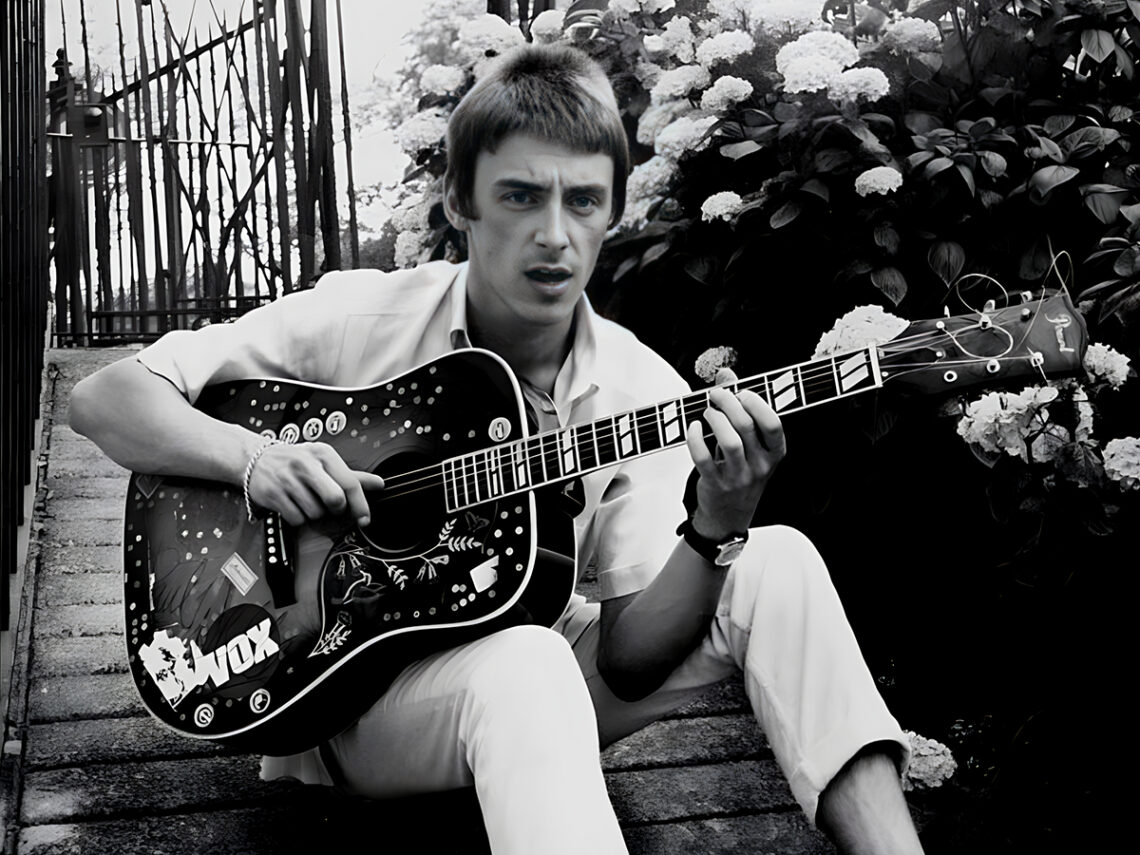
“This is it”: The gig that transformed Paul Weller’s songwriting

“Coming from a little suburban town, I wasn’t a hip city kid,” Paul Weller once said in a past interview, referring to his upbringing in Woking. “I was quite the opposite, really.”
The future frontman of The Jam famously fell in love with rock and roll not merely by way of Beatles and Who records, but by attending a life-changing Status Quo concert at the age of 14.
By no coincidence, Weller’s first forays into songwriting in the early 1970s were understandably more straightforward and anthemic – the way a teenager with rockstar dreams typically goes about things. It was the kind of music that pleased the small crowds at the working men’s clubs where the fledgling version of The Jam were cutting their teeth.
By 1976, however, a now 18-year-old Weller experienced his official “back to the drawing board” moment after attending a very different sort of gig at London’s Lyceum Ballroom.
This was, of course, the Sex Pistols, playing on July 9th, 1976, smack dab in the midst of their forceful conquering of the zeitgeist. For Weller, like thousands of other kids seeking out a generational identity in the dark times of the mid-1970s, this was the lightning bolt of inspiration; like Status Quo, but tenfold.
“I thought, this is it, this is my generation’s moment,” Weller said of the experience. “The Pistols were the catalyst for a new awareness. My songwriting changed at this point.”
Pouring all his energy into a new set of songs, Weller found a way to tap into the same sort of youthful frustration and rebellion as the Pistols, but with a perspective all his own, adding in elements and characters from the Mod universe along with a presentation and style fully separate from the punk scene, with lyrical ideas focused on everyday life.
When The Jam’s first studio album arrived in May of 1977, it struck an immediate chord with young people looking for something a little more cerebral and sustainable following in the wreckage of the Sex Pistols experiment.
“You’d better listen, man, because the kids know where it’s at,” Weller sings on the single ‘In the City’, a new, confident anthem for the UK’s under-25s.
Two years later, on the song ‘Saturday’s Kids’ from the Setting Sons album, Weller further showed his evolution as a lyrical portrait painter of the England he knew best, offering up zero glorification of lost youths in the new Thatcher era.
“Saturday’s boys live life with insults, drink lots of beer and wait for half time results,” he sings. “Saturday’s girls work in Tesco’s and Woolworths, wear cheap perfume cause it’s all they can afford. . . Saturday’s kids play one arm bandits; they never win but that’s not the point is it?”
As Weller later recalled to The Huffpost Post, “Songs like ‘Saturday’s Kids’ rang a bell for kids all over the country. That song was about the kids I grew up with.”
It was, you might say, an ode to the status quo.
