


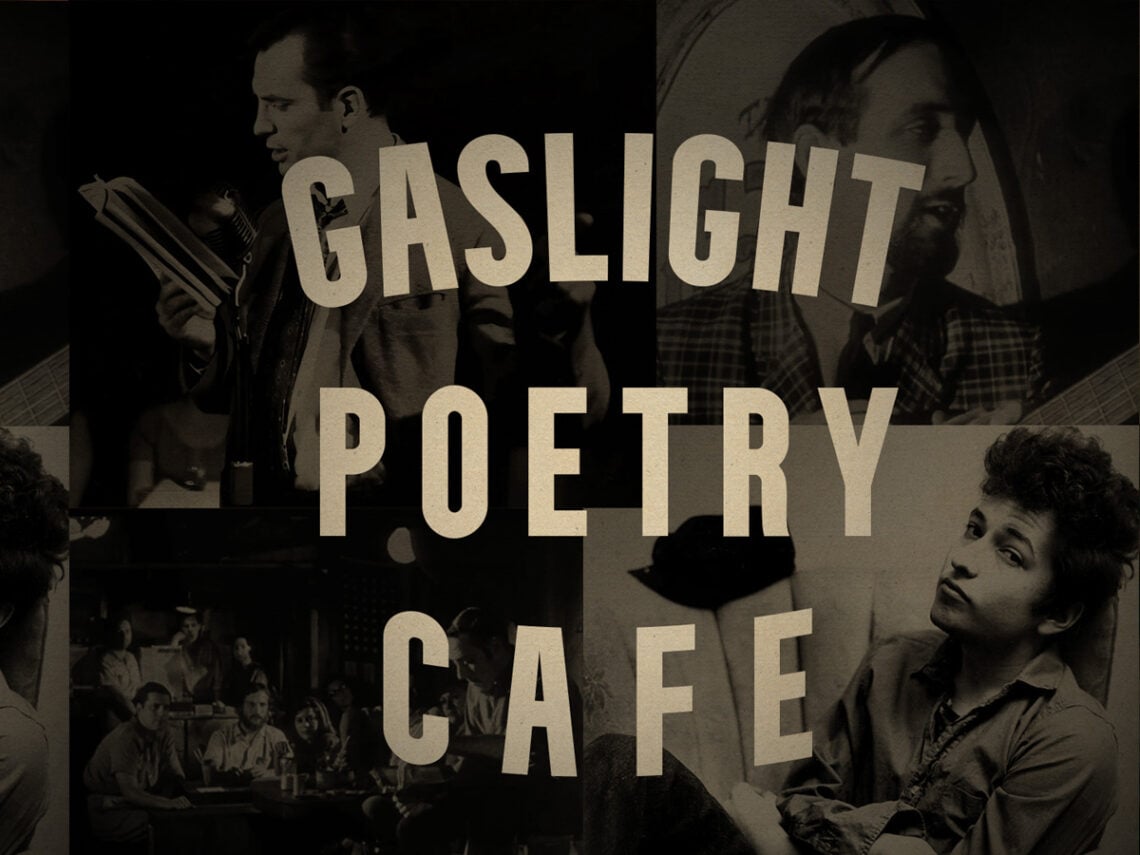
The Gaslight Café: The most important “basket house” in New York’s history

If you’ve ever wondered where the act of snapping your fingers, in lieu of clapping your hands, at a performance started, legend has it that the tradition was born at New York‘s Gaslight Café, an early “basket house” space that merged the Beat Generation with the folk revival.
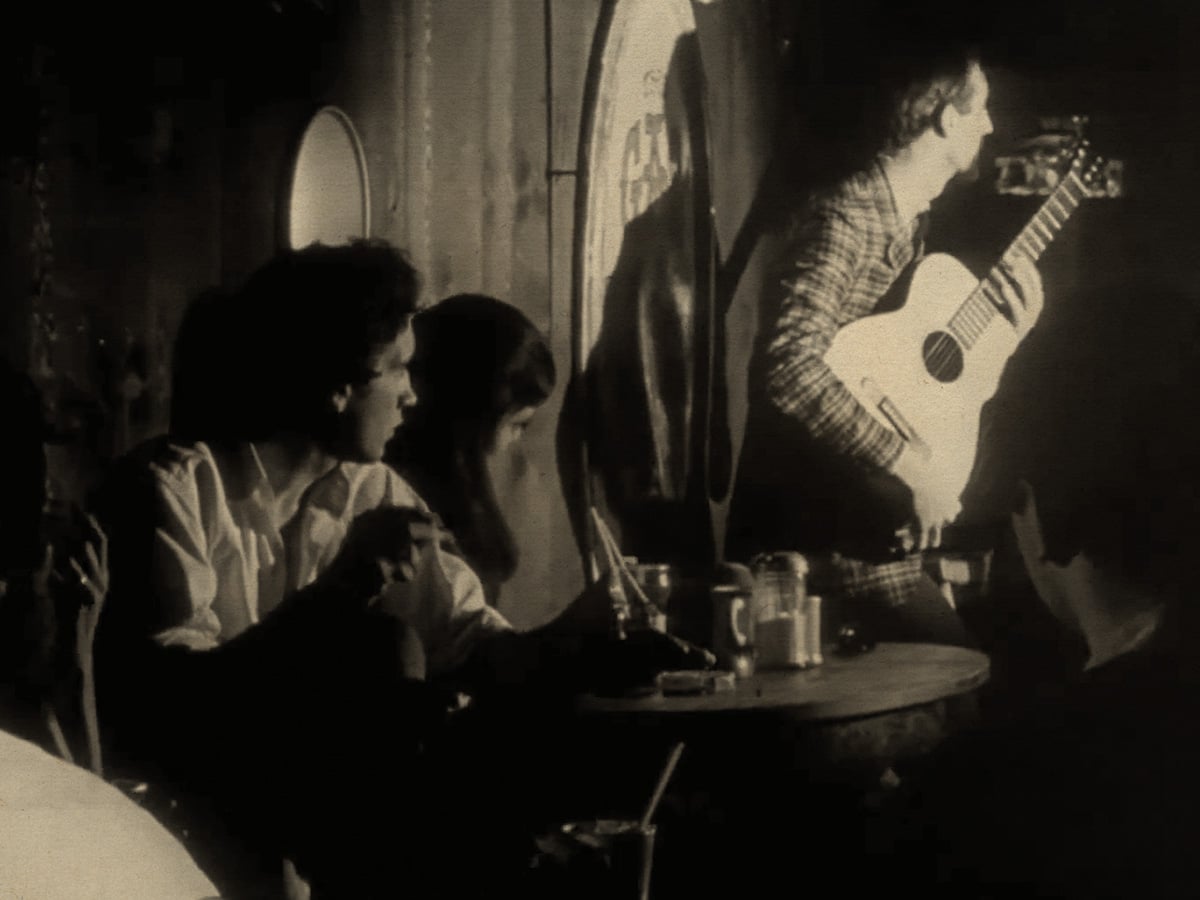
The Gaslight Café opened in 1958, at 116 MacDougal Street, resting beneath a street-level bar, The Kettle of Fish, where an unassuming staircase led towards its entrance, marked with a humble sign. Because of the cafe’s windows opening to the air shafts that led to the apartments above, the applause from audiences would become loud enough for upstairs residents to phone the police. Snapping one’s fingers became the quiet way of applauding, a tactic that, surely, caught on.
But, before it was a coffeehouse, the space was home to Louis’ Luncheon, a hangout for gay men, lesbians, writers and chorus girls throughout the 1930s and ’40s. When John Mitchell arrived to look at the space in the late ’50s, it stood as a coal cellar with such a low ceiling that the floor had to be lowered by shovelling out the dirt in order for patrons to stand comfortably. Mitchell took on the task, literally shovelling and carrying the dirt onto the street in sacks each night, disposing of them in the corner trash cans.
He imagined the space as something of a countercultural hub: a coffeehouse that could function as a third space for musicians, creatives, stoners and sober people alike. He had owned another coffeehouse, Café Figaro, before selling it and using the profits to open his second, then known as ‘The Village Gaslight’.
The Gaslight Café made its name as one of the first “basket houses” in New York, that is, an establishment where performers (who were unpaid) would pass around a basket to the audience at the end of their sets, hoping to make a bit of profit. Gaslight Café was, in turn, central to the shift in ‘coffeehouse culture’, transitioning from a social space meant to hold conversations surrounding politics, religion, philosophy and more over a cup of coffee and a pastry, into one where poetry and music could be heard.
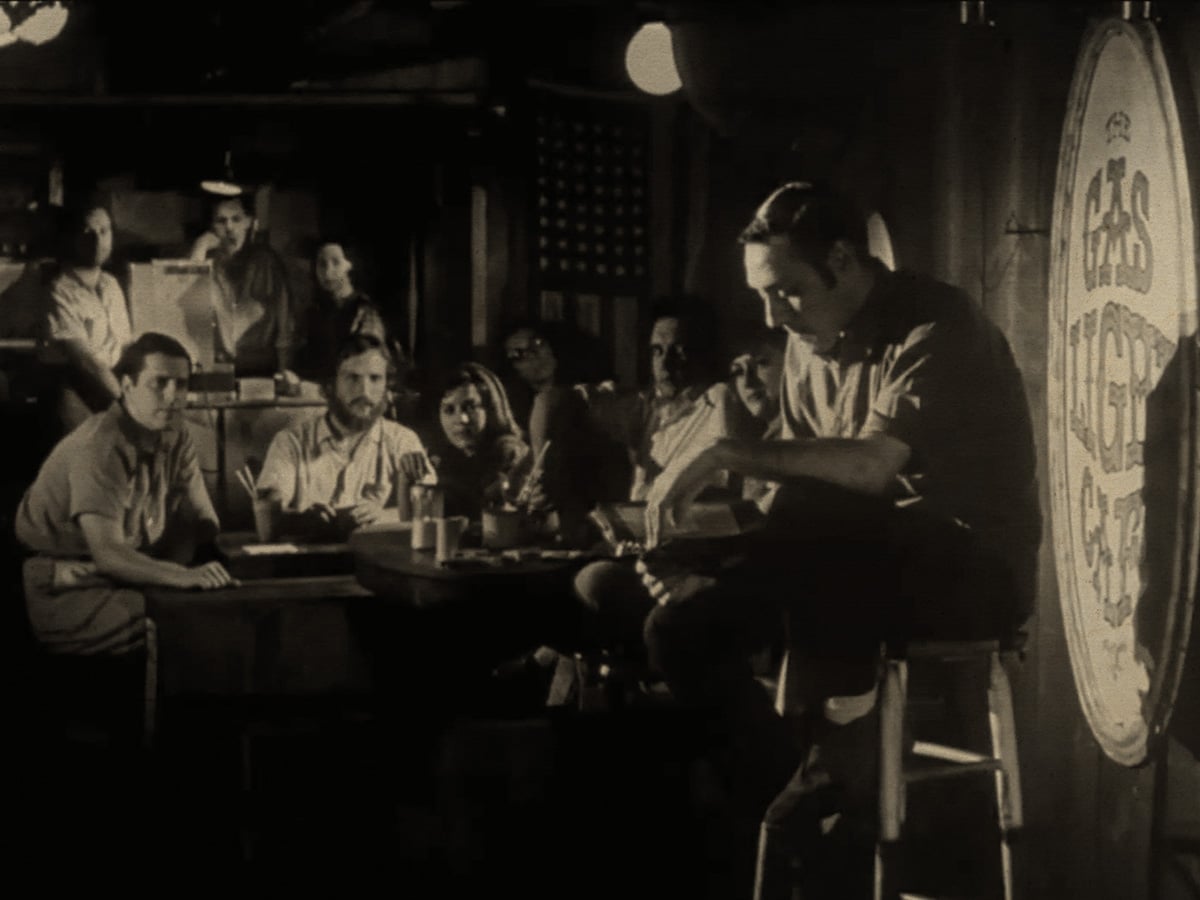
Soon, the café’s signage would read “World famous for the best entertainment in the Village”, and there, the Beat Generation found one of its homes. Jack Kerouac, Gregory Corso and Allen Ginsberg read their poetry in the space, as did Len Chandler, before he began singing folk music. The place itself was compact, a maze of seats and bodies packed together, likely facing the makeshift ‘stage’ (really, an empty corner with a piano) where the performers would be standing.
When not regaling the 110-capacity crowd, the performers travelled upstairs to The Kettle of Fish, which in its own right became an essential hangout for the Beats, the folk musicians and everyone in-between (it was also where they could drink alcohol, as the café stayed sober). According to blues musician Dick Waterman (quoted in his biography, Dick Waterman: A Life in Blues), Bob Dylan and his manager, Albert Grossman, could often be found at the back table, sitting against the air conditioner while surveying the room.
Eventually, Dylan would find his way down the staircase and into Gaslight Café, a space he described in his 2004 memoir Chronicles as “a cryptic club”. In June of 1962, in between his debut and sophomore albums, when he was still largely known outside of the Greenwich Village scene, he began appearing at the café, then established as a space for performers across poetry spheres and the folk revivalists, from Joan Baez to Phil Ochs and Tom Paxton. Some of Dylan’s performances from October 1962 were released on the 2005 album, Live at The Gaslight 1962, with early renditions of ‘Don’t Think Twice, It’s All Right’, ‘A Hard Rain’s a-Gonna Fall’ and more.
By then, however, Mitchell, who had dealt with legal troubles of his own, alongside the attempted closure of The Gaslight Café by the fire department for safety violations in 1960, during a mass investigation of coffeehouses across the Village, had sold the café to John Moyant, whose father-in-law, Clarence Hood, and his son, Sam, took over as its managers into the late ’60s. The folk revival had taken over, in place of the Beats, as the centre of culture, and music would be played nightly at the Gaslight, long into the next morning.
Jose Feliciano, Richie Havens, Ramblin’ Jack Elliott, James Taylor and more within the folk scene would make an appearance, and in the summer of 1966, Joni Mitchell, with her then-husband Chuck, would make her first New York appearance, with two weeks worth of performances at Gaslight Café. “Joan Baez came down to the Gaslight and said that she liked my songs and everything,” Joni later remembered, “and she thought I sounded like Buffy Sainte-Marie!”
Clarence and Sam Hood also booked comedy acts alongside their usual poets, writers and musicians, which saw comedians from Joan Rivers to Lenny Bruce and Hugh Romney, before he reinvented himself as the clown ‘Wavy Gravy’, later being the MC at Woodstock. (On a modern note, The Marvellous Mrs Maisel sees the titular Midge perform in The Gaslight Café as her main venue for stand-up comedy).
Over the course of a decade, some of music’s most notable performers could be heard on its stage: Jimi Hendrix, Big Mama Thornton, Charles Mingus and Bruce Springsteen, to name a few. Folk singer Dave Van Ronk was one of many to immortalise Gaslight Café in his song, ‘Gaslight Rag’: “I had a dream that the Gaslight was clean,” he rasps, “And the rats were all scrubbed down… There’s not much light, but there’s plenty of fights when you’re singing in a hole in the ground.”
The Gaslight Café was by no means a ‘nice’ establishment, with plumbing issues galore from before it opened its doors (due, largely, to John Mitchell’s excavating of the floors), and pipes leaking on patrons while rats ran rampant. The air conditioning would constantly break down, and in contrast, it would be freezing during wintertime. Regardless, the cellar became a landmark of its time, the earliest champion of the Beats and later, a home for folk music to thrive.
“I kept my eyes on the Gaslight. How could I not?” Dylan wrote in Chronicles of his early days of performing. Compared to it, the rest of the places on the street were nameless and miserable, low-level basket houses or small coffee houses where the performer passed the hat.”
The Gaslight Café would officially close its doors in April 1971, with its rising costs and rent, and lack of profit, becoming a burden; one closure in 1967 saw the space try to be revived as The Village Gaslight by Sam Hood the following year, but it was not to last. Having lived its life over a chaotic 13 years, the cellar was converted into The Scrap Bar in the mid-1980s, a metal dive bar until 1995, before becoming a techno dance club in the late millennium. Today, it is The Up & Up, a cocktail lounge where glimpses of The Gaslight Café still persist.

Never Miss A Tale
The Far Out Bob Dylan Newsletter
All the latest stories about Bob Dylan from the independent voice of culture.
Straight to your inbox.