


How did folk music find its home in coffeehouses?

Picture your favourite local coffeehouse: whether it has the old, lived-in quality of historic walls, or it is styled as a more modern spin on the classic café, chances are, they equally harness that comforting embrace that your first necessary sip of coffee in the morning does.
Reminiscing on the ‘original’ coffeehouses made famous in the 1950s and ’60s folk music circuit, such fabled institutions exist, in my mind, as a space that is near unattainable today: a dimly-lit room, the smell of coffee and cigarettes mixing together, the rattle of an espresso machine balanced with the strum of an acoustic guitar and someone’s quiet singing from a corner.
I say unattainable because in the wake of the internet, extracting ourselves from technology has become impossible (a noble attempt, if anything), and to exist in the true nature of a coffeehouse, as it was conceptualised, is to remove oneself from distractions and exist solely in the moment, and hopefully, connect with other people who are seeking the same freedoms.
Coffeehouses have existed for centuries, with the earliest, according to the Library of Congress, dating back to 1555 in Constantinople; Corner Coffee Store names an even older establishment, Kiva Han, opened in 1475. Eventually, the spaces became common in Muslim culture, as the prohibition of alcohol consumption saw coffeehouses as an alternative setting for socialising, and across Western Europe. In England, the first coffeehouses popped up in Oxford, followed by London, in 1652, and by 1675, more than 3,000 could be found across the country. They soon made their way into France and then North America, with the first US coffeehouse opening in Boston in 1676.
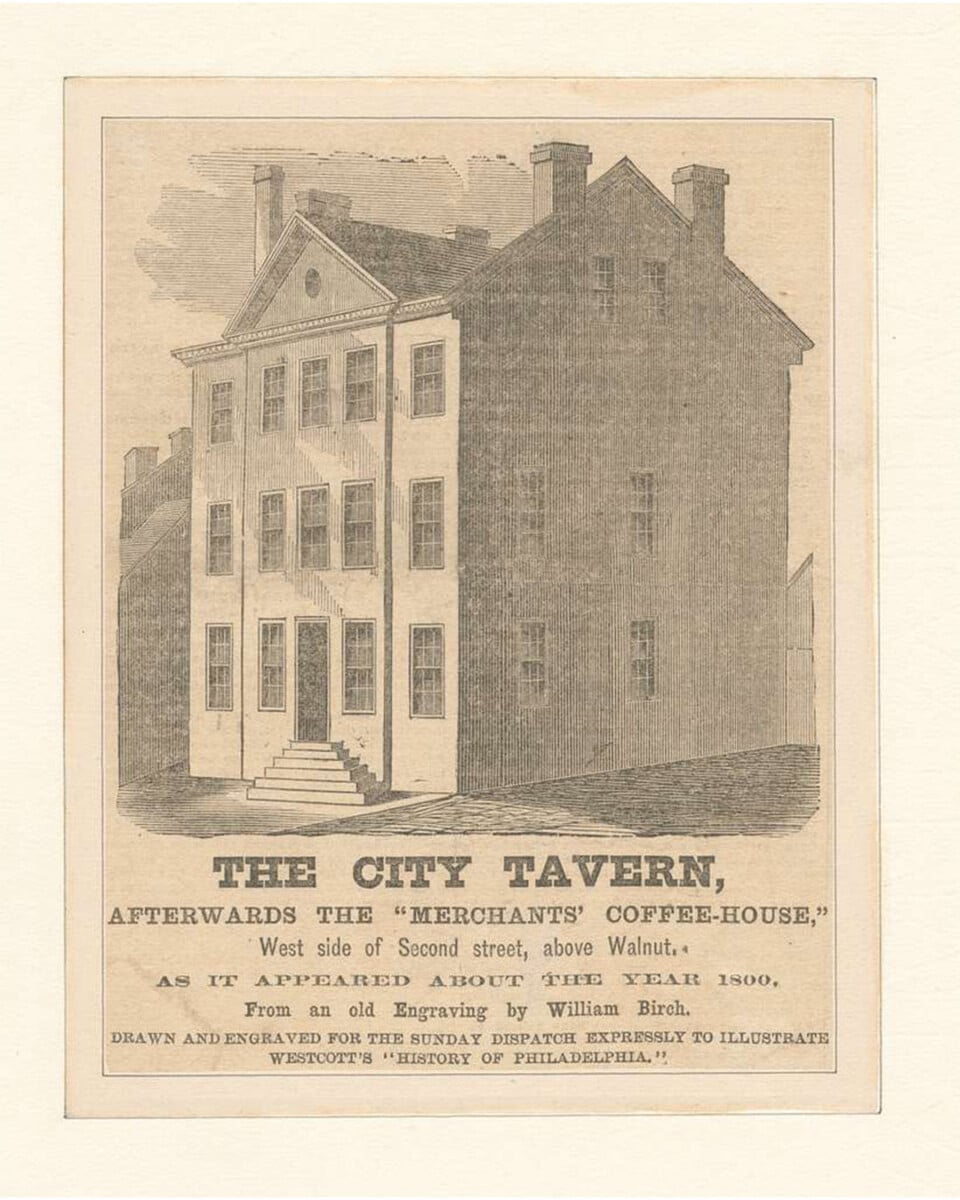
Coffee was, of course, the main draw, but the spaces provided a freeform, welcome invitation for “social levelling”, as the Library of Congress describes. Then still largely segregated, open mainly to all men, there were no requirements of class or place of work; businessmen, particularly, utilised the coffeehouse as a third space to convene, trading gossip, reading the most recent newspapers and establishing enterprises (in London, auction houses including Christie’s and Sotheby’s were born within the city’s coffeehouse scene, while the New York Stock Exchange began in Tontine Coffeehouse on Wall Street).
Finally, their popularity waned in the 19th century, but by the 20th, they were booming once again across the States, with thanks, in part, to the Temperance Movement. Where prohibition removed liquor establishments as a social space, coffeehouses stepped in as a sober alternative. Italian immigrant communities sparked a proliferation of them across the country, from New York and Boston to San Francisco, introducing espresso machines, pastries and, most importantly, cultivating an environment that lent to progressive conversations around society, politics, religion, philosophy and more.
It was within this progressive frame of mind that folk music began to thrive in coffeehouses. The genre became common after World War II, partially influenced by jazz clubs and poetry readings in the Beatnik era, and soon, the two became synonymous, fruitful in bringing people together and sharing ideas, communicated largely through music. These places allowed the songs to be heard and understood, and were something of a safe place for ‘rebellious’ ideologies to thrive. Further, where musicians were concerned, given that the majority of the folk tradition rested on political storytelling, coffeehouses were safe for these songs about strife, poverty, labour, wealth disparity and other sources of turmoil to be performed, shared and carried on.
Growing from its predominantly male patrons, coffeehouses became places where diversity slowly grew, bringing with them a more welcoming air (and less pretension than the jazz and Beatnik clubs that came before them). From an American standpoint, as coffeehouses were primarily established in white, middle-class suburban and urban areas, musicians who travelled to perform brought forth different socioeconomic and cultural backgrounds that informed both the social dynamics of the coffeehouse and the folk tradition.
As folk music scenes grew, more spaces were established in proximity to university and college campuses, which warranted crowds of young students to adopt these coffeehouses as something of a second home. With this, there was an intimacy to them, too: performers and the audiences were all on the same level, socially, and gone were the barriers between them. It was in these coffeehouses that the “basket-house movement” came to be: faced with mediocre pay from the venue itself, musicians would give a performance and then pass around a basket to collect their money for the night.

On this note, there was no emphasis on ‘commercial’ success when it came to playing in a coffeehouse. In fact, as reported, coffeehouses actually hindered the mainstream potential of folk music. As there was an in-between of the old and new generations of folk musicians (with the ‘old’ favouring traditional songs, while the ‘new’ embraced original material), coffeehouses were the place to conceptualise and bring forward the next wave of folk, finding common ground between the two.
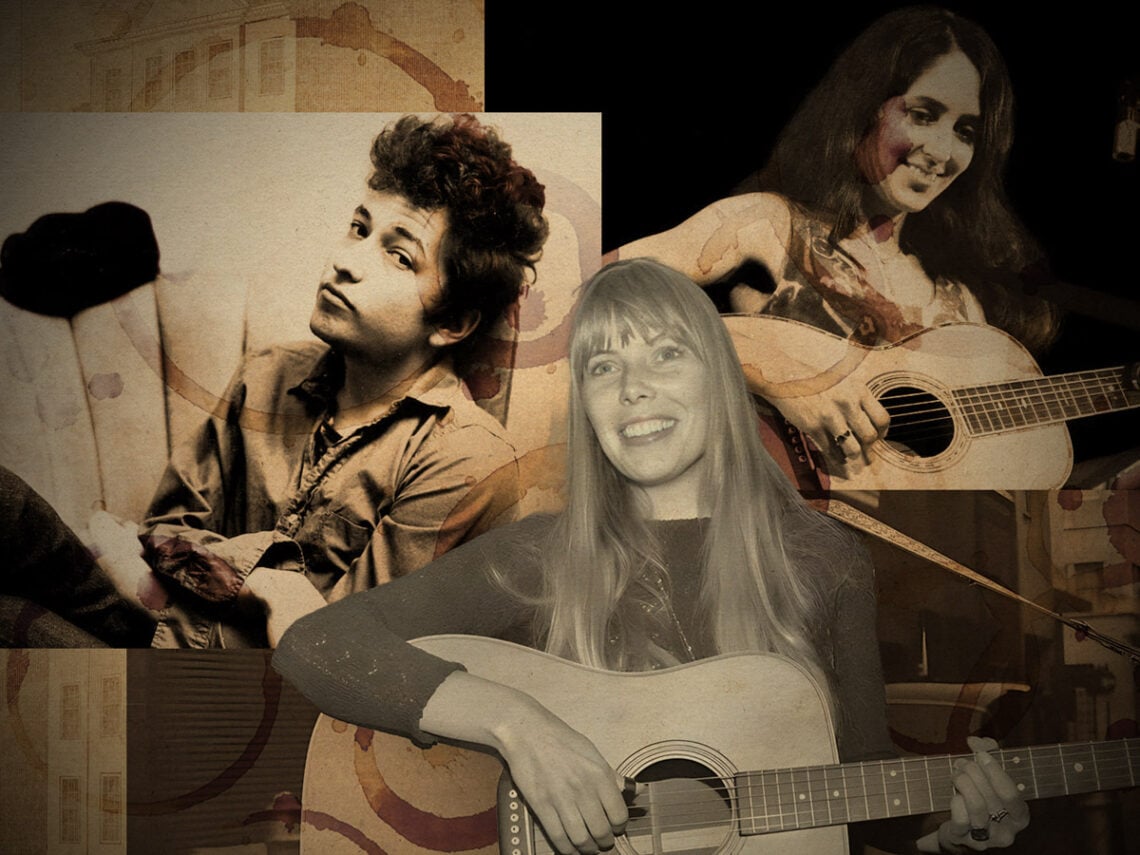
These establishments have made household names of many musicians over the decades. The Commons, a beatnik café in Greenwich Village, was where Bob Dylan would write one of his most legendary songs, while in upstate New York, Caffè Lena saw Dylan, Pete Seeger and more pass through its doors. In Boston and Cambridge’s folk scene, Joan Baez became well-known for her musical talents around Harvard Square, and in California, Tom Waits got his start at Heritage coffeehouse, where he was both a doorman and a performer.
In college in Canada, Joni Mitchell went to a local coffeehouse that introduced her to live music, finding herself visiting time and time again, intrigued by the musicians and wanting to become one of them, too. Later, she would be discovered at another coffeehouse in Florida by none other than David Crosby. “I walked into a coffeehouse in Coconut Grove, and she was standing there singing those songs, and I just was gobsmacked,” he recalled, “I fell for her, immediately.”
It is interesting to think of where the concept of a coffeehouse lies today. They certainly still exist and become spaces for people to listen to local music, foster community and, of course, drink copious amounts of coffee. But in light of mega-corporations like Starbucks adopting the ‘cosy’ atmosphere of a coffeehouse and wiping it clean of its charm, the original sentiment has been lost in the chase towards capital gain.
Still, where chain coffee shops can hopefully be avoided, coffeehouses stand as pillars of their communities, the nucleus of local culture that, among many other social-driven positives, keeps local music alive and well.
